By William Brown
Certified Sports Science Researcher | 11+ Years in Performance Optimization
Toronto, Ontario, Canada
Last Updated: September 26, 2026
The Short Answer
Peptides are short chains of amino acids that act as signaling molecules in your body. They tell your system to ramp up specific processes—things like muscle repair, fat burning, and recovery from training stress.
Here’s what matters most:
- Injectable peptides absorb far better than oral forms. We’re talking absorption rates above 95% compared to roughly 3% for oral delivery.
- The most popular options for athletes include BPC-157 for healing tissue, TB-500 for whole-body recovery, and growth hormone secretagogues for improving body composition.
- Canadian athletes typically run cycles lasting 4 to 12 weeks, with rest periods in between.
- Quality sourcing is everything. Third-party testing isn’t optional—it’s the foundation of safety and results.
One Athlete’s Experience
I want to share a story from Marcus Henderson, a 38-year-old from Toronto who reached out to me after his peptide journey. Three months before we spoke, he’d nearly given up on fitness entirely.
An old hockey injury had wrecked his shoulder. Physical therapy helped, but progress was painfully slow. After two years of limited training, he weighed 218 pounds and felt like his best years were behind him.
A training partner mentioned peptides. Marcus was skeptical, but desperate enough to spend weeks researching before committing to a protocol.
He started with BPC-157 at 0.25 mg twice daily alongside TB-500 at 2.5 mg twice weekly. The plan was eight weeks on, then four weeks off.
Week two: The constant ache in his shoulder began fading.
Week four: He was pressing again—not heavy, but pain-free for the first time in over a year.
Week eight: Down to 201 pounds with visible muscle definition he thought he’d lost forever. Sleep improved dramatically too. He woke up feeling recovered instead of stiff and worn out.
His Protocol
| Peptide | Dose | Frequency |
|---|---|---|
| BPC-157 | 0.25 mg | Twice daily (morning/evening) |
| TB-500 | 2.5 mg | Twice weekly (Mon/Thurs) |
Duration: 8 weeks on, 4 weeks off
Storage: Refrigerated at 2-8°C after reconstitution
Marcus told me this experience completely changed how he viewed recovery and performance after 35.
What Are Peptides and Why Should Athletes Care?
Peptides represent one of the most promising frontiers in performance optimization. These small protein fragments—anywhere from 2 to 50 amino acids linked together—serve as molecular messengers throughout your body.
Here’s the key difference from synthetic hormones: peptides don’t force changes. They signal your existing systems to work more effectively.
Think of peptides as keys that unlock doors already built into your cells. When the right peptide binds to its receptor, it triggers natural responses. Your body already produces thousands of endogenous peptides regulating everything from hunger to healing. Supplementing with specific peptides amplifies these existing pathways.
Your body naturally produces over 7,000 different peptides. They regulate virtually every biological process. Peptide therapy works by supplementing these natural signaling molecules to enhance specific functions.
For Canadian athletes, peptides offer something unique. They bridge the gap between natural training adaptations and pharmaceutical interventions—without the harsh hormonal suppression that accompanies anabolic steroids. Most performance peptides require no post-cycle therapy because they work with your body rather than overriding it.
The applications span remarkably wide territory:
- Healing peptides like BPC-157 accelerate recovery from injuries that might otherwise sideline you for months.
- Systemic recovery peptides such as TB-500 reduce inflammation while promoting tissue regeneration throughout your body.
- Growth hormone secretagogues stimulate your pituitary to release more natural growth hormone, improving body composition without exogenous hormones.
Beyond performance metrics, many users report better sleep, improved skin health, sharper cognitive function, and overall wellbeing. These secondary benefits often prove equally valuable—especially for athletes over 30 whose natural recovery capacity has begun declining.
The Science Behind Peptide Signaling
To understand how peptides work, you need a brief journey into cell biology.
Every cell in your body contains receptors embedded in its membrane. These receptors function like locks, each designed to recognize specific molecular shapes. When a peptide with the matching configuration binds to its receptor, it triggers intracellular signaling cascades that alter gene expression and cellular behavior.
The specificity explains why different peptides produce such varied effects:
- BPC-157 primarily interacts with growth hormone receptors and VEGFR2 pathways, driving angiogenesis and tissue repair.
- TB-500 binds to G-actin, preventing excessive polymerization and enabling cell migration toward injured tissues.
Each peptide speaks a different molecular language to different cellular audiences.
Key Pathways for Performance
Nitric oxide system: Modulated by peptides like BPC-157, this regulates blood flow, nutrient delivery, and exercise capacity. Enhanced signaling means better pumps during training, faster clearance of metabolic waste, and improved cardiovascular performance.
Angiogenesis: Healing peptides promote new blood vessel formation within injured tissues. Tendons and ligaments naturally receive poor blood supply—explaining their notoriously slow healing. Peptide-enhanced angiogenesis delivers more oxygen and nutrients to these hypovascular tissues.
Growth hormone secretion: Follows pulsatile patterns, with most release during deep sleep. Secretagogue peptides like Ipamorelin and CJC-1295 stimulate the pituitary to produce larger pulses of natural growth hormone. Unlike exogenous GH injection, this maintains natural feedback loops.
Inflammation modulation: While acute inflammation serves essential repair functions, chronic inflammation impedes recovery. Peptides like TB-500 increase microRNA-146a expression while decreasing pro-inflammatory cytokines including TNF-alpha and IL-6.
| SHOP NOW |
Why Injectable Peptides Outperform Other Methods
The debate between oral and injectable administration ends quickly when you examine bioavailability data.
Standard oral peptides face a gauntlet of digestive enzymes that destroy approximately 97% of the active compound before absorption. Injectable administration bypasses this destruction entirely, delivering the full dose directly into systemic circulation.
Consider BPC-157 as a practical example. The standard acetate form suffers 99% degradation after just 5 hours in gastric conditions at pH 3.0. Even the enhanced arginine salt formulation, designed specifically for oral stability, still requires significantly higher doses to achieve equivalent effects.
A typical injectable dose of 0.25 mg might require 0.5 to 1 mg orally to produce comparable results.
After years of working with peptide research, I believe the reluctance many people feel toward injections represents the single biggest barrier to experiencing optimal results. The technique is genuinely simple, discomfort is minimal, and the difference in effectiveness is dramatic enough to warrant overcoming initial hesitation.
The Depot Effect
Subcutaneous injection into fatty tissue creates a depot effect—releasing the peptide gradually into circulation over hours. This extended absorption profile maintains more stable blood levels compared to intravenous administration, which produces sharp peaks followed by rapid clearance.
Intramuscular injection penetrates deeper into muscle tissue using slightly longer needles at 90-degree angles. This route may provide faster localized effects for deep tissue injuries but requires more technical skill and produces greater discomfort.
Cost-Effectiveness
Because oral forms require substantially higher doses to achieve similar blood concentrations, the per-dose expense often exceeds injectable options. Factor in the waste from destroyed peptide molecules, and injectable becomes the clear economic choice for serious users.
Consistency
Oral absorption varies based on stomach contents, gastric pH, enzyme activity, and individual digestive health. Injectable peptides deliver precise, reproducible doses each time—eliminating the variability that confounds dose-response relationships.
Top Performance Peptides for Canadians
The Canadian peptide landscape offers access to several categories of compounds, each suited to specific performance goals.
| Peptide | Primary Use | Typical Dose | Cycle Length |
|---|---|---|---|
| BPC-157 | Tissue Healing | 0.25-0.5 mg daily | 4-8 weeks |
| TB-500 | Systemic Recovery | 2-5 mg weekly | 6-12 weeks |
| GHK-Cu | Regeneration | 1-2 mg daily | 8-12 weeks |
| Ipamorelin | GH Release | 0.1-0.3 mg daily | 8-16 weeks |
| CJC-1295 | GH Amplification | 0.1-0.2 mg daily | 8-16 weeks |
Healing peptides address the frustrating reality that injuries derail training progress more than any other factor. A minor tendon strain that responds poorly to rest can sideline athletes for months. BPC-157 and TB-500 represent the cornerstone compounds for accelerated tissue repair.
Recovery optimization peptides improve your body’s ability to adapt to training stress. Even without specific injuries, cumulative microtrauma from intense training eventually outpaces recovery capacity.
Body composition peptides, primarily growth hormone secretagogues, help shift the ratio between muscle and fat tissue. By stimulating natural GH release, these compounds support muscle protein synthesis while enhancing lipolysis.
Combination protocols leveraging multiple peptide categories often produce superior results to single-compound approaches.
BPC-157: The Tissue Repair Specialist
BPC-157 (Body Protection Compound 157) consists of 15 amino acids derived from a protective protein found in human gastric juice. This synthetic peptide has accumulated extensive preclinical research demonstrating remarkable healing properties across virtually every tissue type studied.
How It Works
The mechanisms operate through multiple pathways simultaneously:
- VEGFR2 activation promotes angiogenesis, bringing new blood vessel formation to injured areas
- FAK-paxillin pathway stimulation enhances cell migration, drawing repair cells toward damage sites
- Growth hormone receptor upregulation amplifies anabolic signals driving tissue regeneration
BPC-157 demonstrates a unique property called damage tropism. When injected systemically, it naturally migrates toward sites of tissue damage throughout the body. This means even abdominal subcutaneous injections can support healing in distant locations like shoulders or knees.
Applications
Tendon and ligament injuries respond particularly well. These connective tissues receive minimal blood supply, explaining their notorious healing difficulties. Preclinical studies show accelerated healing in Achilles tendon transection models, with treated subjects demonstrating functional recovery in roughly half the normal timeframe.
Muscle injuries benefit from BPC-157’s effects on both tissue repair and inflammation modulation. Athletes report faster resolution of strains and pulls, enabling earlier return to training.
Gastrointestinal applications stem from BPC-157’s origin in gastric protective proteins. The peptide promotes gut lining healing, modulates gastric acid secretion, and supports intestinal barrier integrity.
Dosing
Typical protocols range from 0.25 to 0.5 mg daily, often split between morning and evening administrations. Subcutaneous injection near the injury site provides high local concentration while systemic distribution supports overall recovery.
Standard cycles run 4 to 8 weeks depending on injury severity, with rest periods between cycles.
Response Timeline
- Fast responders: Noticeable improvement within 3-7 days
- Moderate responders: 2-4 weeks before substantial changes
- Chronic conditions: Often need the full 6-8 week cycle
TB-500: Your Systemic Recovery Partner
TB-500 represents a synthetic version of the active region of Thymosin Beta-4, a naturally occurring peptide found in virtually all human and animal cells. This 43-amino-acid compound works through fundamentally different mechanisms than BPC-157, making them complementary rather than redundant.
The Core Mechanism
TB-500 binds to G-actin—the monomer form of actin that comprises your cellular cytoskeleton. By sequestering G-actin and preventing excessive polymerization into rigid filaments, TB-500 increases cell plasticity and migration capacity. Repair cells move more freely toward damaged tissues.
Angiogenesis stimulation occurs through HIF-1alpha stabilization and subsequent VEGF upregulation. New blood vessels sprout within injured areas, establishing supply lines that deliver oxygen, nutrients, and immune cells.
TB-500 distributes throughout your entire body rather than concentrating at injection sites. This systemic action makes it uniquely effective for supporting multiple injury sites simultaneously and enhancing overall recovery capacity.
Anti-Inflammatory Effects
TB-500 increases microRNA-146a expression while decreasing pro-inflammatory cytokines including TNF-alpha, IL-6, IRAK1, and TRAF6. Unlike corticosteroids that suppress inflammation by weakening immune responses, TB-500 modulates inflammation without compromising tissue integrity.
Collagen Quality
Collagen production enhancement includes not just increased quantity but improved quality. Fiber alignment in TB-500 treated tissues demonstrates superior organization compared to natural healing, which often produces disorganized scar tissue. Better collagen architecture translates into stronger, more functional repaired tissue.
Dosing Protocol
Loading phases typically employ higher initial doses:
- Weeks 1-4: 5 mg weekly, split into 2.5 mg doses twice weekly
- Weeks 5-8 or 12: Reduce to 2-3 mg weekly for maintenance
This front-loading strategy accelerates initial benefits while reducing long-term peptide consumption.
Practical Advantages
TB-500 does not suppress testosterone, estrogen, or other endogenous hormones. Users can discontinue without tapering or post-cycle therapy, though cycling remains advisable given limited long-term safety data.
GHK-Cu: The Regeneration Catalyst
GHK-Cu, a tripeptide naturally occurring in human plasma bound to copper ions, represents the intersection of healing peptides and anti-aging research. Originally studied for wound healing and skin rejuvenation, its applications have expanded to include systemic regenerative effects.
Copper Delivery
Copper serves as an essential cofactor for numerous enzymes involved in tissue maintenance and repair:
- Lysyl oxidase for collagen crosslinking
- Superoxide dismutase for antioxidant protection
- Cytochrome c oxidase for cellular energy production
GHK-Cu transports bioavailable copper directly to tissues requiring regeneration.
Collagen Synthesis
Research shows collagen synthesis increases by approximately 70%. More importantly, the collagen produced demonstrates proper fiber architecture and crosslinking, creating functional rather than scarred tissue.
GHK-Cu often gets overlooked in favor of more popular peptides like BPC-157 and TB-500. In my experience, the combination of all three through protocols like the GLOW blend produces noticeably superior results. The collagen quality improvements from GHK-Cu seem to create longer-lasting tissue repairs.
Gene Expression Modulation
Research demonstrates GHK-Cu influences over 4,000 genes, with effects including:
- Suppression of fibrinogen synthesis
- Reduction of pro-inflammatory cytokines
- Activation of DNA repair mechanisms
Visual Verification
The characteristic blue color of reconstituted GHK-Cu solutions comes from the copper ion content. This visual marker serves quality verification purposes—solutions that appear colorless may indicate degradation.
Dosing
Injectable dosing typically ranges from 1 to 2 mg daily via subcutaneous administration. Standard cycles run 8 to 12 weeks.
The GLOW Blend
Synergistic stacking with BPC-157 and TB-500 forms combination protocols like the GLOW blend:
- 27 mg GHK-Cu
- 10 mg TB-500
- 5 mg BPC-157
Daily doses of 0.9 to 1.8 mg provide all three compounds in optimized ratios.
Growth Hormone Secretagogues Explained
Growth hormone secretagogues stimulate your pituitary gland to produce and release more natural growth hormone rather than replacing it with exogenous injections. This preserves natural feedback loops while amplifying your body’s own anabolic signaling.
Ipamorelin
The cleanest option among GH secretagogues. It selectively stimulates growth hormone release without significantly affecting cortisol, prolactin, or other hormones.
Typical dosing: 0.1 to 0.3 mg administered 2-3 times daily, often including a dose before bed.
CJC-1295 (without DAC)
Amplifies GH release duration by protecting endogenous GHRH from enzymatic degradation. The compound itself does not directly stimulate GH release but extends the signaling window of natural releasing hormone.
| Secretagogue | Mechanism | Best For | Timing |
|---|---|---|---|
| Ipamorelin | GHRP Receptor | Clean GH boost | Pre-workout and bedtime |
| CJC-1295 | GHRH Protection | Extended release | Combined with Ipamorelin |
| MK-677 | Ghrelin Mimetic | Oral convenience | Once daily at night |
| GHRP-6 | Hunger pathway | Mass gain phases | Pre-meals |
Body Composition Effects
These develop gradually over weeks of consistent use. Growth hormone promotes lipolysis (breakdown of stored fat) while supporting muscle protein synthesis. Users typically notice improved recovery, enhanced sleep quality, and subtle body recomposition before more dramatic visual changes.
Sleep Quality
Often the first noticeable benefit. Growth hormone release occurs predominantly during deep sleep phases, and enhanced GH signaling reinforces these restorative cycles.
The IGF-1 Connection
Growth hormone stimulates liver production of Insulin-like Growth Factor 1, which mediates many of GH’s anabolic effects. Secretagogue use increases both GH and downstream IGF-1 levels.
Fasting Requirements
Elevated blood glucose and insulin blunt GH release. Administering these peptides during fasted states—or at least 2 hours after eating—optimizes their action. Pre-bed dosing on an empty stomach capitalizes on natural circadian GH patterns.
Stacking Protocols That Work
Peptide stacking combines multiple compounds to leverage synergistic mechanisms that exceed what individual peptides achieve alone.
The Wolverine Stack
BPC-157 and TB-500 represent the most popular and extensively tested healing combination. Users consistently report approximately 60% better outcomes versus either compound used individually.
Standard protocol:
- Weeks 1-4: BPC-157 at 0.25-0.5 mg daily + TB-500 at 5 mg weekly (split into 2.5 mg doses twice weekly)
- Weeks 5-8: Reduce TB-500 to 2-3 mg weekly while maintaining BPC-157
Applications: Post-surgical repair, severe tendon and ligament tears, chronic joint inflammation, high-volume athletic training recovery.
The GLOW Blend
Adds GHK-Cu to create a triple-mechanism stack addressing tissue healing, systemic inflammation, flexibility, collagen synthesis, and skin health.
Typical dosing: 0.3 to 0.6 mg daily via subcutaneous injection for 8-12 weeks, with 90-day maximum continuous use followed by 30-day washout.
Growth Hormone Enhancement Stacks
Layer secretagogues onto healing peptides for comprehensive support. Combining BPC-157 and TB-500 with Ipamorelin and CJC-1295 provides simultaneous tissue repair and metabolic optimization.
Sample Advanced Stack Protocol
| Timing | Compound | Dose |
|---|---|---|
| Morning | BPC-157 | 0.25 mg |
| Pre-workout | Ipamorelin + CJC-1295 | 0.2 mg + 0.1 mg |
| Evening | BPC-157 | 0.25 mg |
| Bedtime | Ipamorelin + CJC-1295 | 0.2 mg + 0.1 mg |
| Twice weekly | TB-500 | 2.5 mg (loading) |
Duration: 8-12 weeks with 4-week minimum rest between cycles.
Supportive Supplements
- Hydrolyzed collagen: Provides raw materials for tissue reconstruction
- Vitamin C: Essential cofactor for collagen synthesis (500-1000 mg daily)
- Omega-3 fatty acids: Support anti-inflammatory processes (2-3 g combined EPA/DHA daily)
| SHOP NOW |
Timing and Cycling for Best Results
Strategic timing significantly impacts effectiveness. Understanding pharmacokinetics helps optimize protocols beyond simple dose selection.
Split Dosing
Dividing daily amounts across multiple administrations maintains more stable blood levels. BPC-157 at 0.5 mg daily often performs better as 0.25 mg morning and 0.25 mg evening.
Fasted Administration
Critical for growth hormone secretagogues. Elevated insulin from recent meals blunts GH release. Administer at least 2 hours after eating, or first thing in the morning.
Peptide timing matters as much as dosing. Healing peptides benefit from consistent twice-daily administration for stable blood levels, while growth hormone secretagogues require fasted states.
Pre-Workout Timing
TB-500’s effects on blood flow and cell migration could theoretically support workout performance and immediate post-exercise repair initiation. Some users report improved pumps and reduced DOMS with pre-training timing.
Cycle Length
- Acute injury protocols: 4-6 weeks at moderate doses with 2-4 week rest periods
- Chronic conditions: 6-8 week cycles followed by 4-8 weeks off
Rest Periods
Serve multiple purposes:
- Allow assessment of whether benefits persist
- Prevent potential tolerance development
- Provide conservative safety margins
Seasonal Cycling
Align peptide use with training phases:
- Off-season: Healing-focused cycles address accumulated injuries
- Competition preparation: Secretagogue cycles optimize body composition
Injection Technique Fundamentals
Proper technique ensures safety, minimizes discomfort, and delivers consistent doses.
Needle Selection
Insulin syringes with 29-31 gauge needles provide adequate precision while minimizing discomfort. The short 0.5-inch length proves sufficient for subcutaneous administration in most individuals.
Subcutaneous Technique
- Pinch 1-2 inches of skin (typically abdominal area)
- Insert needle at 45-90 degree angles depending on body fat
- Aspirate briefly to confirm no blood vessel puncture
- Inject slowly over 5-10 seconds
- Release pinched skin before withdrawing to reduce leakage
The fear of self-injection proves far worse than reality for almost everyone. Modern insulin needles are so thin that many injections produce less sensation than a mosquito bite. Within a week or two, most people find the process entirely routine.
Site Rotation
Prevents lipohypertrophy (fatty lumps from repeated local trauma). Maintain at least 10 injection sites, ensuring no single location receives injections more frequently than every 24-48 hours.
Reconstitution
- Use bacteriostatic water (not plain sterile water) for antimicrobial preservation
- Direct water stream against vial wall, not directly onto powder
- Gentle swirling—never shake, which can degrade peptide structures
Storage
- Refrigerate at 2-8°C after reconstitution
- Protect from light
- Most peptides maintain potency for approximately 4 weeks
- Write reconstitution dates directly on vials
Sterile Technique
- Alcohol swabs on vial stopper and injection site
- Allow alcohol to dry before needle insertion
- Use each needle only once
Quality Sourcing in Canada
Quality sourcing represents the single most important variable determining safety and effectiveness. The underground nature of the peptide market creates substantial quality variation.
Independent testing studies have found contamination in approximately 30% of online peptide products and excessive endotoxin levels in 65% of samples.
Third-Party Testing
Legitimate suppliers provide Certificates of Analysis with batch-specific data:
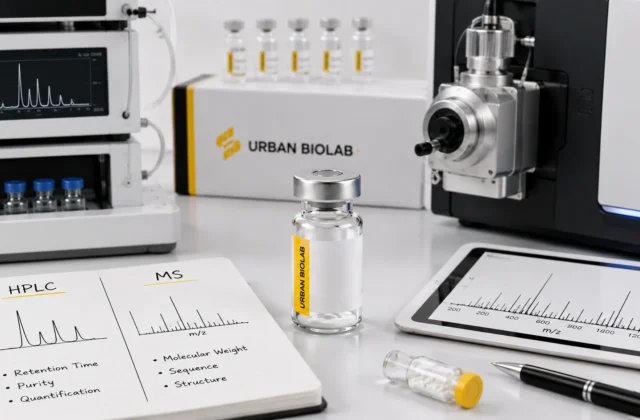
- Full HPLC chromatograms showing peak integration
- Mass spectrometry confirmation of molecular weight
- Endotoxin testing results below 2 ng/mL for injectables
- Proper storage documentation
Purity Standards
- HPLC verification showing 98% or higher purity
- Mass spectrometry confirming correct molecular weight
Red Flags
- Absence of Certificates of Analysis
- Claims of extremely high purity without supporting evidence
- Room temperature storage recommendations
- Vague labeling of salt forms
- Prices dramatically below market averages
- Shipping without cold pack preservation
Canadian Regulatory Context
Health Canada explicitly warns against unauthorized injectable peptides. The compounds exist in legal gray areas regarding importation and personal use. Users operate outside established healthcare frameworks, assuming personal responsibility for sourcing decisions, quality verification, dosing protocols, and management of adverse effects.
Storage During Shipping
Peptides should arrive with cold packs maintaining temperature during transit. Receiving warm packages without cooling elements suggests degradation regardless of original product quality.
Realistic Timelines and Expectations
Setting appropriate expectations prevents both premature disappointment and excessive optimism.
| Timeline | What to Expect | User Percentage |
|---|---|---|
| Days 1-3 | Some notice pain reduction | 10-15% |
| Weeks 1-2 | Functional improvement begins | 30-40% |
| Weeks 3-6 | Substantial progress evident | 40-50% |
| Weeks 6+ | Maximum benefits plateau | Varies |
Ultra-Fast Responders (10-15%)
Notice obvious changes within 1-3 days. These early responders typically report significant pain reduction and improved function almost immediately.
Standard Responders
Experience meaningful improvement within 1-2 weeks. Pain levels decrease, range of motion expands, training capacity gradually recovers.
Moderate Responders
With chronic conditions, may require 3-6 weeks before substantial changes. Long-standing injuries with established scar tissue present greater challenges.
Non-Responders (20-30%)
Report minimal or no meaningful benefit. Potential explanations include inappropriate applications, quality issues, unrealistic expectations, or genuine individual non-responsiveness.
Growth Hormone Secretagogue Timelines
- Sleep quality improvements: Often within first week
- Body composition changes: 4-8 weeks
- Maximum effects: 12-16 weeks
Sustained vs. Temporary Benefits
True tissue healing should persist after discontinuation. Monitoring function during rest periods helps distinguish actual repair from symptomatic suppression.
Nutrition Strategies That Amplify Results
Nutritional support provides the raw materials that peptide signaling directs toward tissue construction.
Peptides are signaling molecules, not building blocks. They tell your body to build and repair tissue, but they cannot supply the raw materials. Adequate protein, collagen precursors, and micronutrients remain essential.
Protein Intake
Target 0.8 to 1 gram per pound of body weight during active tissue repair phases. The enhanced anabolic signaling creates demand for amino acid building blocks.
Collagen Supplementation
Hydrolyzed collagen peptides, typically 10-15 grams daily, deliver glycine, proline, and hydroxyproline in forms optimized for absorption. Timing intake around peptide administration may enhance utilization.
Vitamin C
Essential cofactor for collagen crosslinking. Without adequate ascorbic acid, collagen fibers form improperly regardless of peptide signaling. Maintain 500-1000 mg daily.
Omega-3 Fatty Acids
Modulate prostaglandin synthesis and inflammatory cytokine production through pathways that synergize with TB-500’s anti-inflammatory effects.
Caloric Balance
Tissue repair occurs more efficiently in caloric surplus. Fat loss goals require caloric deficit that may modestly slow healing. Prioritize one objective per cycle.
Meal Timing
Secretagogue injections should occur at least 2 hours after eating. Post-injection fasting for another 20-30 minutes optimizes the growth hormone pulse.
Training Integration Guidelines
Integrating peptides with training requires balancing enhanced recovery capacity against prudent injury management.
I have seen too many users treat peptides as permission to ignore pain signals and train through injuries. Peptides enhance healing, but they do not eliminate the need for intelligent load management.
Active Recovery
Peptides accelerate tissue repair processes that still require appropriate mechanical loading, blood flow stimulation, and gradual stress progression. Complete rest often underperforms structured rehabilitation.
Training Volume
Enhanced recovery between sessions allows higher weekly training frequencies. Many users find they can sustain volumes previously impossible to recover from.
Injury Rehabilitation
The typical progression from protection through controlled loading to full return should compress rather than skip steps. A 6-month expected recovery might become 3 months, but attempting full loads within weeks invites reinjury.
Discomfort vs. Pain
Peptides reduce inflammation and promote repair, potentially masking warning signals. Maintain attention to movement quality, unusual sensations, and progressive loading.
Deload Weeks
Remain valuable even with enhanced recovery. Periodically reducing training stress allows assessment of accumulated fatigue and prevents overreaching.
Post-Workout Timing
The inflammatory cascade following intense training creates signaling opportunities. Administering BPC-157 within the post-workout window potentially enhances targeting of exercise-induced tissue stress.
Understanding Potential Side Effects
Performance peptides demonstrate remarkably favorable short-term side effect profiles compared to hormonal interventions.
Injection Site Reactions
Most common complaint. Redness, mild swelling, tenderness, and occasional itching occur frequently but typically resolve within hours to one day.
Fatigue and Lethargy
Affects some users, particularly with TB-500. These systemic effects typically emerge during the first 1-2 weeks before resolving.
Unlike anabolic steroids, healing peptides like BPC-157 and TB-500 do not suppress natural hormone production. No post-cycle therapy is required.
Sleep Pattern Changes
Growth hormone secretagogues typically improve sleep quality. Some TB-500 users report vivid dreams or occasionally disrupted sleep during initial use.
Water Retention
Minor side effect for some secretagogue users. Temporary increases in body weight that do not reflect fat gain.
Blood Pressure Fluctuations
Deserve monitoring, particularly for individuals with cardiovascular concerns. Home monitoring provides early detection of concerning trends.
Long-Term Safety Data
Simply does not exist for most performance peptides in human populations. The absence of documented long-term adverse effects does not prove safety.
Cancer Concerns
Angiogenesis promotion theoretically could supply blood to malignant tissues. Individuals with cancer history, undiagnosed masses, or strong family history of aggressive cancers should avoid healing peptides.
| SHOP NOW |
Frequently Asked Questions
How quickly will I see results from healing peptides?
Response timelines vary. Approximately 10-15% notice improvement within 3 days, while most experience meaningful changes within 1-2 weeks. Chronic conditions may require 3-6 weeks.
Can I take peptides orally instead of injecting?
Oral administration reduces bioavailability dramatically. Standard oral forms face approximately 97% destruction by digestive enzymes. Injectable remains substantially more effective and cost-efficient.
Do I need post-cycle therapy after peptide use?
Healing peptides and secretagogues do not suppress endogenous hormone production. No post-cycle therapy is required for BPC-157, TB-500, GHK-Cu, Ipamorelin, or CJC-1295.
How do I store reconstituted peptides properly?
Refrigerate at 2-8°C with protection from light. Most maintain potency for approximately 4 weeks. Write the reconstitution date on vials immediately.
Can I combine multiple peptides in the same syringe?
Peptides with similar stability profiles and compatible pH levels can often be combined. Pre-mixed blends like GLOW demonstrate this principle.
What happens if I miss a dose?
Missing occasional doses has minimal impact. Resume normal dosing at the next scheduled time without doubling up.
Are peptides legal in Canada?
Peptides exist in legal gray areas. Health Canada warns against unauthorized injectable peptides. Users assume personal responsibility for their decisions.
How do I know if my peptides are legitimate?
Quality verification requires third-party Certificates of Analysis with batch-specific data including HPLC chromatograms, mass spectrometry, and endotoxin testing.
Will peptides show up on drug tests?
WADA prohibits many peptides including TB-500. Competitive athletes subject to testing should avoid all prohibited peptides entirely.
How long should I cycle off between peptide protocols?
Standard recommendations suggest rest periods equal to half to full cycle length. A 6-week cycle would be followed by 3-6 weeks off.
Glossary of Terms
Angiogenesis: The formation of new blood vessels from existing vasculature. Healing peptides promote angiogenesis to improve blood supply to injured tissues.
Bioavailability: The proportion of an administered substance that enters systemic circulation. Injectable peptides offer near-complete bioavailability.
Certificate of Analysis (COA): Documentation from third-party laboratories verifying peptide identity, purity, and safety.
Chemotaxis: The directed movement of cells toward or away from chemical signals. TB-500 enhances chemotaxis.
Cytokines: Small signaling proteins that regulate inflammation and immune responses.
Endotoxin: Bacterial cell wall components that produce fever and inflammation. Injectable peptides must test below 2 ng/mL.
GHRH: Growth Hormone Releasing Hormone. Peptides like CJC-1295 extend GHRH signaling duration.
Half-life: The time required for peptide concentration in blood to decrease by half.
HPLC: High Performance Liquid Chromatography. An analytical technique that verifies peptide purity.
IGF-1: Insulin-like Growth Factor 1. A hormone produced in the liver that mediates many anabolic effects of GH.
Lipohypertrophy: Fatty lumps under the skin from repeated injections at the same site.
Reconstitution: The process of dissolving lyophilized peptide powder in bacteriostatic water.
Secretagogue: A substance that stimulates secretion of another substance.
Subcutaneous Injection: Administration into the fatty tissue layer beneath the skin.
VEGF: Vascular Endothelial Growth Factor. A signaling protein that stimulates blood vessel formation.
References and Further Reading
- Sikiric P, et al. “Stable gastric pentadecapeptide BPC 157: novel therapy in gastrointestinal tract.” Current Pharmaceutical Design.
- Sosne G, et al. “Thymosin beta 4: a potential novel therapy for neurotrophic keratopathy, dry eye, and ocular surface diseases.” Vitamins and Hormones.
- Pickart L, Margolina A. “Regenerative and Protective Actions of the GHK-Cu Peptide in the Light of the New Gene Data.” International Journal of Molecular Sciences.
This article is for informational purposes only and does not constitute medical advice. Consult with a qualified healthcare provider before beginning any peptide protocol.