
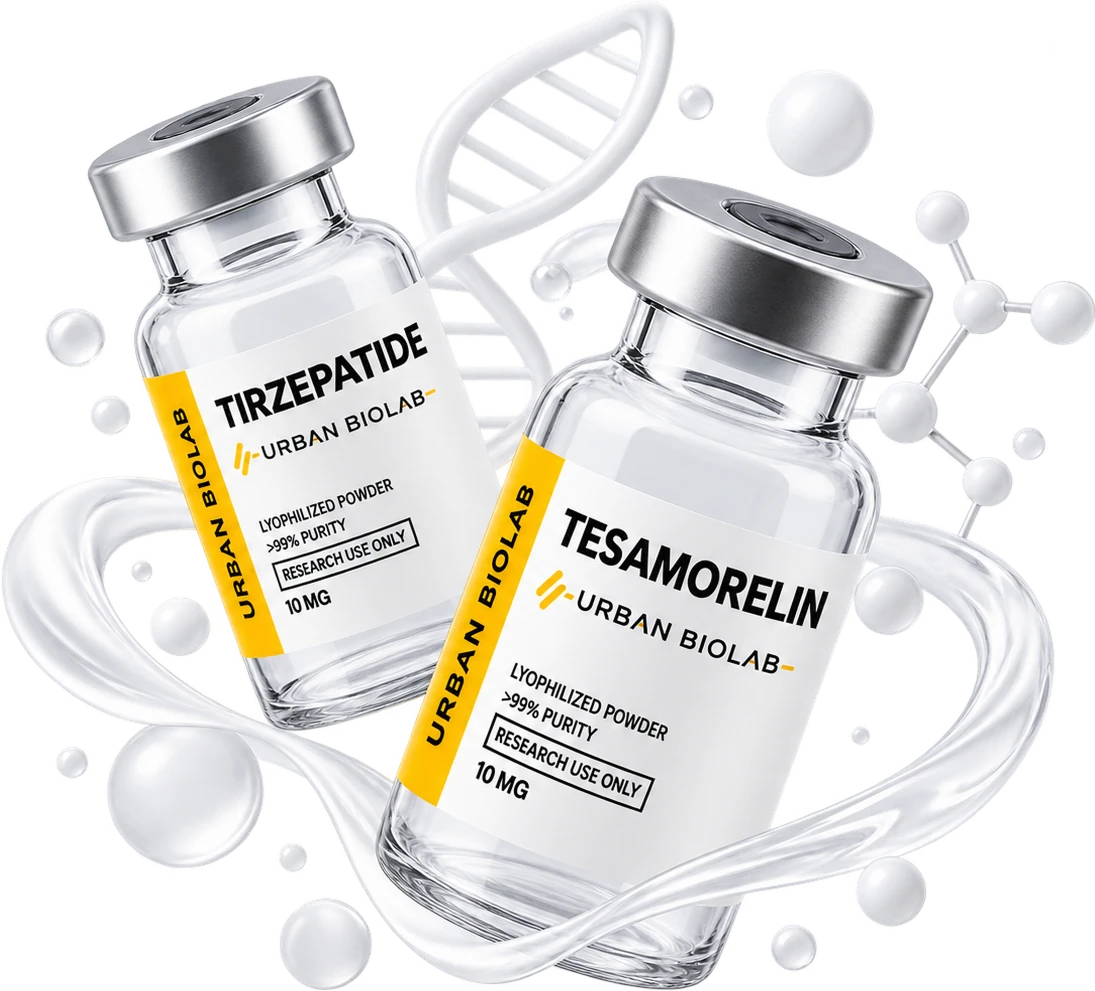
Lyophilization (freeze-drying) removes water from a peptide solution under vacuum, leaving behind a stable powder that resists the degradation pathways that would otherwise occur in solution. But “stable” doesn’t mean indestructible — three factors drive most degradation in stored peptides: heat, light, and moisture.
Temperature
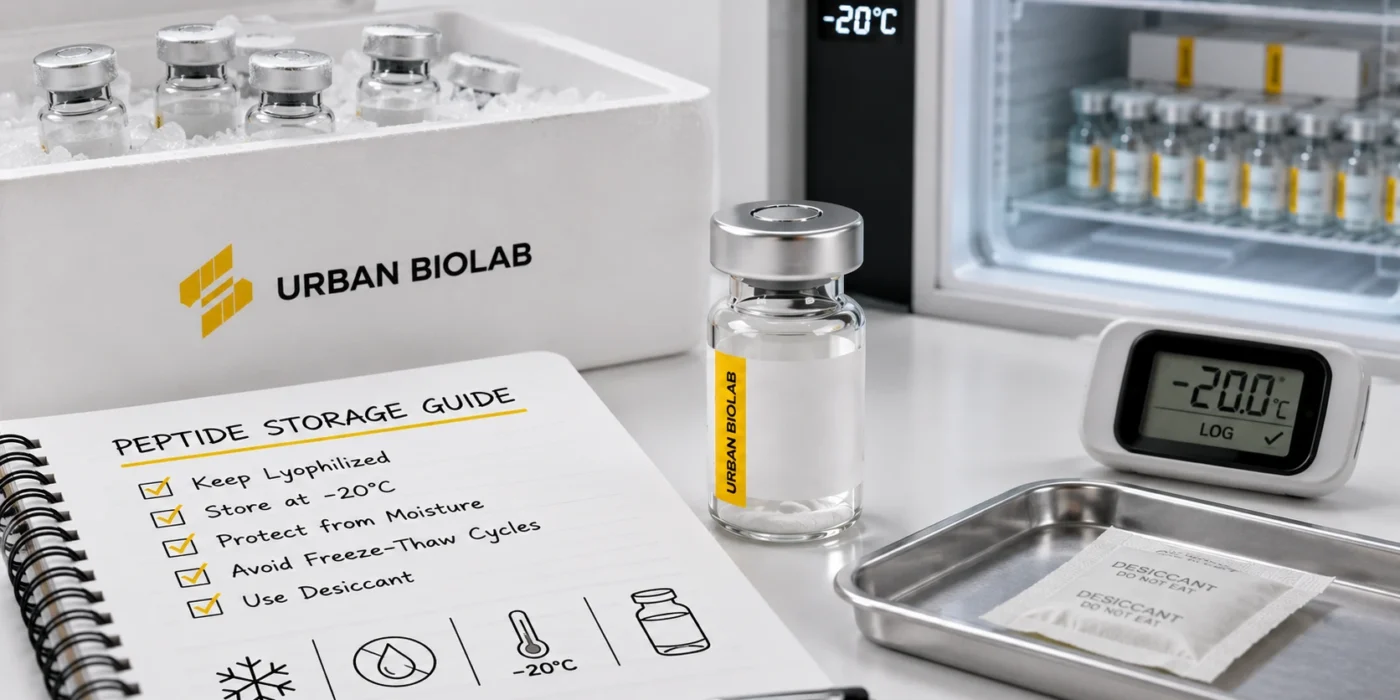
Unreconstituted lyophilized peptides should be stored at -20°C for long-term stability, though many remain viable at standard refrigeration temperatures (2–8°C) for shorter windows. Repeated freeze-thaw cycles are more damaging than a stable temperature, however cold — so if you’re accessing a vial regularly, consider reconstituting only the volume you need rather than freezing and thawing the entire stock repeatedly.
Light Exposure
Many peptides contain amino acid residues — tryptophan, tyrosine, methionine — that are susceptible to photo-oxidation. Amber vials and opaque storage boxes aren’t cosmetic packaging choices; they meaningfully extend shelf life by blocking UV and visible light that would otherwise slowly break down these residues.
Moisture and Reconstitution
Once reconstituted with bacteriostatic water or an appropriate solvent, a peptide’s stability window shrinks dramatically — typically to a matter of weeks, even under refrigeration. Reconstituted solutions should always be kept cold and used within the timeframe your specific research protocol calls for, discarding rather than stretching a solution past its known stability window.