
Retatrutide Canada
Quick answer: can you get retatrutide in Canada?
Not as a prescription — not yet. The pharmaceutical version of retatrutide (Eli Lilly) is still in clinical trials, and no Canadian physician can legally prescribe it today. However, Canadians can access retatrutide today through specialized research peptide suppliers, who operate in a different regulatory space than pharmacies.
Here are the numbers that matter, up to date as of September 2026:
- Phase 2 clinical data: 24.2% average weight loss over 48 weeks at the 12 mg dose — ahead of both Ozempic (14.9%) and Mounjaro (20.9%).
- Phase 3 results (announced July 2026): up to 30.3% average weight loss at 104 weeks in the pivotal TRIUMPH-1 trial — approaching bariatric surgery-level results.
- FDA approval: now expected late 2027 to 2028 (Lilly plans to file its application in Q1 2027).
- Health Canada approval: typically 6–18 months after the FDA, pointing to 2028–2029 at the earliest.
Disclaimer: Retatrutide is an investigational drug. It is not approved by Health Canada or the FDA for any use. Research peptides are sold for laboratory research purposes only, not for human consumption. This article is educational and not medical advice — always consult a qualified physician before using any peptide.
What is retatrutide, and why all the excitement?
Retatrutide is the next evolution of weight-loss medication. Where Ozempic (semaglutide) activates one receptor pathway and Mounjaro (tirzepatide) activates two, retatrutide is a triple agonist — it activates GIP, GLP-1, and glucagon receptors at once.
The glucagon component is the differentiator. GLP-1 and GIP primarily reduce appetite; glucagon increases energy expenditure through thermogenesis, so your body burns more calories at rest. Combined, the three pathways create a calorie-deficit “one-two punch” that neither Ozempic nor Mounjaro can match — and they appear to counterbalance each other’s side effects.
| Medication | Mechanism | Avg weight loss (trials) | Available in Canada |
|---|---|---|---|
| Semaglutide (Ozempic/Wegovy) | Single agonist (GLP-1) | 14.9% | Yes, prescription |
| Tirzepatide (Mounjaro/Zepbound) | Dual agonist (GIP + GLP-1) | 20.9% | Limited, prescription |
| Retatrutide | Triple agonist (GIP + GLP-1 + Glucagon) | 24.2% (Ph 2) / up to 30.3% (Ph 3) | Research peptide only |
Where retatrutide stands right now
Three facts shape the Canadian picture in September 2026:
- Phase 3 trials are complete and successful. Lilly’s TRIUMPH program delivered strong results in July 2026 — up to 30.3% average weight loss at 104 weeks, with 65.3% of 12 mg participants reaching a BMI under 30 AJMC.
- Regulatory submission is coming in Q1 2027. After a dispute with the FDA over whether retatrutide is a drug or a biologic, Lilly confirmed it will file a Biologics License Application in early 2027 BioSpace.
- Early access exists for a narrow patient group. Since August 2026, Lilly has allowed defined groups of patients to apply for early access to the drug AJMC.
The realistic Canadian timeline
| Milestone | Expected |
|---|---|
| Research peptide availability | Available now |
| FDA approval | Late 2027 – 2028 |
| Health Canada approval | 2028 – 2029 |
| Provincial formulary / insurance coverage | 2029 – 2030 (varies by province) |
How Canadians can access retatrutide now
1. Research peptide suppliers (the realistic option today)
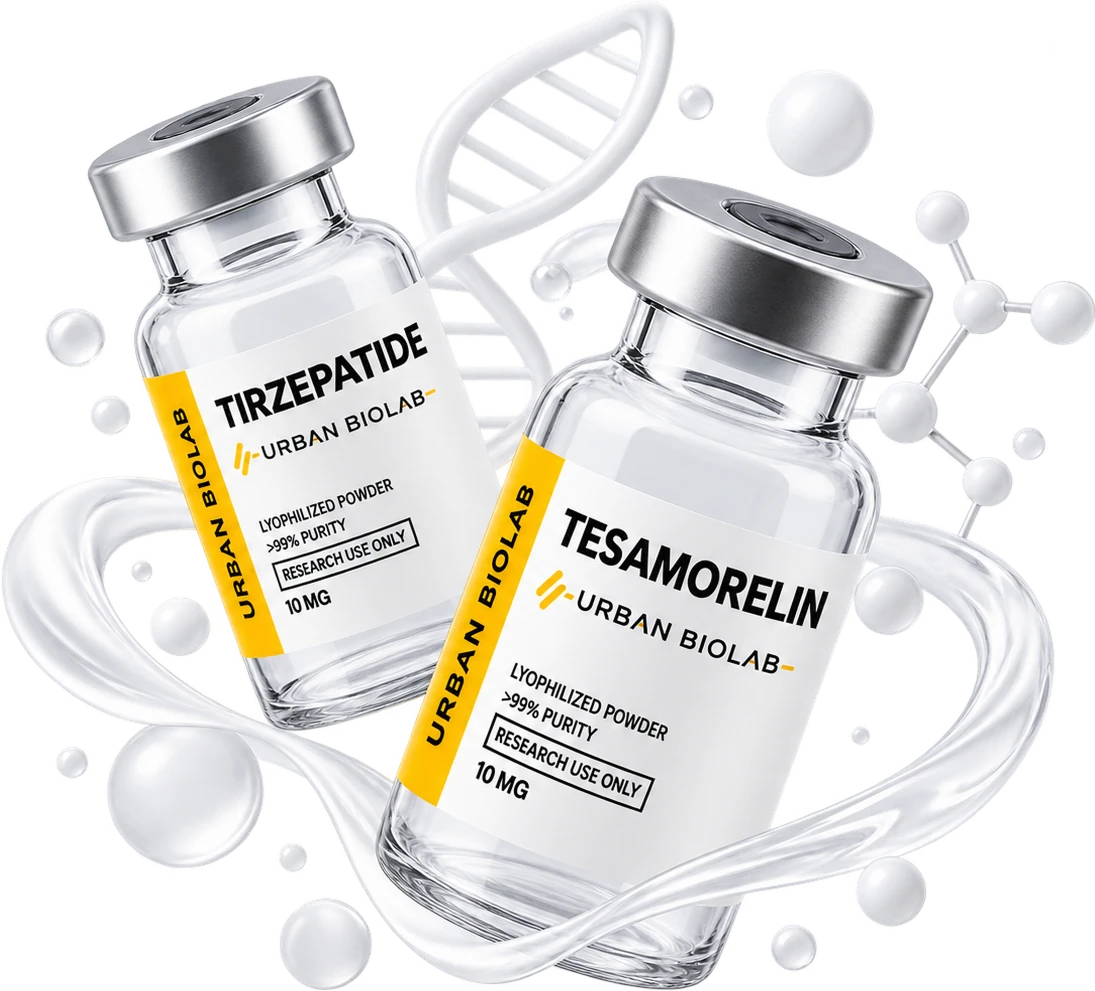
Research peptides occupy a distinct legal category in Canada. Sold explicitly for research purposes rather than human consumption, they sit outside Health Canada’s pharmaceutical oversight. Canadian suppliers like Urban Biolab offer third-party-tested retatrutide with domestic shipping.
Why Canadian suppliers make sense for researchers:
- Domestic shipping within 2–4 days, priced in CAD — no customs, no surprise exchange rates
- Third-party lab testing with batch-specific Certificates of Analysis
- Customer support during Canadian business hours
2. Clinical trial participation
Lilly’s trials include international sites, though Canadian locations remain limited. Participation means free medication and close monitoring, but also frequent visits over 48–104 weeks and the chance of placebo. Search ClinicalTrials.gov for currently recruiting Canadian sites.
3. Waiting for pharmaceutical approval
The safest, most traditional path — but a 2–3 year wait. Many Canadians start with Ozempic or Mounjaro now, then transition to retatrutide when it arrives.
A note on the legal landscape: Eli Lilly has begun actively targeting sellers of unauthorized retatrutide, calling on platforms, payment companies, and regulators to shut down what it calls the “black market” for the drug Lilly Investor Relations. Buyers and suppliers should follow this development closely.
How to verify any research peptide supplier (do not skip this)
Because research peptides aren’t pharmaceutically regulated, the burden of verification falls on you. A supplier should be able to show you, per batch:
- ✅ Third-party HPLC testing showing purity of 98% or higher
- ✅ Mass spectrometry confirming the molecular identity
- ✅ A Certificate of Analysis with matching batch number and date
- ✅ Sterility testing for injectable preparations
- ✅ Clear reconstitution and storage instructions
Never buy from a supplier that can’t produce batch-specific testing documentation. The money saved isn’t worth injecting an impure or misidentified compound.
Storage and reconstitution basics
- Before reconstitution: store lyophilized (freeze-dried) peptide in a freezer at −20 °C, away from light.
- Reconstitution: use bacteriostatic water, not plain sterile water — the preservative allows multiple withdrawals. For a 10 mg vial, most researchers add 2 ml of bacteriostatic water for a 5 mg/ml concentration.
- After reconstitution: refrigerate at 2–8 °C and use within 4–6 weeks.
What the clinical data actually shows
Beyond weight loss, trial participants saw meaningful metabolic improvements:
- A1C reduced by 2.02% on average in participants with type 2 diabetes
- Triglycerides down 28%
- Blood pressure down 6.8 mmHg systolic
- 91% of participants maintained their weight loss through week 48 while on treatment
Who responds best? The strongest predictor of success was early response: participants who lost 5% by week 12 had an 87% chance of reaching 15%+ by week 48. Previous GLP-1 use did not diminish retatrutide’s effect — relevant for Canadians who’ve plateaued on Ozempic.
Dosing protocols and administration (research contexts only)
Clinical trials used a gradual escalation to minimize gastrointestinal side effects:
| Weeks | Dose (weekly) | What to expect |
|---|---|---|
| 1–4 | 2 mg | Tolerability phase; minimal weight loss |
| 5–8 | 4 mg | Appetite suppression begins |
| 9–12 | 8 mg | Active weight loss phase begins |
| 13+ | 12 mg maintenance | Maximum therapeutic dose |
Many researchers run a more conservative variation — extending phases to six weeks if side effects are significant, or stopping at 8 mg if results are satisfactory. Retatrutide is administered by subcutaneous injection in the abdomen, thigh, or upper arm, rotating sites weekly.
Side effects and how to manage them
Gastrointestinal effects dominate, peaking during escalation (weeks 4–8) and largely resolving by week 12:
- Very common (20%+ at 12 mg): nausea 28%, diarrhea 24%, constipation 21%
- Common(10–20%): vomiting 17%, decreased appetite 15%, fatigue 12%
- Less common (5–10%): dizziness 8%, abdominal pain 7%, injection site reactions 5%
Practical management: smaller frequent meals for nausea; 25–30 g fiber + hydration for constipation; avoid sugar alcohols and dairy for diarrhea; 100 g+ protein daily for fatigue.
Seek medical attention immediately for severe abdominal pain radiating to the back (possible pancreatitis), right-upper-abdomen pain after fatty meals (gallbladder), or signs of dehydration.
Cost comparison (CAD)
| Option | Monthly cost (est.) |
|---|---|
| Canadian research peptide, maintenance dose | $200–$400 |
| US research peptide + exchange + shipping | $350–$550 |
| Ozempic, retail without insurance | $400–$600 |
| Projected pharmaceutical retatrutide (post-approval) | $1,200–$1,600 (est.) |
Add $30–$50/month for supplies (bacteriostatic water, syringes, swabs) and consider budgeting $150–$300 per quarter for bloodwork monitoring.
Provincial coverage: what to expect later
Provinces generally cover GLP-1s for diabetes indications only — obesity alone rarely qualifies. Ontario’s ODB, BC’s PharmaCare, Alberta’s Drug Benefit List, and Quebec’s RAMQ all follow similar patterns. Private insurance varies widely. Research peptides are never covered; they’re a personal expense.
The bottom line for Canadians
Retatrutide is the most promising weight-loss compound in development — and the gap between today and pharmacy availability is now roughly 2–3 years. For Canadians who want access now, a verified Canadian research peptide supplier is the practical bridge. For everyone else, the prescription path arrives around 2028–2029, likely with better coverage by 2030.
Whichever path you choose: verify your source, start low and slow, monitor with bloodwork, and talk to a physician.
FAQ
Can I get a retatrutide prescription in Canada right now?
No. It’s not approved by Health Canada, so no Canadian physician can legally prescribe it. Current options are research peptide suppliers or clinical trials.
Is it legal to buy research peptides in Canada?
Research peptides sold for research purposes, without therapeutic claims, are legal to purchase and possess in Canada. Responsibility for use sits with the individual researcher.
How does retatrutide compare to Ozempic?
In trials: about 24.2% average weight loss (Phase 2) and up to 30.3% (Phase 3) versus roughly 14.9% for Ozempic — the difference comes from retatrutide’s triple-receptor mechanism.
Can I use it if Ozempic stopped working for me?
Trial data suggests previous GLP-1 use doesn’t diminish retatrutide’s response. Many who plateaued on Ozempic report renewed progress.
Will I regain weight if I stop?
Like all obesity medications, retatrutide works as a chronic treatment. Regain typically begins within 6–12 months of discontinuation; lower maintenance doses often sustain results.
Is retatrutide safe long-term?
Phase 2 safety data extends to 48 weeks, with serious events rare (pancreatitis 0.3%, gallbladder events 1.4%). Phase 3 includes extended safety monitoring. Long-term data is still being collected.
Glossary
- Triple agonist — activates GIP, GLP-1, and glucagon receptors simultaneously
- GLP-1 — appetite and blood-sugar regulating hormone (target of Ozempic)
- GIP — hormone involved in insulin secretion and fat metabolism
- HPLC — lab method that verifies peptide purity (98%+ expected)
- Mass spectrometry — confirms the molecular identity of the peptide
- COA — Certificate of Analysis; batch-specific lab documentation
- Lyophilized — freeze-dried; requires reconstitution before use
- Bacteriostatic water — sterile water with 0.9% benzyl alcohol preservative
- Thermogenesis — heat production that burns calories; boosted by glucagon activation
References
- Jastreboff AM, et al. Triple-hormone-receptor agonist retatrutide for obesity: a phase 2 trial. NEJM, 2023. https://www.nejm.org/doi/full/10.1056/NEJMoa2301972
- Lilly Phase 3 TRIUMPH-1 results, July 2026. https://www.prnewswire.com/news-releases/lillys-triple-agonist-retatrutide-delivered-powerful-weight-loss-in-pivotal-phase-3-obesity-trial-302778859.html
- Retatrutide approval timeline and status. https://www.glp3.wiki/articles/fda-approval-timeline
- Lilly expands retatrutide early access, Aug 2026. https://www.ajmc.com/view/lilly-expands-retatrutide-access-amid-doctor-pushback
- Lilly calls for crackdown on unauthorized retatrutide market, Aug 2026. https://investor.lilly.com/news-releases/news-release-details/lilly-calls-online-platforms-payment-companies-and-regulators
- ClinicalTrials.gov retatrutide registry. https://clinicaltrials.gov/search?cond=Retatrutide