Beyond Single-Pathway Treatments
Conventional hair loss treatments follow a predictable script: minoxidil twice daily, perhaps finasteride if you accept the risks, and a follow-up appointment in six months. While these approaches have merit—minoxidil produces results in roughly 40% of men with androgenetic alopecia, and finasteride halts progression in about 80% of users—they share a fundamental limitation. They target isolated pathways in what is inherently a multi-factorial problem.
Hair follicles don’t miniaturize because one biological process fails. They shrink as multiple systems deteriorate simultaneously: the extracellular matrix degrades, inflammatory cytokines accumulate, vascular networks atrophy, stem cell populations decline, and DHT sensitivity increases. Addressing only one of these mechanisms leaves considerable therapeutic potential untapped.
This is where GHK-Cu enters the conversation. This naturally occurring copper-binding tripeptide offers something rare in hair restoration: a compound that addresses follicular miniaturization through multiple simultaneous mechanisms rather than a single isolated pathway.
Understanding GHK-Cu
Glycyl-L-histidyl-L-lysine copper (GHK-Cu) is a tripeptide your body produces naturally. Plasma concentrations measure approximately 200 ng/mL at age 20, declining to roughly 80 ng/mL by age 60. This decline correlates with accelerating tissue degradation, slower wound healing, and progressive hair follicle miniaturization.
Supplementing GHK-Cu restores these levels and reactivates regenerative processes that slow with aging. The peptide works through several distinct mechanisms relevant to hair restoration:
Follicular Stem Cell Activation
Hair growth depends on specialized stem cell populations residing in the follicular bulge region. Research published in the Journal of Investigative Dermatology demonstrates that GHK-Cu directly amplifies these stem cell populations, increasing follicle size and density. The peptide achieves this through integrin receptor activation—when GHK-Cu binds to integrin α2β1 on stem cell surfaces, it triggers signaling cascades that shift cells from quiescence into active proliferation.
Vascular Endothelial Growth Factor Stimulation
Healthy follicles require robust blood supply. As follicles miniaturize, their supporting vascular networks atrophy. GHK-Cu stimulates production of vascular endothelial growth factor (VEGF) in a dose-dependent manner, promoting new blood vessel formation around treated follicles. Studies in Biomaterials Science show mesenchymal stem cells treated with GHK-Cu significantly increase VEGF secretion.
Local DHT Modulation
Dihydrotestosterone drives androgenetic alopecia, but the standard medical approach—finasteride or dutasteride—blocks 5-alpha reductase systemically, reducing DHT throughout the entire body with all the hormonal consequences that entails. The copper ion in GHK-Cu provides a different mechanism. Research demonstrates that copper inhibits type 1 5-alpha reductase activity by up to 90% at appropriate concentrations. Type 1 5-alpha reductase predominates in scalp tissue, while type 2 predominates in reproductive tissues. This selectivity means you get DHT reduction where you need it without systemic suppression.
Collagen Synthesis and Matrix Remodeling
Hair follicles sit embedded in dermal collagen matrix, which provides mechanical support and biochemical signaling that regulates follicle cycling. GHK-Cu increases collagen production by up to 70% in human dermal fibroblasts at optimal concentrations around 1 nanomolar. The peptide simultaneously regulates matrix metalloproteinases (MMPs) that break down collagen, creating balanced remodeling rather than net degradation.
Anti-Inflammatory Action
Chronic low-grade inflammation accelerates follicular miniaturization. Inflammatory cytokines like TNF-alpha and IL-1 beta accumulate in balding scalps, shortening anagen phase and triggering premature entry into catagen. GHK-Cu suppresses these inflammatory mediators substantially, creating a microenvironment conducive to sustained growth.
How GHK-Cu Compares to Minoxidil
Direct comparisons provide the most useful data when evaluating treatment options. Animal studies using C57BL/6 mice (the standard model for hair growth research) found that GHK-Cu produced comparable follicle size increases and hair shaft thickness improvements relative to 5% minoxidil.
| Parameter | GHK-Cu (1-2 mg daily injectable) | 5% Minoxidil (topical twice daily) |
|---|---|---|
| Follicle entry into growth phase | 6-8 days | 9 days |
| Visible density improvement | 12-16 weeks | 16-24 weeks |
| Mechanisms of action | Multi-pathway | Single pathway |
| Systemic regenerative effects | Yes | No |
| Application frequency | Once daily | Twice daily required |
| Dermatitis/irritation risk | Minimal | Moderate (10-15% experience irritation) |
| Cardiovascular considerations | None | Contraindicated with heart conditions |
| Combination synergy potential | High | Moderate |
Canadian clinics incorporating GHK-Cu into hair restoration protocols report outcomes aligning with research findings. Patients typically see initial improvements around the 12-week mark, with optimal results emerging after 6 months of consistent use. Typical outcomes include:
- 40-60% increase in measurable hair density
- 20-35% increase in average hair shaft diameter
- Extended anagen phase duration (2-4 months longer growth phase)
- Reduced shedding during telogen phase
- Improved scalp skin quality
Response rates vary based on individual factors including age, duration of hair loss, and baseline follicle miniaturization severity. Men under 40 with recent-onset hair loss tend to respond better than older individuals with long-standing extensive baldness.
The Complete Protocol
Implementing GHK-Cu effectively requires understanding optimal dosing, application methods, and complementary interventions.
Injectable Protocol (Primary Recommendation)
Subcutaneous injection provides the most reliable bioavailability and systemic regenerative effects.
Standard Dosing: 1-2 mg daily via subcutaneous injection
Injection Sites: Abdomen (2+ inches from navel), outer thighs, upper arms, or upper outer quadrant of buttocks. Rotate sites consistently.
Reconstitution: For 50 mg vials, add 3 mL bacteriostatic water to achieve approximately 16.7 mg/mL concentration. For a 1 mg dose, draw 6 units on a 100-unit insulin syringe. For 2 mg, draw 12 units.
Managing Injection Site Discomfort: GHK-Cu can cause mild to moderate injection site irritation due to copper peptide sensitivity. This typically presents as temporary redness, slight swelling, or a small knot lasting several hours to 2 days. Solutions include diluting with additional bacteriostatic water or combining with BPC-157, which reportedly reduces injection discomfort substantially.
Topical Protocol (Complementary or Standalone)
Topical application targets scalp tissue directly with lower systemic absorption—ideal for those hesitant about injections or seeking to complement injectable protocols.
Concentration: 0.5-2% GHK-Cu solution
Application: Apply to clean, dry scalp nightly. Use dropper or spray application followed by 2-3 minute gentle massage. No rinsing required.
Combination Approach (Optimal Results)
The most effective protocols combine systemic administration with direct scalp application: 1-2 mg daily subcutaneous injection plus 0.5-1% topical solution applied nightly. This dual approach provides both systemic regenerative benefits and concentrated local effects.
Timeline Expectations
Understanding realistic timelines prevents premature discontinuation. Hair growth occurs slowly because follicular cycling operates on month-long timescales.
Weeks 4-8: Subtle scalp health improvements become noticeable first—reduced inflammation, less itching, improved skin quality. These changes indicate the protocol is working even before visible hair changes emerge.
Weeks 12-16: Visible changes in hair thickness and density begin appearing. Existing hairs may appear slightly thicker. New vellus hairs start emerging in previously sparse areas.
Weeks 24+: Optimal results manifest—measurable density improvements, visible coverage enhancement, thicker hair shafts, extended growth phase duration.
Progressive Dosing Strategy
Weeks 1-4: 1 mg once daily to establish baseline tolerance and monitor for injection site reactions
Weeks 5-8: 2 mg once daily (standard maintenance dose for most users)
Weeks 9-12: Continue 2 mg daily, assess early response, take comparison photos
Weeks 13-24: 2 mg once daily or 2 mg three times weekly
Cycling Protocols
Most protocols recommend cycling rather than continuous use to prevent receptor desensitization:
- Standard Cycle: 8-12 weeks on, 3-6 weeks off
- Conservative Cycle: 4-6 weeks on, 2-4 weeks off
- Extended Cycle: 12-16 weeks on, 4-6 weeks off
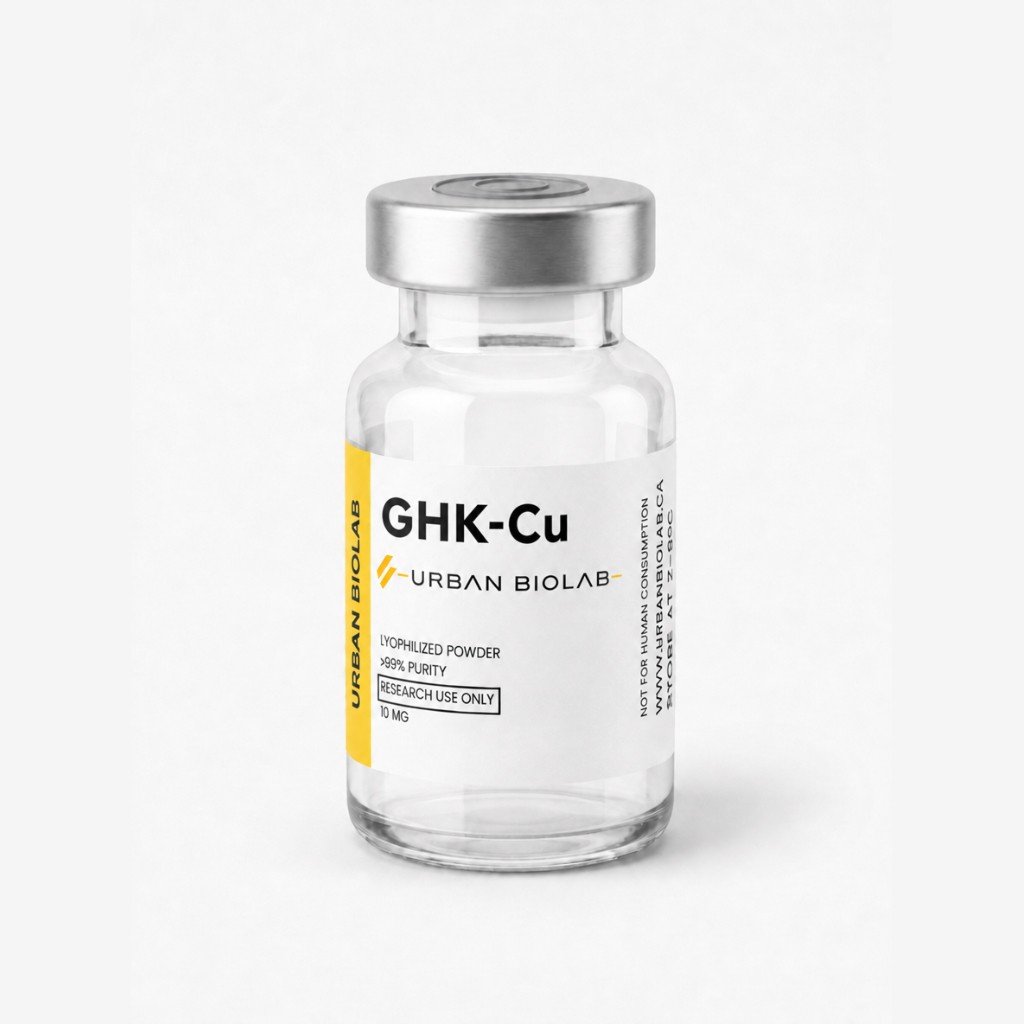
GHK-Cu 80MG
GHK-Cu 80mg is a copper-binding research peptide complex widely studied for its role in cellular signaling, tissue remodeling, and regenerative biology pathways. In laboratory research settings, GHK-Cu has attracted interest for investigations into wound-healing models, collagen synthesis pathways, and antioxidant activity, making it a valuable compound in skin, tissue, and cellular regeneration research.
Maximizing Results: Combination Protocols
GHK-Cu + BPC-157
BPC-157 provides additional angiogenic effects, accelerates tissue repair, and reportedly reduces injection site discomfort from copper peptides. Mix 1-2 mg GHK-Cu with 0.25-0.5 mg BPC-157 in the same injection daily.
GHK-Cu + Microneedling
Microneedling creates controlled micro-injuries that trigger wound healing responses while simultaneously enhancing topical absorption. Research published in the International Journal of Dermatology demonstrates that microneedling alone produces measurable hair growth improvements; adding GHK-Cu application post-microneedling enhances results substantially.
Protocol:
- Microneedle scalp (0.5-1.5 mm depth) every 10-14 days
- Apply 0.5-1% topical GHK-Cu within 10-15 minutes after microneedling
- Continue daily injectable GHK-Cu regardless of microneedling timing
GHK-Cu + Platelet-Rich Plasma
PRP treatments every 4-6 weeks combined with daily GHK-Cu create powerful synergistic effects. PRP delivers concentrated growth factors while GHK-Cu maintains regenerative signaling between treatments. Combination approaches produce superior outcomes compared to PRP alone.
Scalp Application Techniques
The scalp presents unique challenges—thicker stratum corneum, dense hair coverage, higher sebum production. Several techniques enhance topical penetration:
Pre-Application: Cleanse scalp thoroughly to remove sebum and product buildup. Use clarifying shampoo 1-2 hours before application. Dry scalp completely.
Application Method: Part hair in sections to expose scalp directly. Apply solution onto scalp skin, not hair shafts. Use 2-3 minute circular massage.
Post-Application: Leave on overnight without rinsing. Avoid touching or scratching scalp for several hours.
Regional Response Patterns
- Vertex (Crown): Typically shows best response due to richer vascular supply
- Frontal Hairline: Most visible area but historically more resistant; requires consistent application
- Temporal Recession: Often shows intermediate response; benefits from combination with microneedling
Tracking Progress
Photography Documentation
Take standardized photos every 4 weeks under consistent lighting conditions. Use natural indirect lighting near a window on an overcast day. Capture top of head, crown, frontal hairline, and temporal regions at the same angle and distance each time.
Hair Density Measurements
Define a specific 1 cm² area in the most affected region. Count visible hairs within that area using magnification. Recount the same location monthly. Density typically increases 5-10% by week 12, 15-25% by week 24, and 30-50% by 12 months in responders.
Shed Rate Tracking
Count hairs lost daily for one week before starting to establish baseline. Include hairs on pillow, in shower, and on brush. Initial shed rate might increase slightly during weeks 4-8 (shedding of miniaturized hairs), then should decrease substantially below baseline by weeks 12-16.
Cost Analysis
| Treatment | Monthly Cost (CAD) | Annual Cost (CAD) |
|---|---|---|
| 5% Minoxidil (generic) | $20-35 | $240-420 |
| 1 mg Finasteride (generic) | $15-30 | $180-360 |
| PRP Hair Restoration | $200-400/session | $2400-4800 (year 1) |
| GHK-Cu Injectable | $90-150 | $1080-1800 |
| GHK-Cu Topical | $60-100 | $720-1200 |
| GHK-Cu Combined | $150-250 | $1800-3000 |
While GHK-Cu costs more than generic minoxidil or finasteride, it provides multi-system regenerative benefits beyond hair restoration alone—improved skin quality, accelerated wound healing, enhanced overall tissue repair. The side effect profile also differs significantly; GHK-Cu avoids the sexual dysfunction and mood changes reported by approximately 15-20% of finasteride users.
Frequently Asked Questions
How long does GHK-Cu take to show results?
Expect subtle improvements in scalp health within 4-8 weeks, visible changes in hair thickness and density around 12-16 weeks, and optimal results after 6 months of consistent use.
Should I use injectable or topical GHK-Cu?
Injectable provides the most reliable bioavailability and systemic benefits. Topical targets scalp directly with lower systemic absorption. Combination protocols produce optimal results by addressing hair loss both systemically and locally.
Can I combine GHK-Cu with finasteride or minoxidil?
Yes. GHK-Cu works through different mechanisms than finasteride (DHT reduction) or minoxidil (vasodilation), making combinations safe and potentially more effective than single-agent therapy.
Does GHK-Cu work for female pattern hair loss?
Research demonstrates effectiveness in both male and female subjects. The mechanisms apply regardless of gender. Women often show excellent response without the hormonal concerns associated with finasteride.
What are the side effects?
Injectable GHK-Cu primarily causes injection site reactions that typically resolve within hours to 2 days. Topical application rarely produces side effects beyond minor scalp irritation in sensitive individuals. GHK-Cu does not cause the sexual dysfunction, depression, or cardiovascular effects associated with finasteride and minoxidil respectively.
Can GHK-Cu regrow hair on a completely bald scalp?
Results depend on follicle status. GHK-Cu can reactivate dormant follicles and enlarge miniaturized ones, but cannot regenerate follicles that have completely died. Best results occur in areas with existing vellus hairs or recently thinned regions. Completely smooth bald areas present for 5+ years show limited response.
Do I need to use GHK-Cu forever?
Like most hair loss treatments, discontinuing results in gradual loss of gains over several months. However, cycling protocols allow breaks while maintaining results. Long-term maintenance typically requires continued use, though potentially at lower frequency after initial restoration.
What’s the best way to enhance GHK-Cu effectiveness?
Combine with microneedling every 10-14 days. Consider adding BPC-157 to reduce injection discomfort. Ensure adequate protein intake (1.6-2.2 g/kg body weight daily). Optimize vitamin D, iron, and zinc levels. Address underlying inflammation through diet, stress management, and sleep.
Key Considerations
Hair loss treatments work best when implemented early, before extensive follicular loss occurs. Waiting until you’ve lost 50% or more of hair density significantly reduces treatment efficacy across all interventions.
The multi-pathway approach addresses limitations inherent in single-agent therapy. Minoxidil alone, finasteride alone, even PRP alone all leave multiple regenerative pathways unstimulated. GHK-Cu fills these gaps.
Success requires patience, consistency, and realistic expectations. Hair cycles operate on timescales of months, not weeks. Document everything—take photos, measure density, track shedding. Data drives decisions more reliably than subjective impressions. Six months from now, you’ll want objective evidence of improvements that occurred so gradually you barely noticed them developing.
This article was clinically reviewed by Dr. Sarah Pemberton, MD, FRCPC, a board-certified dermatologist practicing in Edmonton, Alberta, specializing in medical and surgical hair restoration.