Educational disclaimer: This is not medical advice, diagnosis, or treatment. BPC-157 and TB-500 are research compounds, are not approved for general medical use in many jurisdictions, and carry legal, contamination, infection, and dosing risks. The protocols below are summarized from the source article’s reported clinical/anecdotal material. Do not start, stop, or change any treatment based on this article. Talk to a qualified clinician who knows your history and local regulations.
The basic problem: white tissue heals poorly
Muscle is red, vascular, and relatively quick to repair. Tendon, ligament, and meniscus are “white” tissue: they have poor blood supply. When they are injured, the body may send inflammatory and repair signals, but the supply lines are weak. The result can be a chronic loop of pain, degeneration, and incomplete remodeling.
The Wolverine Stack is the popular name for combining BPC-157 and TB-500. The source article’s core argument is that they work from two different angles: one improves the supply route, the other mobilizes the repair cells.
The two players
BPC-157: the supply-line builder
BPC-157 is a 15-amino-acid sequence derived from a protein found in gastric juice. The source emphasizes its role in angiogenesis—new blood-vessel formation—through upregulation of VEGF and modulation of nitric oxide signaling. In plain terms: it is claimed to help build more microcirculation around poorly vascularized tissue, while limiting some of the oxidative stress that a sudden blood-flow increase could cause.
TB-500: the cell-mobilizer
TB-500 is a synthetic fragment related to thymosin beta-4. The source describes it as acting on actin, the cell’s internal scaffolding. By keeping actin in a more deployment-ready state, TB-500 is claimed to improve cell migration—bringing fibroblasts and other repair cells to the injury site. The article’s metaphor is useful: BPC-157 builds roads; TB-500 sends workers.
Why they are paired
The source argues that using one without the other is incomplete. BPC-157 may improve blood supply; TB-500 may improve cell movement. The combination is claimed to be more useful than either alone, though high-quality human evidence remains limited.
Receptor sensitivity and growth-hormone signaling
The article also cites preclinical work suggesting BPC-157 can increase growth-hormone receptor density on tendon fibroblasts. The interpretation is that BPC-157 may make injured tissue more responsive to the growth hormone and repair signals already present in the body, rather than requiring exogenous HGH. That is a plausible mechanism in the source’s framing, but it should be treated as preclinical/mechanistic, not proven clinical benefit.
Reconstitution: the math people get wrong
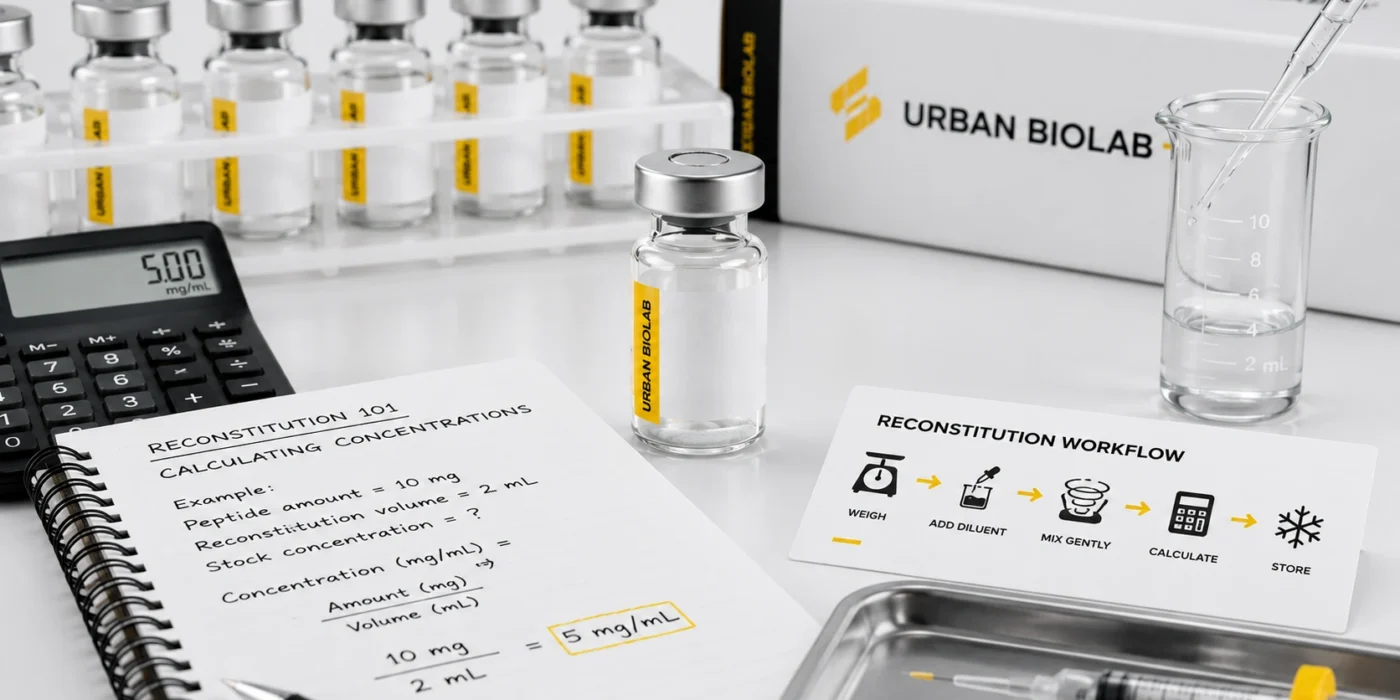
The source recommends simplifying the math by always adding 2 mL of bacteriostatic water to the vial, regardless of whether it is 5 mg or 10 mg.
| Vial | Water added | Concentration | Example draw |
|---|---|---|---|
| 5 mg BPC-157 | 2.0 mL | 2.5 mg/mL | 20 units = 0.5 mg |
| 10 mg TB-500 | 2.0 mL | 5.0 mg/mL | 10 units = 0.5 mg |
Storage: Once reconstituted, keep refrigerated and protected from light. The source says BPC-157 is relatively robust for roughly 3–4 weeks; TB-500 is more fragile and should be used within about 14 days.
Important safety note: Reconstitution and injection carry contamination and infection risks. Use sterile technique and proper sharps disposal. The source warns not to mix BPC-157 and TB-500 in the same syringe because TB-500 is chemically fragile and BPC-157 is acidic.
Reported protocols from the source
These are the source’s reported protocols, not recommendations.
Protocol A: “Maintenance”
For chronic nagging pain, mild tendinopathy, or general joint stiffness in older athletes.
- BPC-157: 0.25 mg once daily, often at night
- TB-500: 2.5 mg once weekly
- Cycle: 8 weeks on, 4 weeks off
Protocol B: “Active Repair”
For acute grade-1 strains, tendonitis flares, or post-competition recovery.
- BPC-157: 0.5 mg daily, optionally split into 0.25 mg AM/PM
- TB-500: 5.0 mg per week, split into two 2.5 mg doses
- Cycle: about 6 weeks, then reassess
Protocol C: “Post-Surgical / High-Acute”
For grade 2–3 tears or post-operative recovery, described as aggressive.
- BPC-157: 1.0 mg daily, split 0.5 mg AM/PM
- TB-500 loading: 10 mg in week 1, split into 2.5 mg every other day
- TB-500 maintenance: 5 mg weekly afterward
- Cycle: 8–12 weeks maximum
The source author argues that TB-500 loading may be useful in acute cases because TB-500 is systemic and takes time to saturate. That is an anecdotal/clinical-observation claim, not established consensus.
Local vs. systemic injection
The source’s position:
- BPC-157: proximity may matter. It is described as having local autocrine signaling effects, so injecting near the injured area—but not directly into dangerous structures—may produce faster local effects.
- TB-500: treat it as systemic. Inject into ordinary subcutaneous fat such as the abdomen or glute; do not try to thread it into a painful joint.
The article gives basic subcutaneous injection advice: pinch skin, use a small insulin syringe, inject at about 45 degrees, inject slowly, and massage briefly. It also warns not to inject into a nerve or vessel; if bright red blood appears, withdraw and apply pressure.
Realistic timeline
The source emphasizes that peptides are not painkillers.
- Week 1: Often little or nothing. Angiogenesis is just beginning.
- Weeks 2–3: The “danger zone.” Inflammation may fall and pain may drop, but structural strength is not restored. Returning to heavy loading here can cause re-injury.
- Weeks 4–6: Collagen organization and structural integration. Isometric and slow eccentric loading may be appropriate under guidance.
- Week 8+: Remodeling phase. Vascular network and collagen alignment should be more established.
The source’s practical warning: absence of pain is not proof of healing. Pain is a lagging indicator.
The “bricks” stack: raw materials matter
Peptides are signals; they do not supply building material. The source recommends supporting collagen synthesis with:
| Compound | Source dosage | Rationale |
|---|---|---|
| Hydrolyzed collagen | 20 g daily | Glycine and proline for tendon matrix |
| Vitamin C | 1000 mg daily | Cofactor for collagen cross-linking |
| Copper bisglycinate | 2 mg daily | Cofactor for lysyl oxidase and tensile strength |
The source suggests taking collagen and vitamin C about 60 minutes before rehab exercise to pair substrate availability with mechanical stimulation.
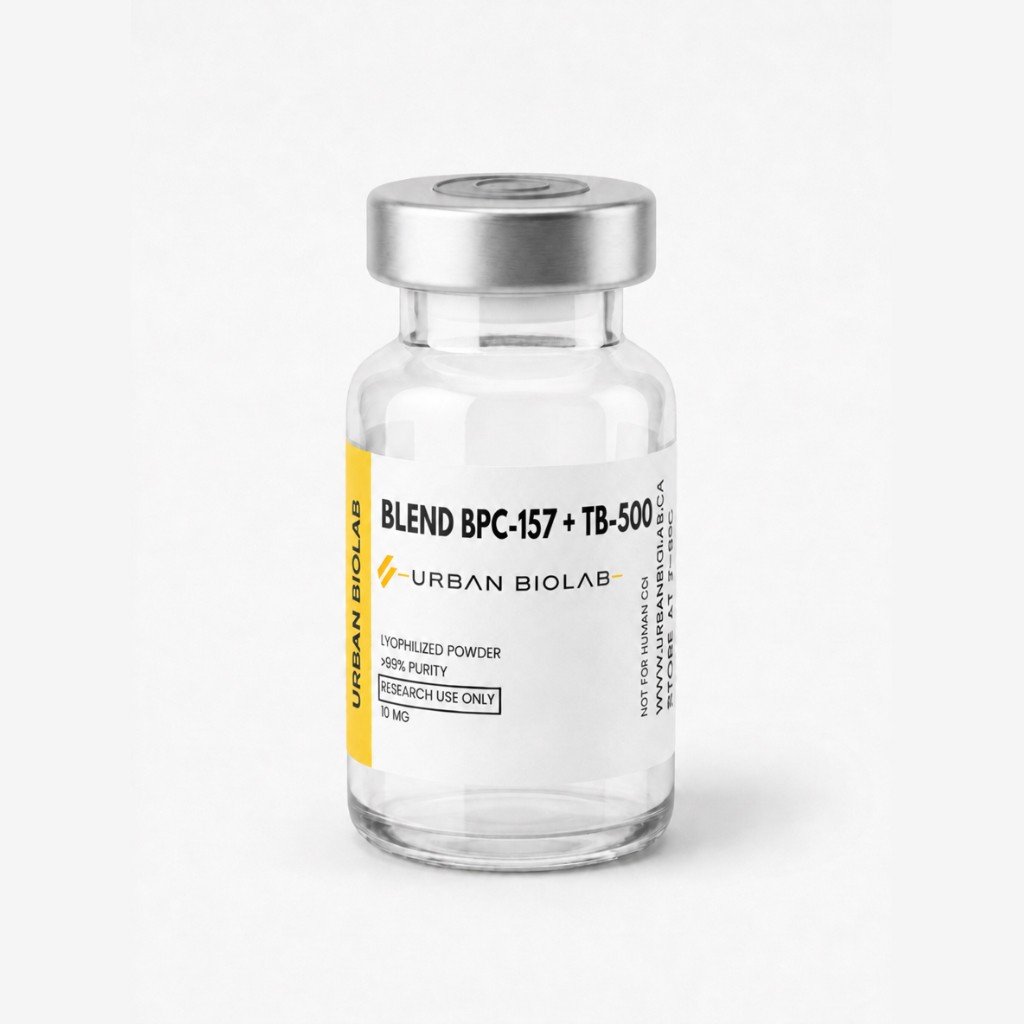
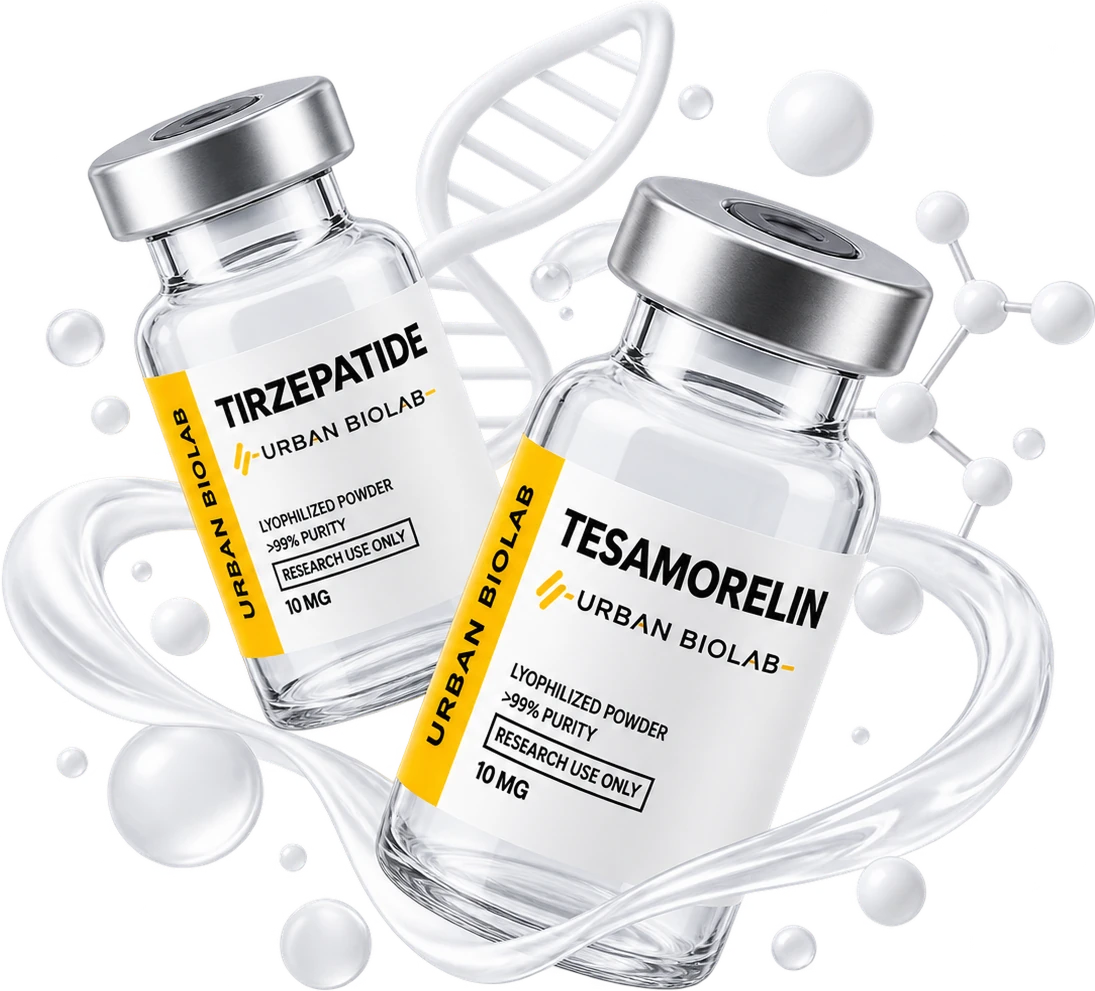
BPC-157 + TB-500 Blend 20MG
BPC-157 + TB-500 is a combined research peptide blend featuring two widely studied compounds known for their roles in tissue repair, cellular regeneration, and recovery-related signaling pathways. In laboratory research settings, this combination is of interest for investigations into connective tissue models, cell migration, angiogenesis, and regenerative biology, offering a complementary approach to studying complex repair mechanisms.
Things that can undermine the cycle
The source names three main “cycle killers”:
- NSAIDs such as ibuprofen or naproxen. The argument is that healing needs an acute inflammatory signal, and NSAIDs may blunt it. BPC-157 is described as modulating inflammation, not abolishing it.
- Alcohol. It inhibits mTOR, raises cortisol, and dehydrates tissue—all counterproductive to repair.
- Ice. The source argues that icing constricts blood vessels while BPC-157 is being used to grow them. It recommends heat instead for blood flow, while acknowledging that acute injury management is nuanced.
Injury-specific blueprints
The source gives targeted examples. These are site-specific anecdotes, not proven protocols.
Rotator cuff / supraspinatus
- BPC-157: subcutaneous injection into the lateral deltoid area, described as a regional-saturation approach.
- TB-500: systemic.
- Rehab: prioritize isometric external rotation—press the back of the hand into a doorframe and hold—rather than aggressive band internal rotation.
- Timeline: shoulders often take 10–12 weeks.
Tennis elbow / golfer’s elbow
- BPC-157: pinch skin about an inch from the painful elbow bone and inject subcutaneously.
- TB-500: systemic.
- Rehab: stop heavy gripping; use straps. Slow wrist pronation/supination with a hammer or FlexBar.
- Timeline: source does not give a fixed one, but emphasizes load management.
Patellar tendon / jumper’s knee
- BPC-157: inject into the VMO area or fat pad above the kneecap rather than directly over the kneecap.
- Rehab: Spanish squats—band behind knees, shins vertical, hold bottom position isometrically.
Achilles tendon
- BPC-157: avoid injecting near the Achilles itself; inject into calf fat higher up.
- Rehab: heavy slow calf raises with a long eccentric phase; do not bounce.
Troubleshooting common issues
- Red, itchy welt: often a histamine reaction to benzyl alcohol in bacteriostatic water. Let the syringe warm up; if persistent, the source suggests sterile saline, but warns saline-reconstituted vials must be used within about 48 hours.
- “Peptide flu” / lethargy: reported after large TB-500 doses; the source says it usually fades after a few injections.
- Plateau: possible receptor attenuation. The source suggests a 3-day BPC-157 washout, then resume.
- Hard lump: likely a subcutaneous depot; warm compress and massage, usually resolves in days.
How it compares with cortisone, PRP, and stem cells
The source’s comparison:
- Cortisone: cheap and fast pain relief, but catabolic and may weaken tendon.
- PRP: expensive and variable; results depend on blood quality and inflammation status.
- Stem cells: very expensive; may fail if injected into avascular scar tissue.
- Wolverine Stack: relatively low cost in the source’s framing, no pain during administration, and claimed to be consistent across age/blood quality. The source argues it can be used before stem cells to “build the soil.”
Women’s considerations
The source notes that estrogen is protective for tendons and increases collagen synthesis, while cycle-related hormone fluctuations can affect ligament laxity. It suggests BPC-157 may pair better with the follicular phase, though this is speculative. It also warns that TB-500 may cause temporary water retention, which can be more noticeable in women; increased water intake and dandelion root are mentioned as optional support.
Traveling with peptides
The source’s practical advice:
- Use a proper insulin cooling case or hard-shell diabetic travel case; do not rely on loose ice in a bag.
- For domestic travel, keep vials in original packaging and carry insulin syringes; do not pre-load syringes.
- For international travel, laws vary widely. The source advises taking a cycle break for short trips rather than risking customs seizure or legal trouble.
FAQ highlights
- Cancer risk: No evidence that BPC-157 initiates cancer, but angiogenesis could theoretically support an existing tumor. The source says avoid angiogenic peptides with active malignancy.
- Drug testing: Both are banned under WADA’s peptide hormone category and can be detected for weeks.
- Oral BPC-157: Standard acetate salt is destroyed by stomach acid; oral may be more relevant for gut issues, injection for tendon issues.
- Stacking with TRT/HGH: The source claims synergy but this is not established as safe or effective in humans.
- TB-500 and heart growth: The source says no human evidence at 5 mg/week; concern comes from high-dose animal studies.
- Bacteriostatic water: Discard about 28 days after opening.
- Nerve/vessel hit: Withdraw, apply pressure; nerve irritation may last a few days.
Glossary
- Angiogenesis: formation of new blood vessels.
- Lyophilized: freeze-dried powder.
- Subcutaneous: into the fat layer under the skin.
- Reconstitution: mixing powder with solvent.
- Fibroblasts: cells that produce collagen and extracellular matrix.
- VEGF: vascular endothelial growth factor, a signal for blood-vessel growth.