
A closer look at the 86% liver fat reduction data and what it means for metabolic health
The Headline Numbers
Retatrutide has generated substantial excitement in metabolic medicine, and for good reason. In Phase 2 clinical trials, participants receiving the 12mg dose experienced an average 86% reduction in liver fat over 48 weeks. Perhaps more remarkably, 93% of those on the highest dose achieved normal liver fat levels—below 5%—by the end of the study period.
These aren’t marginal improvements. They represent some of the most dramatic liver fat reductions ever documented in pharmaceutical research.
But what does this actually mean for people dealing with fatty liver disease? And how does Retatrutide’s approach differ from existing treatments? Let me walk through the evidence and offer some perspective on where this compound fits in the broader landscape of metabolic medicine.
Understanding the Liver’s Role in Metabolic Health
Your liver handles over 500 functions essential to survival. It filters toxins, produces bile, stores glycogen, synthesizes proteins, and regulates cholesterol. When fat accumulates in liver cells—a condition called hepatic steatosis—these processes begin to malfunction.
Metabolic dysfunction-associated steatotic liver disease (MASLD), formerly known as nonalcoholic fatty liver disease (NAFLD), now affects roughly 38% of the global population. In Canada, approximately 7.9 million adults have some form of fatty liver disease, and most don’t know it.
The Silent Progression Problem
Fatty liver rarely produces symptoms until significant damage has occurred. By the time someone experiences discomfort or fatigue, the disease may have progressed to inflammation (steatohepatitis) or early scarring (fibrosis). This silent progression is why screening matters for anyone carrying excess weight, particularly those with other metabolic risk factors.
The connection between obesity and liver dysfunction runs through insulin resistance. Excess fat—especially visceral fat around the midsection—floods the liver with fatty acids it cannot efficiently process. This triggers de novo lipogenesis, where the liver converts excess carbohydrates into even more fat. The resulting dysfunction worsens insulin resistance, creating a destructive feedback loop.
Approximately 20-30% of people with simple steatosis will progress to steatohepatitis over time without intervention. From there, fibrosis can develop, potentially leading to cirrhosis.
Traditional treatment has focused almost exclusively on lifestyle modification—lose weight, eat better, exercise more. While sound advice, sustained weight loss through diet and exercise alone proves exceptionally difficult for most people. The biology of obesity actively works against these efforts through hormonal adaptations that increase hunger and decrease metabolic rate after weight loss.
How Retatrutide Works Differently
Retatrutide operates through a triple-agonist mechanism that distinguishes it from earlier generations of weight loss medications. While semaglutide (Ozempic, Wegovy) targets only the GLP-1 receptor, and tirzepatide (Mounjaro, Zepbound) targets both GLP-1 and GIP receptors, Retatrutide adds glucagon receptor activation.
That third receptor target matters enormously for liver health.
The Glucagon Connection
Glucagon receptors sit abundantly on liver cells. When activated, they trigger metabolic effects that directly oppose fat accumulation:
- Fatty acid oxidation increases—the liver burns more fat for energy
- Lipogenesis decreases—fewer new fat molecules are created
- Triglyceride breakdown within liver cells accelerates
This isn’t theoretical. Studies using glucagon receptor antagonists (drugs that block glucagon) actually increased liver fat in patients with type 2 diabetes. That finding supports the idea that glucagon receptor activation actively promotes liver fat clearance.
What makes Retatrutide particularly interesting is that researchers observed liver fat reductions exceeding what weight loss alone would predict. When participants lost approximately 20% of body weight, they achieved near-maximal liver fat reductions—but the relationship suggested liver benefits appeared to frontload, with substantial improvements occurring before maximum weight loss was achieved.
The Triple Receptor Advantage
Each receptor target contributes distinct benefits:
GLP-1 Receptor: Reduces appetite, slows gastric emptying, enhances insulin secretion, promotes satiety
GIP Receptor: Improves insulin sensitivity, supports metabolic function, enhances GLP-1 effects
Glucagon Receptor: Stimulates liver fat burning, reduces lipogenesis, promotes fatty acid oxidation, increases energy expenditure
Together, these three mechanisms attack metabolic dysfunction from multiple angles simultaneously—something impossible to achieve with single-target drugs.
The Clinical Evidence
The most compelling data comes from a Phase 2 substudy published in Nature Medicine in June 2024. This randomized, double-blind, placebo-controlled trial enrolled 98 participants with MASLD and at least 10% liver fat content as measured by MRI.
Participants received weekly subcutaneous injections of either placebo or Retatrutide at doses of 1mg, 4mg, 8mg, or 12mg for 48 weeks.
Liver Fat Reduction at 24 Weeks
| Treatment Group | Mean Relative Liver Fat Change | Achieved Normal Liver Fat |
|---|---|---|
| Placebo | +0.3% | 0% |
| Retatrutide 1mg | -42.9% | 27% |
| Retatrutide 4mg | -57.0% | 52% |
| Retatrutide 8mg | -81.4% | 79% |
| Retatrutide 12mg | -82.4% | 86% |
The dose-dependent response was clear. At the 8mg and 12mg doses, participants experienced liver fat reductions exceeding 80% from baseline. Participants who started with liver fat content of 15-20% were reducing that to under 3% in many cases.
By week 48, results continued improving. The 12mg dose group achieved an average 86% relative reduction in liver fat, with 93% of participants reaching normal liver fat levels.
Beyond Fat Reduction
The trial also tracked biomarkers of liver inflammation and fibrosis:
- K-18, a marker of hepatocyte death, decreased significantly with higher doses (up to 49.6% reduction)
- Pro-C3, a biomarker indicating active fibrogenesis, decreased significantly across all doses 4mg and above
These findings suggest Retatrutide doesn’t just reduce liver fat—it may help prevent progression from simple steatosis to more advanced disease stages.
Metabolic Improvements
As liver fat decreased, measures of insulin resistance improved correspondingly. Fasting insulin dropped by up to 71% at higher doses. HOMA-IR showed similar improvements. These findings reinforce the interconnected nature of metabolic health: improving one aspect tends to improve others simultaneously.
A Real-World Experience
Aaron M. from Halifax, Nova Scotia, shared his experience with Retatrutide:
“My doctor told me I had fatty liver back in 2022. Said my ALT was elevated and the ultrasound showed fat buildup. I was carrying around 218 lb at 5’10” and honestly felt tired all the time. Figured it was just getting older, you know?
Started researching options after my GP mentioned these new peptide therapies. Found Retatrutide and decided to try it out. Within the first month I noticed my appetite completely changed. Food just stopped being this constant thing on my mind.
By month three, I was down 26 lb. More importantly, my energy came back. That afternoon crash where I needed coffee just to function? Gone. Six months in, another round of bloodwork showed my liver enzymes had dropped back to normal range. My doctor was genuinely surprised at how much the ultrasound had improved.
Currently sitting at 171 lb after nine months. That’s 47 lb total. But the liver stuff is what matters most to me. Knowing that fat is clearing out of my liver gives me peace of mind I didn’t have before.”
Protocol Used: Started at 1mg weekly for 4 weeks, increased to 4mg for weeks 5-8, then 6mg from week 9 onward. Subcutaneous injection once weekly.
How Retatrutide Compares to Other Therapies
Understanding how Retatrutide stacks up against existing options helps contextualize the liver benefit findings.
Liver Fat Reduction Comparison
| Medication | Receptor Targets | Liver Fat Reduction | Timeframe |
|---|---|---|---|
| Semaglutide | GLP-1 only | ~50% | 52 weeks |
| Tirzepatide | GLP-1 + GIP | ~55-65% | 52 weeks |
| Retatrutide | GLP-1 + GIP + Glucagon | 82-86% | 24-48 weeks |
Semaglutide has been studied extensively for liver effects. A randomized controlled trial published in Alimentary Pharmacology and Therapeutics showed semaglutide reduced liver steatosis but not liver stiffness in subjects with NAFLD. Liver fat reductions of approximately 50% occurred after one year of treatment.
Tirzepatide adds GIP receptor activation to the GLP-1 backbone. Clinical data suggests slightly better liver outcomes than semaglutide alone, with some studies showing 55-65% liver fat reduction.
Retatrutide achieves approximately 30% greater liver fat reduction than semaglutide and 20-25% greater reduction than tirzepatide. The addition of glucagon receptor agonism appears responsible for this enhanced hepatic response.
The speed of improvement also differs. While semaglutide and tirzepatide show gradual liver fat reduction over 6-12 months, Retatrutide achieves near-maximal liver benefits by week 24. This faster response could prove clinically meaningful for patients with advancing liver disease who need rapid intervention.
Resmetirom, approved in March 2024 as the first dedicated NASH medication, takes a completely different approach by targeting thyroid hormone receptor beta. Early data showed liver fat reductions in the 40-50% range with improvements in fibrosis markers. However, resmetirom addresses liver disease specifically without the broader metabolic and weight loss benefits that incretin-based therapies provide.
Safety and Liver Enzyme Monitoring
When discussing any medication and liver health, the natural question becomes whether the compound itself causes liver problems. The answer for Retatrutide: no evidence of hepatotoxicity has emerged from clinical trials, even in participants with pre-existing fatty liver disease.
Liver enzymes—specifically ALT and AST—serve as primary indicators of liver cell damage. When hepatocytes die or become injured, these enzymes leak into the bloodstream where they can be measured through routine blood tests.
What the Trials Showed
In the MASLD substudy, mean ALT and AST levels were normal at baseline. After 48 weeks of treatment, these enzymes showed no consistent increase compared to placebo. In fact, the overall direction trended toward improvement.
The broader Phase 2 obesity trial tracked liver enzymes as safety markers. Transient increases in ALT to more than three times the upper limit of normal occurred in just 1% of participants receiving Retatrutide. These elevations resolved with continued treatment and were not associated with clinical symptoms or liver injury.
Importantly, mean ALT and AST levels actually decreased or remained unchanged at week 48 across the study population. This pattern is consistent with improving liver health rather than drug-induced damage.
Monitoring Recommendations
For anyone using Retatrutide, regular monitoring remains sensible practice:
- Baseline liver function tests before starting
- Follow-up testing at 12 weeks
- Periodic monitoring thereafter
Most practitioners recommend checking ALT, AST, and a complete metabolic panel at regular intervals during treatment. The FIB-4 index, calculated from age, ALT, AST, and platelet count, provides a non-invasive estimate of liver fibrosis.
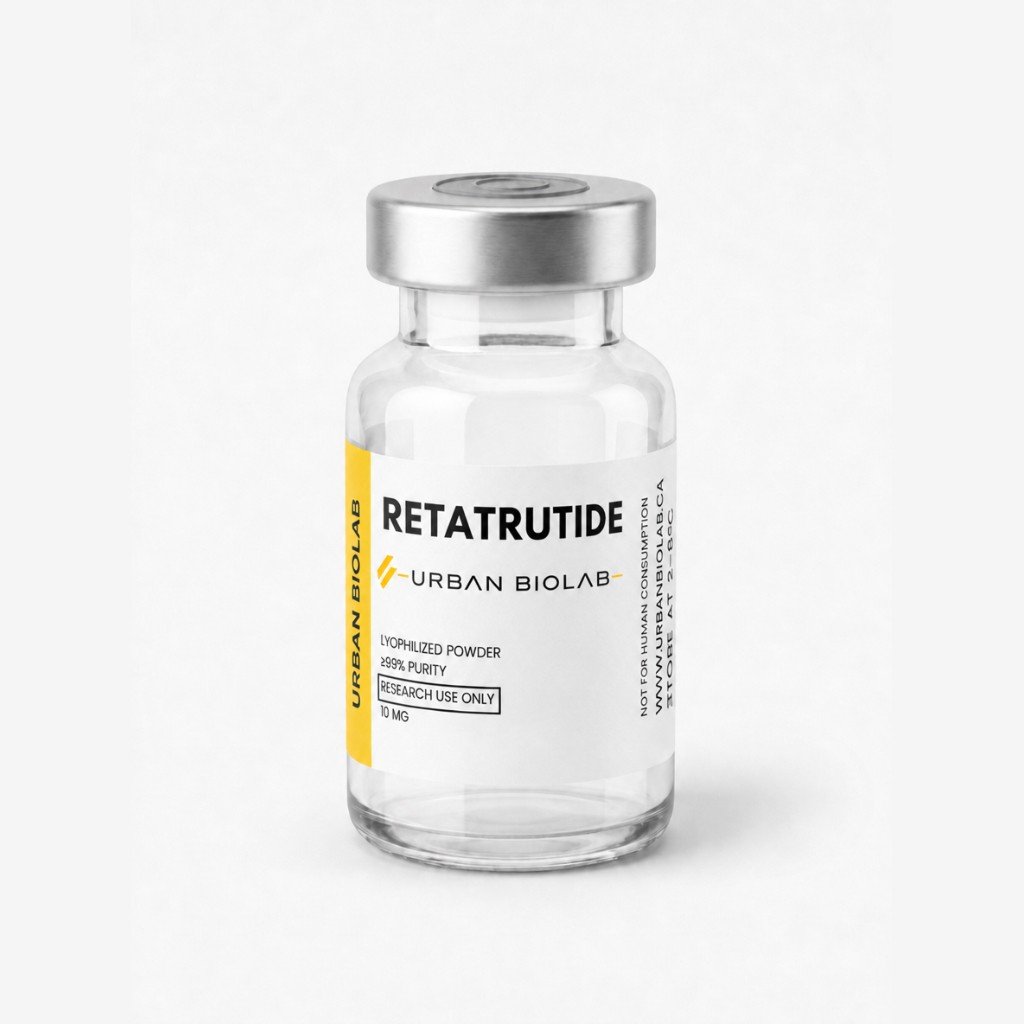
RT (Retatrutide) 10MG
Buy Retatrutide Canada: RT10 is a cutting-edge investigational peptide designed for advanced scientific exploration in metabolic health and weight management research. Known for its unique mechanism as a triple agonist (GLP-1, GIP, and glucagon receptors), it has shown promising potential in preclinical studies related to appetite regulation, fat metabolism, and glycemic control.
Practical Protocols for Liver Health
For those considering Retatrutide with liver health as a primary goal, certain practical approaches may enhance outcomes.
Dosing Approach
The gradual titration protocol used in clinical trials serves multiple purposes:
- Weeks 1-4: 1mg weekly (allows GI adaptation)
- Weeks 5-8: 4mg weekly (intermediate titration)
- Weeks 9-12: 8mg weekly (therapeutic range entry)
- Week 13+: 8-12mg weekly (based on tolerance and response)
This approach allows the gastrointestinal system time to adapt, reducing nausea and other digestive symptoms. It also provides time to assess individual response at each dose level before moving higher.
Clinical trial data showed meaningful liver benefits occurred even at the 4mg dose level, though maximal effects required the higher 8mg and 12mg doses.
Managing Side Effects
The most common challenge during initiation involves gastrointestinal side effects. Nausea, particularly during the first 6-8 weeks, affects a significant percentage of users. Understanding that this adaptation period typically resolves helps maintain motivation.
Practical strategies include:
- Eating smaller portions spread throughout the day
- Avoiding high-fat foods that delay gastric emptying
- Staying well-hydrated
- Using ginger or peppermint for antiemetic effects
Side effects during initiation do not predict long-term tolerability. Many users who experience significant nausea initially find it completely resolves by weeks 10-12.
Hydration and Electrolytes
Adequate hydration becomes even more important during Retatrutide use. Aiming for at least 2-3 litres of water daily supports metabolic processes. Electrolyte balance deserves attention, particularly during rapid weight loss phases—sodium, potassium, and magnesium can become depleted as body composition changes.
Monitoring Your Progress
Tracking improvements in liver health requires different metrics than simply watching the scale.
Recommended Monitoring Schedule
Baseline (Before Starting):
- Complete metabolic panel including ALT, AST, GGT
- Lipid panel (triglycerides particularly relevant)
- Fasting insulin and glucose (HOMA-IR calculation)
- HbA1c
- Consider abdominal ultrasound if not recently done
Week 12: Repeat metabolic panel and lipids
Week 24: Full repeat of baseline testing
Week 48: Comprehensive assessment including imaging if baseline showed significant steatosis
Liver enzymes provide the most accessible monitoring markers. ALT and AST levels in the normal range or trending downward suggest the liver is responding well.
Triglyceride levels deserve special attention because they reflect hepatic lipid metabolism directly. In Retatrutide trials, triglycerides dropped by over 40% at higher doses.
Imaging Options
MRI-PDFF (proton density fat fraction) provides the gold standard measurement for liver fat content. While expensive and not always readily available, MRI gives precise quantification of liver fat percentage.
Ultrasound offers a more accessible alternative that can qualitatively assess hepatic steatosis, though with less precision. FibroScan, a specialized ultrasound technology, measures both liver stiffness (indicating fibrosis) and controlled attenuation parameter (indicating steatosis).
Lifestyle Factors That Enhance Results
While Retatrutide powerfully addresses metabolic dysfunction, lifestyle factors continue playing important supporting roles.
Dietary Priorities
Reduce: Added sugars, refined carbohydrates, alcohol, highly processed foods
Emphasize: Lean proteins, vegetables, whole grains, healthy fats, fiber
Sugar intake impacts liver health directly. Fructose in particular promotes de novo lipogenesis when consumed in excess. Limiting added sugars reduces substrate availability for hepatic fat production.
Alcohol requires careful consideration for anyone with fatty liver disease. Even moderate consumption can accelerate liver damage when steatosis is present. Many practitioners recommend complete abstinence for those with established MASLD.
Coffee consumption (2-3 cups daily) has consistently shown liver-protective effects in epidemiological studies.
Physical Activity
Exercise supports liver health through multiple mechanisms:
- Increases insulin sensitivity independent of weight loss
- Promotes utilization of hepatic glucose stores
- Increases energy expenditure, contributing to fat loss from all tissues
Resistance training deserves particular emphasis during weight loss phases. Preserving muscle mass maintains metabolic rate and ensures weight loss reflects fat reduction rather than lean tissue loss.
Activity Recommendations:
- Cardiovascular: 150-300 minutes weekly of moderate intensity activity
- Resistance: 2-3 sessions weekly targeting major muscle groups
- Daily movement: Reduce sedentary time throughout the day
Sleep and Stress
Sleep quality affects metabolic health in ways that ultimately impact the liver. Poor sleep disrupts hormonal patterns governing appetite, insulin sensitivity, and fat metabolism. Prioritizing 7-9 hours of quality sleep nightly supports the metabolic improvements Retatrutide provides.
Chronic stress elevates cortisol, which promotes visceral fat accumulation and insulin resistance. Finding effective stress reduction strategies contributes to the overall metabolic environment that determines liver health.
Long-Term Outlook
Understanding what happens beyond the initial treatment period matters for anyone considering Retatrutide for liver health.
The TRIUMPH program, Eli Lilly’s Phase 3 development effort, includes multiple trials addressing various aspects of the compound’s effects. These studies will enroll thousands of participants and follow them for extended periods, generating the safety and efficacy data necessary for regulatory approval.
What Happens After Stopping?
Experience with similar medications suggests that metabolic benefits, including liver health improvements, may reverse if therapy is discontinued. This aligns with the understanding of obesity as a chronic condition requiring ongoing management.
The biological mechanisms underlying weight regain after stopping incretin-based therapies involve hormonal adaptations that increase hunger while decreasing metabolic rate. For liver health specifically, the return of elevated insulin levels and renewed fat accumulation would presumably lead to liver fat reaccumulation over time.
Viewing Retatrutide as a long-term therapeutic option rather than a short-term fix aligns better with the biology of metabolic disease. Just as someone with hypertension typically continues blood pressure medication indefinitely, those with obesity and fatty liver disease may benefit from ongoing treatment to maintain improvements.
Special Considerations for Canadians
Canadians navigating metabolic health face unique circumstances compared to other jurisdictions.
Health Canada has not approved Retatrutide for any indication as of late 2025. The regulatory timeline for Canadian approval typically follows US FDA action by 6-18 months, meaning potential availability of an approved product remains years away.
Provincial formulary coverage decisions add another layer of complexity. Even after Health Canada approval, actual patient access depends on individual provincial decisions about drug coverage. Quebec, Ontario, Alberta, and British Columbia each maintain separate formulary processes.
The Canadian liver disease burden continues growing. Statistics Canada data shows increasing rates of metabolic syndrome and associated liver conditions across provinces. Rising obesity prevalence, particularly since 2020, has accelerated these trends.
For Canadian researchers and clinicians following Retatrutide development, the liver health data represents a particularly exciting application. The compound addresses a gap in current treatment options for MASLD, providing meaningful improvement where few effective pharmaceutical options currently exist.
Frequently Asked Questions
How quickly can I expect liver health improvements?
Clinical trial data showed that most liver fat reduction occurred within the first 24 weeks of treatment. Many participants experienced substantial improvements by 12 weeks. However, maximal benefits continued accumulating through week 48.
Is Retatrutide safe for people who already have fatty liver disease?
The Phase 2 substudy specifically enrolled participants with established MASLD. Not only was Retatrutide safe in this population, it produced remarkable improvements. No hepatotoxicity signals emerged.
What dose produces the best liver results?
The 8mg and 12mg doses produced similar liver fat reductions (81.4% and 82.4% respectively at 24 weeks). The choice between them often depends on tolerability, as higher doses produce more gastrointestinal side effects.
Can Retatrutide reverse liver fibrosis?
The Phase 2 trial showed reductions in Pro-C3, a marker of active fibrogenesis. However, established fibrosis takes considerable time to reverse, and the 48-week trial duration may have been too short to demonstrate fibrosis regression on imaging. Longer studies currently underway will better address this question.
How long should I stay on Retatrutide for liver health benefits?
This question lacks definitive answers since long-term discontinuation studies are not yet available. Based on experience with similar medications, metabolic benefits likely require ongoing treatment to maintain.
Glossary of Key Terms
ALT (Alanine Aminotransferase): A liver enzyme that leaks into the bloodstream when liver cells are damaged. Elevated levels indicate potential liver stress or injury.
AST (Aspartate Aminotransferase): Another liver enzyme used to assess hepatic health. Also found in heart and muscle tissue.
De Novo Lipogenesis: The metabolic pathway by which the liver converts excess carbohydrates into fatty acids for storage.
Fibrosis: Scarring of liver tissue that develops from repeated injury and inflammation.
GIP (Glucose-Dependent Insulinotropic Polypeptide): A gut hormone that enhances insulin secretion. One of Retatrutide’s receptor targets.
GLP-1 (Glucagon-Like Peptide-1): An incretin hormone that reduces appetite, slows gastric emptying, and enhances insulin secretion.
Glucagon: A hormone that raises blood sugar and promotes fat metabolism. The third receptor target in Retatrutide, with particular importance for liver fat reduction.
Hepatic Steatosis: Accumulation of fat within liver cells. Normal liver fat content is less than 5%.
HOMA-IR: A calculated value using fasting insulin and glucose that estimates insulin resistance.
K-18: Keratin-18, a protein released when liver cells die. Serves as a biomarker of hepatocyte injury.
MASLD: Metabolic Dysfunction-Associated Steatotic Liver Disease. The updated nomenclature for fatty liver disease associated with metabolic dysfunction.
MASH: Metabolic Dysfunction-Associated Steatohepatitis. The progressive form characterized by inflammation and hepatocyte injury.
MRI-PDFF: Magnetic Resonance Imaging Proton Density Fat Fraction. The gold standard for quantifying liver fat content.
Pro-C3: A biomarker indicating active fibrogenesis (scar tissue formation) in the liver.
Triple Agonist: A compound that activates three different receptor types simultaneously.
References
- Sanyal AJ, Kaplan LM, Frias JP, et al. Triple hormone receptor agonist retatrutide for metabolic dysfunction-associated steatotic liver disease: a randomized phase 2a trial. Nature Medicine. 2024;30:2037-2048.
- Jastreboff AM, Kaplan LM, Frias JP, et al. Triple-Hormone-Receptor Agonist Retatrutide for Obesity – A Phase 2 Trial. New England Journal of Medicine. 2023;389:514-526.
- American Diabetes Association. Retatrutide (LY3437943), a Novel GIP/GLP-1/Glucagon Receptor Triagonist – Obesity, NAFLD, and T2D Phase 2 Trial Results. 83rd Scientific Sessions.
Final Thoughts
The liver health data for Retatrutide represents genuine progress in metabolic medicine. We finally have a compound that addresses fatty liver disease through multiple complementary pathways simultaneously—not just through weight loss, but through direct hepatic mechanisms.
The addition of glucagon agonism isn’t marketing differentiation; it’s a mechanistically sound approach to a problem that has lacked good pharmaceutical solutions until recently. The 86% liver fat reduction achieved in trials stands as one of the most impressive results ever documented for a pharmaceutical intervention in this space.
For Canadians dealing with both obesity and fatty liver disease—which describes the vast majority of MASLD patients—Retatrutide offers a compelling proposition. Rather than taking one medication for weight and another for liver disease, a single weekly injection addresses both concerns with what appears to be best-in-class efficacy for each.
That said, this remains an investigational compound. Long-term safety data is still accumulating, and regulatory approval remains years away. Those exploring research peptide options should do so with appropriate caution, quality verification, and medical oversight.
The biology of metabolic disease is complex, but our ability to intervene is improving rapidly. Retatrutide represents an important step forward—one that may fundamentally change how we approach fatty liver disease.
Research Disclaimer
This article is provided for educational and informational purposes only. Retatrutide is an investigational compound not yet approved by Health Canada or other regulatory agencies for clinical use. The information presented reflects published clinical trial data and should not be construed as medical advice. Research peptides are intended for laboratory research use only. Always consult with qualified healthcare professionals regarding any health concerns or before beginning any supplementation protocol.