
Retatrutide canada is now one of the most-searched obesity-treatment phrases in the country — and 2026 is the year it moved from research curiosity to mainstream Canadian health conversation. This guide covers what retatrutide is, what the Phase 2 data actually showed, how it compares to approved options, and where retatrutide canada stands on access, regulation, and realistic timelines.
Quick answer: Retatrutide is an investigational triple-receptor agonist from Eli Lilly that produced 24.2% average weight loss at 12 mg over 48 weeks in Phase 2. It is not approved by Health Canada and is not available through Canadian pharmacies. Phase 3 trials are ongoing, with realistic Canadian pharmacy availability in the 2027–2028 window if the data hold and Health Canada approves it.
An Illustrative Look at the Patient Experience
Note: the following is a composite drawn from the patterns reported across trial participants and published patient accounts. It is not a verified individual testimonial.
The typical retatrutide experience, as described across trial reporting and patient communities, follows a recognizable arc. The first two weeks are often unremarkable — mild appetite shifts, nothing dramatic. Around week three, many people describe a qualitative change: food stops occupying the same mental space. Snacking urges quiet down. Meals feel satisfying at smaller portions.
Weeks six through eight are frequently the hardest. Nausea, digestive upset, and fatigue peak during this window as the dose escalates. People who push through — with smaller meals, bland foods, hydration, and sometimes anti-nausea support — almost universally report improvement by week nine or ten.
By month three, energy often returns and then improves beyond baseline. Weight loss becomes visible. The psychological shift that many patients describe as the most valuable part — food becoming functional rather than emotional — tends to consolidate in this phase.
Retatrutide canada interest often spikes at exactly this point in the narrative, because people reading these accounts want to know how to access the same experience. The honest answer, covered in detail below, is that legal access in Canada today is limited to clinical trials.
Table of Contents
- Understanding the Obesity Challenge in Canada
- What Is Retatrutide and How Does It Work
- The Triple Receptor Mechanism Explained
- Clinical Evidence: Phase 2 Trial Results
- Complete Weight Loss Timeline by Month
- Dosing Protocol: What the Trials Used
- Side Effects and How to Manage Them
- Who Benefits Most from Retatrutide
- Metabolic Benefits Beyond Weight Loss
- Retatrutide vs Other Weight Loss Medications
- Nutrition Strategies During Treatment
- Accessing Retatrutide in Canada
- Exercise Considerations During Treatment
- Long-Term Maintenance Strategies
- Frequently Asked Questions
- Glossary of Terms
- References
Understanding the Obesity Challenge in Canada
Statistics Canada estimates that roughly 27% of Canadian adults live with obesity, and another 36% are classified as overweight. That means nearly two-thirds of the adult population sits in a weight category associated with elevated metabolic risk.
The consequences are not cosmetic. Obesity substantially increases the risk of type 2 diabetes, cardiovascular disease, joint disease, sleep apnea, and fatty liver disease. Provincial data shows regional variation — Alberta and Saskatchewan report some of the highest rates, British Columbia the lowest — but no province is exempt from the trend.
Traditional approaches have well-documented limits. Meta-analyses of dietary interventions consistently show that most people regain roughly half of lost weight within two years and nearly all of it within five. This is not a willpower failure. It reflects metabolic adaptation: resting energy expenditure falls, hunger hormones rise, and the body defends its prior weight set point.
That biology is why pharmaceutical intervention has moved from fringe to mainstream in obesity medicine. Medications that act on appetite and metabolic signaling address the condition at the level where it actually operates.
The economic context matters too. Direct and indirect costs of obesity in Canada are estimated in the tens of billions annually, driven by diabetes care, cardiovascular events, joint replacement, and lost productivity. Any treatment that meaningfully reduces weight at scale has implications well beyond the individual patient.
Retatrutide canada searches reflect this backdrop. Canadians are not just curious about a new drug — many are looking for something that works better than what is currently available and covered.
What Is Retatrutide and How Does It Work
Retatrutide is a synthetic peptide developed by Eli Lilly. It belongs to the incretin mimetic class — the same family as semaglutide (Ozempic/Wegovy) and tirzepatide (Mounjaro/Zepbound) — but with a distinguishing feature: it activates three receptors simultaneously rather than one or two.
- GLP-1 reduces appetite, slows gastric emptying, and improves insulin secretion.
- GIP supports nutrient handling, insulin sensitivity, and fat metabolism.
- Glucagon increases energy expenditure and fat oxidation.
The glucagon component is what separates retatrutide from everything currently approved. GLP-1 and GIP primarily reduce calorie intake. Glucagon activation increases calorie output. The combination attacks the energy balance equation from both sides.
The engineered structure resists rapid enzymatic breakdown, which is why once-weekly dosing is possible rather than the daily injections required by earlier peptide therapies.
Development Timeline
Phase 1 established safety in healthy volunteers. Phase 2, completed in 2023 and published in the New England Journal of Medicine, demonstrated the efficacy signal that made retatrutide a global story. Phase 3 trials — the TRIUMPH program — are ongoing. If those trials confirm the Phase 2 findings, Eli Lilly is expected to file with the FDA in the late 2026 to early 2027 window, with Health Canada following roughly 6 to 12 months behind.
For retatrutide canada, that timeline is the single most important fact in this article.
The Triple Receptor Mechanism Explained
Understanding why retatrutide outperforms single and dual agonists requires looking at each pathway.
GLP-1 Receptor Activation
GLP-1 receptors in the brain and gut regulate appetite and digestion. Activation produces reduced hunger, earlier satiety, and slower gastric emptying — food stays in the stomach longer, extending fullness. Natural GLP-1 breaks down within minutes; retatrutide’s engineered structure maintains activation for days.
GIP Receptor Activation
GIP improves insulin sensitivity and appears to influence fat storage versus fat oxidation. The GLP-1/GIP combination, first commercialized as tirzepatide, produced meaningfully greater weight loss than GLP-1 alone. Retatrutide retains this dual mechanism and adds a third.
Glucagon Receptor Activation
Glucagon is best known for raising blood sugar by releasing stored glucose. But glucagon receptor activation also increases energy expenditure, enhances fat oxidation, and may promote thermogenesis. This is the mechanism that addresses a key limitation of earlier medications: the metabolic slowdown that accompanies weight loss. By increasing energy output even at rest, the glucagon component helps maintain the caloric deficit needed for continued fat loss.
The three pathways work synergistically. The combined effect exceeds what any single pathway could produce alone, which is why the trial numbers sit in a different tier from approved options.
Clinical Evidence: Phase 2 Trial Results
The Phase 2 trial enrolled 338 adults with obesity or overweight plus at least one weight-related condition. Average baseline BMI was approximately 37. Participants were randomized across four active doses and placebo, treated for 48 weeks.
Dose-Response Results
| Weekly Dose | 48-Week Weight Loss | Nausea Rate | Completion Rate |
|---|---|---|---|
| Placebo | 2.1% | 8% | ~97% |
| 1 mg | 8.7% | 12% | ~97% |
| 4 mg | 15.2% | 18% | ~94% |
| 8 mg | 21.1% | 24% | ~92% |
| 12 mg | 24.2% | 28% | ~89% |
Several features of these results stand out. The dose-response relationship was clean and roughly linear — each step up produced a meaningful increment. Weight loss continued throughout the 48-week period rather than plateauing early, suggesting that longer treatment could produce further gains. And the completion rate at the highest dose — nearly nine in ten — indicates tolerability was manageable for most participants despite the gastrointestinal side effect burden.
What the Numbers Do Not Establish
- These are Phase 2 findings. Phase 3 is larger, longer, and more rigorous. Results frequently shift at Phase 3.
- They are averages, not individual outcomes. The range across participants was wide, including non-responders.
- They do not establish long-term safety. 48 weeks is short for a medication intended for chronic use.
- They are not head-to-head comparisons against semaglutide or tirzepatide. Cross-trial comparisons, including the frequently cited nausea rates, are suggestive rather than definitive.
For a 220-pound person, 24.2% translates to roughly 53 pounds. That is the figure driving retatrutide canada interest — and it is genuinely significant. But it should be read with the Phase 2 caveats above.
Complete Weight Loss Timeline by Month
The trial showed a predictable trajectory that most participants followed, regardless of final dose.
Month 1 (Weeks 1–4)
Appetite changes begin, usually subtly. Weight loss averages a few percent, driven primarily by reduced intake. Mild nausea and fatigue are common. Injection-site reactions occur in a minority and resolve quickly.
Month 2 (Weeks 5–8)
The hardest phase for many participants. Side effects peak around weeks 6–8 as the dose escalates. Nausea, digestive upset, and fatigue are at their most intense. Weight loss continues but the discomfort can overshadow visible results. This is the period where adherence is tested most.
Month 3 (Weeks 9–12)
Relief phase. Gastrointestinal symptoms typically improve substantially. Cumulative weight loss often reaches the 8–10% range. Participants who achieve at least 5% loss by week 12 have a strong predictor of longer-term success.
Months 4–6 (Weeks 13–24)
Acceleration phase. Side effects largely resolved. Rate of loss peaks during this window for many participants. Secondary benefits — energy, sleep, joint comfort, mood — often become noticeable and reinforce adherence.
Months 7–11 (Weeks 25–48)
Deceleration and stabilization. Loss continues but slows as the body approaches a new equilibrium. Plateau typically occurs around weeks 40–44. Final average loss at 12 mg was 24.2%.
The pattern matters for expectation-setting. The early weeks are the hardest, and the most common reason people abandon treatment is stopping before the therapeutic window opens.
Dosing Protocol: What the Trials Used
This section describes the trial protocol for educational purposes. It is not a recommendation for self-administration. Any use of retatrutide outside a clinical trial should be supervised by a physician.
The Phase 2 trial used a graduated escalation approach to reduce gastrointestinal side effects.
| Weeks | Dose |
|---|---|
| 1–4 | 2 mg weekly |
| 5–8 | 4 mg weekly |
| 9–12 | 8 mg weekly |
| 13+ | 8 mg or 12 mg weekly, based on response and tolerance |
The rationale is straightforward: starting at a full therapeutic dose tends to produce intolerable nausea and vomiting, leading to discontinuation before the drug has a chance to work. Gradual titration lets the body adapt. Phase 3 trials are testing similar schedules, and the eventual approved label will specify the recommended protocol.
For retatrutide canada readers, the practical implication is that even after approval, treatment will involve a months-long titration — not a rapid ramp to the top dose.
Side Effects and How to Manage Them
At the 12 mg dose, the most commonly reported adverse events were gastrointestinal.
Common (20% or more)
- Nausea: ~28%. Typically peaks in the hours after eating, especially after large or fatty meals.
- Diarrhea: ~24%. Usually transient during dose increases.
- Constipation: ~21%. Slowed gastric emptying can reduce bowel frequency.
- Vomiting: ~17%. Most common during the peak weeks 6–8 window.
Less Common (5–20%)
- Injection-site reactions: ~14%. Redness, itching, mild pain; resolve within 24–48 hours.
- Fatigue: ~13%. Most common early, often improves as the body adapts.
- Headache: ~11%. Often related to hydration or blood sugar shifts.
- Hair thinning: ~3%. Likely telogen effluvium from rapid weight loss rather than the drug itself; typically reverses once weight stabilizes.
Serious but Rare
- Pancreatitis: ~0.3%. Requires immediate medical attention for severe abdominal pain radiating to the back.
- Gallbladder events: ~1.4%. Consistent with any rapid weight loss; adequate dietary fat helps.
- Acute kidney injury: ~0.7%. Almost exclusively in participants with severe dehydration from GI symptoms.
The discontinuation rate due to adverse events at 12 mg was approximately 11% — nearly nine in ten participants completed 48 weeks.
Management Strategies
Smaller, more frequent meals are the most effective nausea prevention strategy. Cold foods often settle better than hot during peak weeks. Hydration deserves deliberate attention because GLP-1 activity can blunt thirst perception while GI symptoms increase fluid losses. Anti-nausea medications and ginger can help when dietary adjustments are insufficient.
None of this is a substitute for clinical supervision. Retatrutide canada readers considering treatment should discuss side effect management with a physician familiar with the drug class.
Who Benefits Most from Retatrutide
Likely Candidates (Pending Approval and Clinical Assessment)
- Adults with BMI ≥ 30
- Adults with BMI ≥ 27 plus at least one weight-related condition (type 2 diabetes, hypertension, sleep apnea, dyslipidemia)
- People who have attempted lifestyle intervention multiple times without sustained results
- People with metabolic syndrome or prediabetes
- People with type 2 diabetes seeking improved glycemic control
- People with a family history of obesity-related disease who may benefit from earlier intervention
Caution or Contraindication
- Personal or family history of medullary thyroid cancer
- Multiple endocrine neoplasia syndrome type 2
- History of pancreatitis
- Severe gastrointestinal disease
- Pregnancy or breastfeeding
- Type 1 diabetes
- Severe kidney impairment
- Active eating disorders (require specialist evaluation)
- Polypharmacy requiring review of absorption interactions
Age is less important than overall health status. Psychological readiness and realistic expectations about long-term treatment matter considerably.
Metabolic Benefits Beyond Weight Loss
The scale gets the attention, but the metabolic improvements may matter more for long-term health.
- A1C: roughly 2 percentage points reduction in participants with type 2 diabetes
- Triglycerides: ~28% reduction
- LDL cholesterol: ~12% reduction
- Systolic blood pressure: ~6.8 mmHg reduction
- Liver fat: ~44% reduction in MRI-assessed subsets
- Inflammation (CRP): significant reduction
These changes reduce cardiovascular and liver disease risk independently of weight loss. For the millions of Canadians living with fatty liver disease or prediabetes, the implications are substantial. Retatrutide canada interest is partly driven by this broader metabolic story, not just the headline weight-loss number.
Retatrutide vs Other Weight Loss Medications
| Medication | Mechanism | Average Weight Loss | Canadian Status |
|---|---|---|---|
| Liraglutide (Saxenda) | GLP-1 | ~8% | Approved |
| Semaglutide (Ozempic/Wegovy) | GLP-1 | ~14.9% | Approved (supply variable) |
| Tirzepatide (Mounjaro/Zepbound) | GLP-1/GIP | ~20.9% | Approved |
| Retatrutide | GLP-1/GIP/glucagon | ~24.2% (Phase 2) | Not approved |
Two caveats on this table. First, these are not head-to-head comparisons — different trials, populations, and endpoints. The ranking is suggestive, not definitive. Second, the frequently cited nausea comparison (retatrutide ~28% vs semaglutide ~44%) conflates different trial designs and should be treated skeptically.
What the table does support: retatrutide appears to sit in a higher efficacy tier than currently approved options. For retatrutide canada readers, the practical comparison is often against tirzepatide, which is approved and clinically available now and sits closer to retatrutide than semaglutide does.
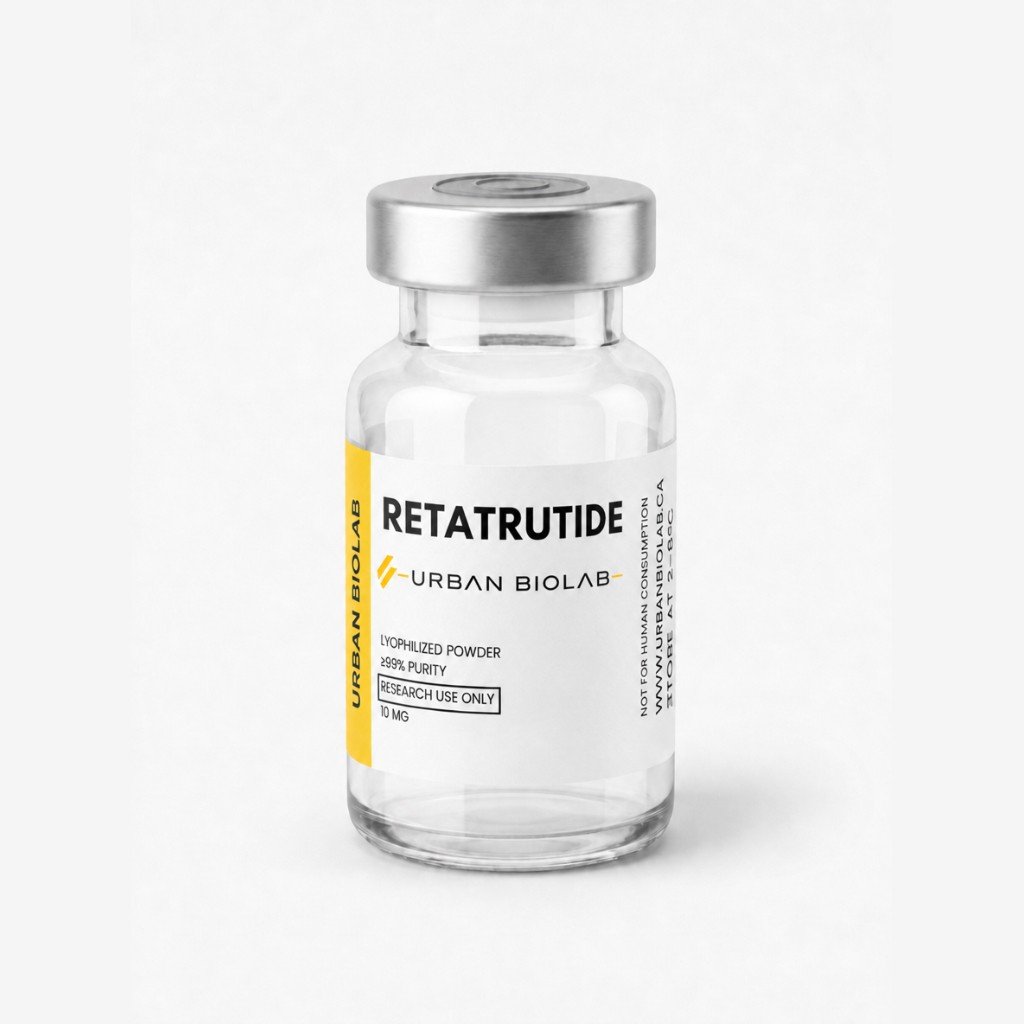
RT (Retatrutide) 10MG
Buy Retatrutide Canada: RT10 is a cutting-edge investigational peptide designed for advanced scientific exploration in metabolic health and weight management research. Known for its unique mechanism as a triple agonist (GLP-1, GIP, and glucagon receptors), it has shown promising potential in preclinical studies related to appetite regulation, fat metabolism, and glycemic control.
Nutrition Strategies During Treatment
For anyone using retatrutide under clinical supervision, several principles matter.
Protein prioritization. Rapid weight loss without adequate protein risks muscle loss. Many clinicians recommend roughly 1.0–1.6 g per kg of body weight daily, distributed across meals rather than concentrated in one or two.
Dietary fat should not be eliminated. Very low-fat diets during rapid weight loss increase gallstone risk. Moderate intake supports gallbladder function — a lesson well established in bariatric surgery patients undergoing similar rapid loss.
Smaller, more frequent meals reduce nausea during the adjustment phase. Five to six smaller eating occasions tend to work better than three large ones.
Hydration requires deliberate attention. Aim for consistent fluid intake throughout the day rather than relying on thirst, which can be blunted.
Micronutrient coverage through a multivitamin is reasonable during significant caloric restriction. Vitamin D deserves particular attention given Canadian sun exposure patterns.
These are general principles, not a protocol. Individual guidance should come from a clinician.
Accessing Retatrutide in Canada
This is the section retatrutide canada searchers actually want.
Current Regulatory Status
- Health Canada: Not approved.
- FDA: Not approved. Filing expected in the late 2026 to early 2027 window if Phase 3 succeeds.
- Realistic Canadian pharmacy availability: 2027–2028 at the earliest, assuming a Health Canada submission follows FDA action.
Legitimate Pathways in Canada Today
- Clinical trials. Retatrutide Phase 3 trials are running globally, including Canadian sites. Eligibility is narrow and enrollment is not guaranteed. Check ClinicalTrials.gov and Health Canada’s Clinical Trials Database directly.
- Special Access Program. Health Canada’s SAP allows practitioners to request unapproved drugs for patients with serious or life-threatening conditions when conventional options have failed. In practice, SAP requests for retatrutide are unlikely to be granted while Phase 3 is ongoing and approved alternatives exist — but the pathway exists.
What Is Not a Legitimate Pathway
The research-peptide market. Products sold as research chemicals fall outside Health Canada’s drug regulatory framework. Purity and identity are not guaranteed, dosing errors are common without clinical supervision, and adverse events go unreported. Independent testing of grey-market peptides has repeatedly found underdosing, wrong compounds, and contamination.
I am deliberately not providing vendor names or sourcing instructions here. Retatrutide canada readers deserve a clear answer, not a shopping guide for an unapproved injectable.
Provincial Coverage: What to Expect
Provincial drug plans will eventually need to make coverage decisions. Based on precedent with other obesity medications, initial coverage will likely focus on patients with type 2 diabetes or severe obesity with comorbidities. Others may face out-of-pocket costs. Quebec, Ontario, British Columbia, and Alberta each evaluate medications independently, creating a patchwork that will affect access differently across the country.
Exercise Considerations During Treatment
Physical activity complements retatrutide’s effects in three ways: it preserves muscle mass during rapid fat loss, improves insulin sensitivity beyond what medication alone achieves, and supports cardiovascular health.
Resistance training deserves particular emphasis. Muscle tissue burns more calories at rest than fat, and preserving lean mass during weight reduction helps maintain metabolic rate. Bodyweight exercises, resistance bands, or light weights provide adequate stimulus without requiring a gym.
Starting intensity should match current fitness. Walking, swimming, and light cycling are reasonable entry points. The weight loss itself often makes movement easier as treatment progresses.
Timing can matter for comfort. Working out on an empty stomach may worsen nausea; exercising too soon after eating can cause discomfort from slowed gastric emptying. Mid-morning or late afternoon windows often work best.
Energy levels may fluctuate during adaptation, particularly in the early weeks. This typically improves as the body adjusts.
Long-Term Maintenance Strategies
Once weight loss stabilizes around weeks 40–48, the focus shifts from losing to maintaining.
Continuing medication appears necessary for sustained maintenance based on experience with similar drugs. Discontinuation of GLP-1 agonists is typically followed by significant regain within months. Obesity is a chronic condition, and framing treatment as long-term management rather than a temporary intervention sets realistic expectations.
Lifestyle habits established during treatment — smaller meals, higher protein intake, hydration, physical activity — provide a foundation that supports maintenance regardless of medication status.
Regular monitoring through weight tracking and periodic bloodwork helps identify early signs of regain or metabolic change. Catching trends early allows intervention before reversal becomes significant.
For retatrutide canada readers planning ahead, the key point is that treatment will likely be long-term, not a short course. That has cost and coverage implications worth understanding now.
Frequently Asked Questions: Retatrutide Canada
Is retatrutide available in Canada?
No. It is not approved by Health Canada and is not available through Canadian pharmacies. It is available only through clinical trials and, in rare cases, the Special Access Program.
When will retatrutide be approved in Canada?
If Phase 3 succeeds and Eli Lilly files with Health Canada, realistic pharmacy availability is 2027–2028. This is an estimate, not a commitment.
Can I get retatrutide prescribed in Canada?
Not through standard prescribing. Only through a clinical trial or, exceptionally, the Special Access Program.
How much weight can I expect to lose?
Phase 2 data showed an average of 24.2% at the 12 mg dose over 48 weeks. For a 200-pound person, roughly 48 pounds. Individual results vary widely, and Phase 3 results may differ.
Is retatrutide better than Ozempic or Mounjaro?
Phase 2 data suggests greater average weight loss than either, but there has been no head-to-head trial. Tirzepatide (Mounjaro) is approved and available in Canada now.
What happens if I stop taking retatrutide?
Weight regain is likely within 6–12 months of discontinuation, consistent with other medications in this class.
Does retatrutide cause hair loss?
A small percentage of trial participants reported hair thinning, likely related to rapid weight loss rather than the drug itself. It typically reverses once weight stabilizes.
How much does retatrutide cost in Canada?
There is no legal retail price because it is not legally sold. Grey-market prices vary widely and reflect unverified product, not pharmaceutical pricing.
Is the research-peptide market safe?
No. Unregulated peptides carry documented risks of mislabeling, contamination, and dosing error. There is no pharmacovigilance pathway for adverse events.
Glossary
GLP-1 (Glucagon-like peptide-1): A hormone that reduces appetite, slows gastric emptying, and improves insulin secretion.
GIP (Glucose-dependent insulinotropic polypeptide): An intestinal hormone involved in nutrient metabolism and insulin regulation.
Glucagon: A hormone that raises blood sugar by releasing stored glucose; receptor activation also increases energy expenditure and fat oxidation.
Triple agonist: A medication that activates three receptor types simultaneously.
A1C: A blood test measuring average blood sugar over 2–3 months.
BMI (Body Mass Index): A height-to-weight calculation used to categorize body composition.
Subcutaneous injection: An injection into the fatty tissue layer beneath the skin.
Telogen effluvium: Temporary hair shedding triggered by metabolic stress such as rapid weight loss.
Bacteriostatic water: Sterile water containing a preservative, used to reconstitute lyophilized peptides.
Gastric emptying: The process by which food leaves the stomach and enters the small intestine; GLP-1 agonists slow this.
References
- Jastreboff AM, et al. “Triple-Hormone-Receptor Agonist Retatrutide for Obesity: A Phase 2 Trial.” New England Journal of Medicine. 2023.
- ClinicalTrials.gov. “A Study of Retatrutide (LY3437943) in Participants With Obesity.” NCT05934110.
- Statistics Canada. “Overweight and Obese Adults, 2018.” Health Reports.
This article is educational and is not medical advice. Retatrutide is investigational and has not been approved by Health Canada or the FDA. Individual health decisions should be made in consultation with qualified healthcare professionals.