When it comes to healing the digestive tract, BPC-157 stands apart from most peptides. It wasn’t discovered in some random lab screening—it was found in gastric juice, meaning gut healing is its original purpose, not an afterthought. For anyone dealing with IBS, IBD, or leaky gut who’s exhausted conventional options, this peptide offers a different approach: addressing root causes rather than masking symptoms.
Let me walk you through what actually matters when using BPC-157 for digestive issues—the protocols, the realistic timelines, and the practical details that determine whether you’ll see results.
Why Injection Beats Oral for Gut Healing
I know some people prefer oral BPC-157 for convenience, but if you’re serious about healing your gut, injection is the way to go. Here’s why:
Bioavailability matters more than you think. When you inject subcutaneously, nearly 100% of the peptide reaches your bloodstream intact. Oral BPC-157? Standard formulations lose about 99% to stomach acid within hours. Even the more stable arginine salt versions still degrade significantly, and absorption varies wildly between individuals.
Systemic distribution reaches everywhere. Your digestive tract is long—from esophagus to colon. Injecting BPC-157 allows it to circulate throughout your body and migrate specifically to damaged tissue. Oral administration concentrates in the upper GI tract but may never reach distal small intestine or colon lesions in therapeutic amounts.
Precise dosing, predictable results. A 500 mcg injection delivers exactly 500 mcg. Oral dosing requires guessing—you might take 1000 mcg hoping to absorb 200-300 mcg, but individual variation makes this unreliable. With injection, you can titrate by 50-100 mcg increments based on response.
Quality standards are higher. Injectable products undergo sterility testing and endotoxin screening that oral supplements don’t require. Given that you’re bypassing digestive defenses, this matters for safety.
What BPC-157 Actually Does for Your Gut
Understanding the mechanisms helps set realistic expectations. BPC-157 works through several simultaneous pathways:
Mucosal barrier restoration—stimulates mucus production while strengthening the epithelial lining. This creates both immediate protection and long-term structural integrity.
Angiogenesis—promotes new blood vessel formation in damaged tissue through VEGFR2 activation, delivering oxygen and nutrients where healing needs to happen.
Anti-inflammatory signaling—modulates inflammatory cascades through Egr-1 inhibition, reducing cytokines like TNF-alpha while promoting tissue repair rather than continued damage.
Motility normalization—influences nitric oxide signaling and neuronal pathways controlling gut contractions. Whether your transit is too fast or too slow, the peptide appears to regulate rather than simply stimulate or suppress.
Tight junction repair—upregulates zonulin and occludin proteins that seal intestinal cells together. This directly addresses the root cause of leaky gut.
Oxidative stress reduction—demonstrates antioxidant properties that protect intestinal tissue from reactive oxygen species damage.
Dosing Protocols by Condition
Mild to Moderate IBS
- Route: Subcutaneous injection (abdominal area)
- Starting dose: 250 mcg once daily
- Maintenance: 350-500 mcg daily after week 2
- Duration: 6-8 weeks minimum
- Timing: Morning, before breakfast
- Expected timeline: Motility improvements weeks 2-3, symptom reduction peaks weeks 6-8
Inflammatory Bowel Disease (Crohn’s/UC)
- Route: Subcutaneous injection
- Loading phase: 500 mcg twice daily (morning and evening) for weeks 1-2
- Maintenance: 500-750 mcg once daily for weeks 3-12
- Duration: 10-12 weeks for active disease
- Expected timeline: Reduced bleeding and urgency weeks 2-4, mucosal healing evidence weeks 8-12
Leaky Gut/Intestinal Permeability
- Route: Subcutaneous injection
- Dosing: 400-500 mcg once daily
- Duration: 10-12 weeks minimum (tight junction repair requires sustained exposure)
- Complementary support: L-glutamine 5g daily, zinc carnosine 75mg twice daily
- Expected timeline: Inflammation markers improve weeks 4-6, food sensitivity reduction weeks 6-8, full restoration 10-12 weeks
NSAID-Induced Gastric Damage Prevention
- Route: Subcutaneous injection
- Dosing: 250-350 mcg daily
- Duration: Concurrent with NSAID therapy plus 2 weeks after discontinuation
- Mechanism: Counteracts gastric damage through systemic protective signaling
Post-Food Poisoning Recovery
- Route: Subcutaneous injection
- Dosing: 500 mcg twice daily for week 1, then 500 mcg once daily
- Duration: 4-6 weeks total
- Note: Only after infection has cleared—not for active gastroenteritis
Reconstitution and Storage
Proper handling preserves peptide integrity. Here’s what you need to know:
Before reconstitution: Store lyophilized powder refrigerated at 2-8°C in the main body of your fridge (not the door where temperature fluctuates). For longer storage, -20°C extends stability to 2-3 years. Let vials reach room temperature before opening to prevent condensation.
Reconstitution technique: This step matters more than people realize. After disinfecting the rubber stopper with alcohol and waiting 15 seconds for evaporation, draw your calculated volume of bacteriostatic water. The critical error is spraying water directly onto the powder—this creates turbulence that denatures peptides. Instead, angle the needle and let water slide gently down the vial wall. After adding water, swirl gently in circular motions. Never shake vigorously. The powder should dissolve completely within 1-3 minutes, producing a clear, colorless solution.
After reconstitution: Refrigerate at 2-8°C immediately. Use within 14 days when using bacteriostatic water. Protect from light—amber vials or aluminum foil wrapping helps. Never freeze reconstituted solutions; ice crystals mechanically destroy peptide structure.
Dosing calculations: For a 5mg vial reconstituted with 2.5mL bacteriostatic water, you get 2mg/mL (2000 mcg/mL). To draw 250 mcg: 250 ÷ 2000 = 0.125 mL = 12.5 units on an insulin syringe. For 500 mcg: 0.25 mL (25 units). For 350 mcg: 0.175 mL (17.5 units).
Injection technique: Use 29-31 gauge insulin syringes. Pinch 1-2 inches of abdominal skin, insert at 45-90 degrees depending on body fat, inject slowly over 3-5 seconds. Rotate sites systematically—abdomen at least 2 inches from navel, outer thighs, back of upper arms.
Warning signs of degradation: Discard solutions showing cloudiness, particulate matter, color changes (especially yellowing), or unusual odors. Never use questionable solutions—the risk outweighs any cost savings.
Realistic Timeline: What to Expect Week by Week
Digestive tissue heals slower than many other body systems due to constant exposure to food, acid, and bacteria. Here’s what typical injectable protocols look like:
Weeks 1-2: Early signaling. Most people notice minimal symptomatic changes, though cellular healing begins immediately. Some report mild shifts in digestive timing. Those with severe inflammation may notice reduced urgency by end of week 2.
Weeks 3-4: First clear improvements. Bloating typically decreases first, followed by better bowel consistency. IBS users report more predictable schedules with reduced urgency. IBD users notice decreased cramping and potentially reduced bleeding. Pain reduction tends to lag other symptoms.
Weeks 5-8: Substantial functional improvement. This is the turning point. Energy improves as nutrient absorption increases. Food intolerances decrease as barrier function strengthens. IBD users report notably reduced bleeding and fewer daily bowel movements. Sleep quality improves with fewer nighttime symptoms.
Weeks 9-12: Structural healing and consolidation. Tight junction restoration completes during this phase. IBD patients may see endoscopic evidence of mucosal healing if scoped during this window. Benefits plateau rather than continuing linear improvement—this is optimal timing to assess whether to continue, reduce dose, or complete the protocol.
How BPC-157 Compares to Conventional Treatments
For IBD: Conventional approaches include 5-ASA drugs, corticosteroids, immunosuppressants, and biologics—all carrying significant side effect profiles including infection risk, liver toxicity, and bone density loss. BPC-157 targets mucosal healing without systemic immunosuppression, promotes actual tissue regeneration rather than just suppressing immune response, and has no documented infection risk increase. It works best as a complementary approach for severe disease.
For IBS: Conventional treatments include antispasmodics, laxatives, anti-diarrheals, SSRIs, and dietary modifications—often providing incomplete relief and addressing symptoms rather than underlying dysfunction. BPC-157 normalizes motility patterns rather than forcing constipation or diarrhea, typically showing effects within 2-4 weeks.
For GERD/Ulcers: Long-term PPI use is linked to nutrient malabsorption, increased infection risk, and potential kidney damage. BPC-157 heals ulcerated tissue directly rather than just reducing acid, and can be used alongside acid reducers for synergistic effect.
When NOT to Use BPC-157
Absolute contraindications:
- Active cancer or cancer history within 5 years (angiogenesis-promoting effects theoretically could support tumor growth)
- Pregnancy and breastfeeding (zero human safety data)
- Active gastrointestinal infection (complete antibiotic/antiviral treatment first)
- Scheduled GI surgery (discontinue 2 weeks before, resume only with surgical clearance)
Relative contraindications (use with caution):
- Children under 18 (no pediatric safety data)
- Severe liver or kidney disease (peptide clearance may be impaired)
- Bleeding disorders (affects hemostasis and platelet function)
- Severe IBD with complications like strictures, fistulas, or abscesses (requires surgical evaluation)
Quality Verification for Injectable Use
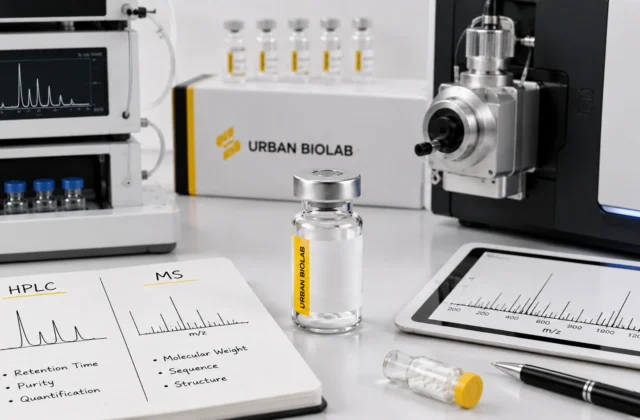
Injectable applications demand the highest quality standards. Your Certificate of Analysis should demonstrate:
- Greater than 98% purity through HPLC testing
- Mass spectrometry confirming molecular weight
- Heavy metals screening (lead, mercury, arsenic, cadmium)
- Residual solvent analysis (TFA, acetonitrile)
- Proper sterile packaging
- Batch-specific testing (not generic)
Red flags: No third-party testing, claims of 99%+ purity without chromatographic data, room temperature storage, prices dramatically below market averages.
Side Effects and Safety Profile
Animal studies show remarkable safety—no organ damage even at doses far exceeding human use. No mutagenic, genotoxic, or clastogenic effects in standard safety batteries.
Common mild effects (8-12% of users): Injection site reactions, temporary fatigue during week 1, mild headaches that resolve by week 2, digestive timing changes as motility normalizes.
Uncommon moderate effects (2-4%): Anxiety or mood changes, heart palpitations, sleep disruption, persistent injection site irritation.
Rare severe effects (<1%): Severe allergic reactions, significant blood pressure changes, injection site infections from poor technique.
Long-term safety beyond 6 weeks remains uncharacterized. Conservative cycling limits continuous use to 10-12 weeks followed by 4-8 week breaks.
Complementary Strategies That Amplify Results
BPC-157 addresses tissue damage and inflammation but can’t compensate for continued dietary insults or chronic stress. These additions accelerate healing:
L-glutamine (5-10g daily)—primary fuel source for intestinal cells, supplies building blocks for repair while BPC-157 provides signaling.
Zinc carnosine (75mg twice daily)—supports tight junction integrity, works synergistically with BPC-157’s mechanisms.
Bone broth (8-16 oz daily)—supplies collagen peptides, glycine, and proline for tissue reconstruction.
Omega-3 fatty acids (2-4g EPA/DHA daily)—reduces systemic inflammation, complements tissue repair mechanisms.
Probiotics (30-50 billion CFU multi-strain)—repopulates beneficial bacteria while BPC-157 heals the terrain.
Vitamin D3 (2000-4000 IU daily)—supports immune regulation and barrier function, particularly important for Canadians with limited winter sun exposure.
Dietary modifications—eliminating gluten, dairy, alcohol, processed sugars, and high-FODMAP foods during initial protocol allows clear assessment of peptide effects.
Troubleshooting When Things Aren’t Working
No improvement after 4 weeks? Consider: insufficient dose (increase to 500-600 mcg), continued dietary irritants (strict elimination trial), degraded peptide (check storage, source fresh vial), poor injection technique (ensure subcutaneous depth), underlying infection (stool testing for parasites, SIBO, H. pylori, C. diff), or undiagnosed condition (endoscopy/colonoscopy).
Initial improvement then plateau? Consider: inadequate duration (extend to 12 weeks), dose too low for maintenance (increase to 600-750 mcg), stress undermining progress, nutritional deficiencies (test vitamin D, B12, iron, zinc), reintroduced problem foods, or need for complementary support.
Worsening symptoms? Consider: contaminated product (discontinue immediately), injection site infection, allergic reaction, paradoxical motility changes (reduce dose by 50%), underlying condition progression (seek medical evaluation), or die-off reaction if treating SIBO/dysbiosis.
Tracking Your Progress
Objective assessment prevents both premature abandonment and unnecessarily prolonged protocols. Track these metrics:
Daily: Bowel movement frequency/timing, Bristol Stool Scale rating, pain level (0-10), bloating severity, energy level, sleep quality, food reactions, injection site reactions.
Weekly: Overall trend (improving/stable/worsening), good days vs bad days, weight stability, average bathroom trips, food sensitivity changes, stress impact on symptoms.
Laboratory monitoring (baseline, week 6, week 12): CRP, ESR, complete blood count, fecal calprotectin (IBD marker), vitamin D, B12, iron, folate, liver and kidney function.
Signs of successful healing: Progressive reduction in urgency and frequency, improved stool consistency toward Bristol Type 3-4, decreased pain and cramping, reduced bloating, improved energy, better sleep, expanding food tolerance, weight stabilization, improving lab markers, reduced need for rescue medications.
Combining with Other Peptides
For comprehensive healing, some researchers combine BPC-157 with complementary compounds:
BPC-157 + TB-500 for severe IBD: TB-500 (Thymosin Beta-4) promotes systemic inflammation reduction and cellular migration. Protocol: BPC-157 500-750 mcg daily + TB-500 2-5mg weekly, both subcutaneous, for 10-12 weeks.
BPC-157 + KPV for IBD: KPV tripeptide specifically targets inflammatory bowel disease through potent anti-inflammatory effects. Protocol: BPC-157 500-750 mcg daily + KPV 500 mcg daily, 8-10 weeks.
BPC-157 + GHK-Cu for comprehensive healing: GHK-Cu supports tissue remodeling and collagen synthesis. Protocol: BPC-157 500 mcg daily + GHK-Cu 2-3mg 3-5 times weekly, 10-12 weeks. Best for leaky gut with systemic inflammation and skin manifestations.
Maintenance After Your Protocol
The peptide creates conditions for healing but doesn’t permanently alter underlying genetic predispositions. Maintenance requires sustained attention:
Maintenance dosing options: 250-350 mcg injectable 3-4 times weekly rather than daily; or complete 10-12 week protocols with 6-8 week breaks and repeat as needed; or pulse dosing (5 days on, 2 days off).
Lifestyle factors: Dietary vigilance becomes even more critical—maintain a 90/10 approach where 90% of diet consists of gut-friendly whole foods. Stress management deserves particular attention for IBS—the gut-brain axis means psychological stress directly triggers symptoms regardless of tissue healing.
When to restart: Consistent symptom decline over 2 weeks, major life stressors, accumulated dietary indiscretions, or seasonal flare patterns. Many IBD researchers find they need 10-12 week protocols twice yearly to maintain remission.
Canadian Regulatory Context
Health Canada has not approved BPC-157 as a health product or prescription drug. It’s classified as an unauthorized health product, meaning physicians face potential license issues for prescribing it. Using BPC-157 for personal research exists in a legal gray area—it’s not a controlled substance and is used by tens of thousands of Canadians.
Personal note: It’s always interesting how governments express concern about our health regarding products like peptides, yet anyone can buy cigarettes, alcohol, or consume fast food without much fuss. It’s almost as if it’s not really about health—but I digress.
Key Takeaways
- Injectable BPC-157 provides superior bioavailability, consistency, and therapeutic reliability compared to oral routes for gut healing
- Near 100% bioavailability from subcutaneous injection ensures predictable therapeutic levels throughout the digestive tract
- Systemic distribution reaches all gut segments including those oral peptide may miss during degradation
- Dosing ranges from 350-750 mcg daily subcutaneous depending on condition severity
- Realistic timelines span 10-12 weeks for substantial healing
- Quality verification requires pharmaceutical-grade standards including endotoxin testing below 2 ng/mL for safe injection
- Proper reconstitution technique and sterile injection practices are non-negotiable for safety
- Conservative cycling (10-12 weeks on, 6-8 weeks off) balances therapeutic benefit against unknown long-term risks
- Absolute contraindications include cancer history, pregnancy/breastfeeding, and active infections
- Systematic troubleshooting identifies fixable issues versus genuine non-response
- Objective tracking through symptom diaries and laboratory markers prevents premature abandonment
- Post-protocol maintenance requires sustained dietary vigilance and stress management
Research Purposes Only: This content is provided for informational and educational purposes for qualified researchers. BPC-157 is not approved by Health Canada for human therapeutic use and should only be used in appropriate research contexts. This article does not constitute medical advice, diagnosis, or treatment recommendations. Consult qualified healthcare providers before beginning any new health protocol.