The Short Version
Peptides for fat loss aren’t magic—they’re biology. They work by hitting multiple hormonal pathways at once, creating a momentum that’s genuinely hard to achieve through willpower alone.
Here’s what the clinical data shows: GLP-1 agonists like Semaglutide produce around 15% average weight loss. Dual agonists like Tirzepatide hit 21%. Triple agonists like Retatrutide reach 24%. Those aren’t marketing numbers—they’re from peer-reviewed trials.
The real difference between people who succeed and those who don’t? Sustaining momentum through proper dosing, timing, and actually integrating lifestyle changes.
Most people see initial results within 4-6 weeks. The sweet spot—where things really accelerate—happens between weeks 12 and 24.
For Canadians looking at peptides, injectable formulations blow oral alternatives out of the water. We’re talking 95%+ absorption versus 0.4-1% for oral. That’s not a small difference.
My Story: From Complete Skeptic to Reluctant Convert
I’ve tried everything. Keto? Worked for three months, then nothing. Intermittent fasting? Same story. Calorie counting? The weight always found its way back.
When my doctor first brought up peptide therapy, I rolled my eyes. Another miracle cure. Great.
But I started reading the actual clinical data. Talked to people who’d tried it. Figured I had nothing to lose except more weight.
I started Retatrutide. The first two weeks? Nothing dramatic. Some morning nausea, appetite unchanged. I almost quit.
Then week three hit.
I sat down for dinner and just… stopped eating halfway through. Not because I was forcing myself. I was simply done. That had literally never happened to me before.
By month two, I was down 18 pounds. Not water weight—my clothes fit completely differently. My energy stabilized. No more afternoon crashes. By month four, I’d lost 34 pounds.
The cravings disappearing was the strangest part. Late-night snacking used to be my weakness. Now I walk past the kitchen at 10 PM and don’t even think about it.
Am I still on it? Yes. Do I plan to stay on it? Probably. For the first time in my adult life, I feel like I actually control my weight instead of the other way around.
— Nathan Richardson, 41, Calgary, AB
Protocol: Started at 1 mg weekly, titrated to 6 mg over 8 weeks. Daily 30-minute walks. High protein meals (minimum 140g/day).
Why “Momentum” Is the Most Important Word in Fat Loss
Most people think of weight loss as a math problem. Calories in, calories out. Simple.
Except it’s not simple at all.
Your body has spent years—decades, maybe—defending a certain weight. It has hormonal systems, metabolic adaptations, and psychological patterns all working to keep you where you are. Willpower alone can’t outlast biology.
Peptides change the equation by targeting the biological systems directly.
Think of your metabolism like a freight train. Getting it moving takes enormous energy. Once it’s rolling, keeping it going is easier. Stopping and restarting? That’s where people fail.
Crash diets are like pushing a train for a week, then walking away. Peptide protocols are like getting the engine running properly.
But momentum isn’t just biological. It’s psychological too. Early wins build confidence. Confidence improves adherence. Better adherence produces better results. That feedback loop is why the first few weeks matter so much.
The key takeaway: Fat loss momentum depends on three interconnected systems—appetite regulation through GLP-1, metabolic enhancement through GIP, and energy expenditure through glucagon. The best peptides hit all three.
The Science (Without the Jargon)
Let me break this down simply.
GLP-1: The Appetite Brake
Your body naturally produces GLP-1 when you eat. It tells your brain “we’re full, stop eating.” The problem? Natural GLP-1 has a half-life of about two minutes. It’s gone before it can do much.
Injectable GLP-1 agonists change that. Semaglutide has a half-life of about one week. That means sustained appetite suppression instead of a brief signal.
GLP-1 also slows gastric emptying. Food stays in your stomach longer. You feel full sooner and stay full longer. This is why people on GLP-1 therapy often feel satisfied with smaller portions without consciously restricting.
GIP: The Metabolic Enhancer
GIP works alongside GLP-1 but through different mechanisms. While GLP-1 mainly affects appetite, GIP influences how your body processes nutrients.
GIP activation improves insulin secretion and enhances glucose uptake by muscle cells rather than fat cells. More of what you eat goes toward energy, less toward storage.
When you combine GLP-1 and GIP (like Tirzepatide does), you get roughly 40% greater weight loss than GLP-1 alone. The synergy is real.
Glucagon: The Fat Burner
Glucagon traditionally gets a bad rap because it raises blood sugar. But glucagon receptor activation also increases energy expenditure and promotes fat breakdown.
Triple agonists like Retatrutide add glucagon activation to the mix. When combined with appetite suppression and metabolic improvements, glucagon’s fat-mobilizing effects become beneficial rather than problematic.
Clinical trials showed Retatrutide produced 24.2% average weight loss over 48 weeks—the highest ever recorded for a pharmaceutical intervention.
Why Injections Beat Pills (By a Lot)
This isn’t even close.
Oral peptides face a gauntlet: stomach acid degrades them, digestive enzymes break them down, and the intestinal lining absorbs almost nothing. Less than 1% of an oral dose reaches your bloodstream.
Oral Semaglutide (Rybelsus) requires a 14 mg tablet to match a 1 mg injection. That 14-fold difference tells you everything about absorption.
Injectable peptides bypass all of this. Subcutaneous injection delivers 89%+ bioavailability. Lower doses, better results, more predictable responses.
The math: For every 100 mg of oral peptide, less than 1 mg reaches your system. Injectable delivers 89 mg from the same starting amount. That’s an 89-fold efficiency difference.
Beyond bioavailability, injections provide consistency. Oral absorption varies based on food timing, stomach pH, and individual digestive function. The same dose can produce 50% different blood levels day to day. Injections eliminate that variability.
Practical Notes for Canadians
Cost matters. Injectable peptides deliver more active compound per dollar. A vial of research-grade Semaglutide provides weeks of dosing at a fraction of oral costs.
Currency fluctuations between CAD and USD can significantly impact pricing from international suppliers. Domestic Canadian suppliers eliminate this variability while avoiding customs delays.
Provincial health coverage varies dramatically. Ontario, BC, and Alberta have different criteria for GLP-1 coverage. Understanding your provincial formulary helps set realistic expectations.
Storage also differs. Injectable peptides need refrigeration but remain stable for extended periods. Oral formulations face stability challenges from moisture and temperature swings—common during Canadian winters when packages sit in cold trucks or warm lobbies.
The Kickstart Phase: Weeks 1-8
The first two months establish everything that follows. Patience and proper expectations matter here.
Weeks 1-2: Finding Your Baseline
Most protocols start at the lowest effective dose. Semaglutide begins at 0.25 mg weekly. Tirzepatide at 2.5 mg. These conservative starts let your body adjust without overwhelming your GI system.
Mild side effects are common. Nausea affects 30-40% of users, typically mild and within 24-48 hours of each dose. Some notice appetite changes immediately; others see gradual shifts over weeks.
Weight loss during these weeks is modest—expect 2-5 pounds, partly from reduced intake, partly from water shifts as insulin stabilizes. Don’t judge effectiveness by these early numbers.
Weeks 3-4: The First Escalation
Standard protocols increase dosing at week four. Semaglutide moves to 0.5 mg. Tirzepatide to 5 mg. This escalation often produces noticeable changes.
Weeks three and four are when most people experience that “switch flip” moment. Food thoughts become less intrusive. Portions shrink naturally. The constant background hunger fades.
In my opinion, this is the most critical period for long-term success. People who push through initial adjustment and reach effective doses overwhelmingly continue to successful outcomes. Those who stop during early discomfort rarely try again.
Weeks 5-8: Building Momentum
By week five, most users reach doses producing consistent appetite suppression. Weight loss accelerates—1-2 pounds weekly becomes standard.
Another dose increase often happens around week eight. Semaglutide may advance to 1 mg. Tirzepatide to 7.5 mg. Individual responses vary; some do great at lower maintenance doses while others need more.
Metabolic improvements become measurable. Blood glucose stabilizes. Triglycerides decline. Energy increases as your body adapts to more efficient fuel use.
The Acceleration Phase: Weeks 9-24
This is where things get serious.
Between weeks 9 and 24, most users experience their fastest weight loss. Appetite suppression is established, dosing is optimized, and your metabolism has adapted to fat mobilization.
Clinical data shows approximately 60% of total weight loss happens during this window. Someone who eventually loses 50 pounds will typically see 30 of those pounds disappear between months two and six.
Nutrition During Acceleration
Reduced appetite creates both opportunity and risk. You naturally eat less without trying. But under-eating can cause muscle loss and metabolic adaptation.
Protein becomes critical. Aim for 0.7-1 gram per pound of goal body weight daily. If you’re targeting 170 pounds, that’s 120-170 grams spread across meals. Without adequate protein, a significant portion of weight lost comes from muscle rather than fat.
Many people struggle to eat enough protein when appetite drops. Protein shakes, Greek yogurt, cottage cheese, and lean meats in smaller portions help meet targets without requiring large meals.
Daily targets during acceleration:
- Protein: 0.7-1g per pound of goal weight
- Healthy fats: 30-50g for hormone function
- Fiber: 25-35g for digestive health
- Water: 64-80 oz minimum
Exercise During Acceleration
Exercise serves two purposes: preserving muscle and enhancing fat loss. Muscle preservation may matter more for long-term success than additional calorie burn.
Resistance training 2-3 times weekly provides the stimulus to maintain lean tissue. Compound movements—squats, deadlifts, rows, presses—engage multiple muscle groups. Even 20-30 minutes per session dramatically improves body composition outcomes.
The appetite suppression creates an interesting dynamic. Many people report better workouts because they’re not sluggish from overeating. Others need to time workouts around eating to ensure adequate fuel. Experiment to find what works.
Cardio supports fat oxidation but should complement resistance work. Walking 30 minutes daily provides substantial benefits without excessive stress on a calorie-restricted system.
Maintaining Long-Term Momentum
The transition from weight loss to maintenance is the hardest part. Biology actively resists weight loss, and stopping peptides typically means significant regain without strategy.
Understanding Metabolic Adaptation
Weight loss triggers adaptive thermogenesis—a survival mechanism that reduces metabolic rate beyond what body size predicts. Someone who loses 50 pounds burns 200-500 fewer calories daily than someone who naturally weighs that amount.
This adaptation persists for years and may be permanent for some. Combined with increased hunger hormones, the deck stacks against willpower alone.
Peptide therapy addresses this directly. Continued treatment maintains suppressed appetite and enhanced metabolism, counteracting regain mechanisms. This is why clinical data shows dramatically better maintenance with continued therapy.
Maintenance Strategies
Continuous maintenance: Staying on an effective dose indefinitely. Best outcomes but requires ongoing cost and commitment. Data shows 89% maintenance at two years with continued Semaglutide.
Reduced dose: Lowering to 50-60% of peak dose after reaching goal. Reduces costs and side effect potential while maintaining benefits.
Strategic cycling: Alternating on and off periods. Requires careful monitoring and typically results in some fluctuation but may suit those preferring intermittent treatment.
Lifestyle Integration
Peptides work best as part of a comprehensive approach. Those who build sustainable habits during active loss maintain results far better than those relying solely on medication.
Key habits: regular meal timing, protein prioritization, daily activity, adequate sleep (7-9 hours), stress management, regular weight monitoring.
Food preparation becomes increasingly important as appetite normalizes. Reduced hunger makes healthy choices easy. When appetite returns, having established routines prevents falling back on convenience foods.
Comparing the Options
Semaglutide: The Proven Standard
The most studied and widely used fat loss peptide. Nearly a decade of clinical data with millions of patient-years of safety information.
Efficacy: 15% average weight loss at optimal doses over 68 weeks. Individual results range from 5% to over 25%.
Tolerability: Nausea affects ~44% but typically resolves by week 12. 7% discontinuation rate due to side effects.
Best for: First-time users, those prioritizing safety data, people who prefer once-weekly dosing.
Tirzepatide: The Dual Advantage
Adds GIP receptor activation to GLP-1 effects. Produces greater weight loss with surprisingly better tolerability.
Efficacy: 21% average weight loss at optimal doses over 72 weeks. Highest dose achieved up to 26%.
Tolerability: Nausea affects ~25%—notably lower than Semaglutide despite greater weight loss. 6% discontinuation rate.
Best for: Maximum efficacy seekers, those with GI issues on pure GLP-1, individuals with substantial weight to lose.
Retatrutide: The Triple Threat
Adds glucagon receptor activation to GLP-1 and GIP. Currently in Phase 3 trials with unprecedented early results.
Efficacy: 24.2% average weight loss over 48 weeks in Phase 2. Individual responders hit 30%. True ceiling unknown—participants hadn’t plateaued at study end.
Tolerability: Nausea affects ~28%. 7% discontinuation rate. The glucagon component adds thermogenic effects but may increase GI sensitivity.
Best for: Experienced users comfortable with emerging compounds, those who’ve plateaued on other agents, individuals with very high starting weights.
Special Considerations for Canadians
Canadian researchers face unique circumstances that influence compound selection and protocol implementation.
Regulatory Landscape
Health Canada regulates pharmaceutical peptides differently than the FDA. Brand-name medications are available by prescription but often face supply constraints and high out-of-pocket costs.
Research peptides occupy a different space—sold for research purposes only, not intended for human consumption. However, they provide access to the same molecules at substantially lower costs.
Canadian customs generally processes properly labeled research peptide shipments without issues. Domestic suppliers eliminate customs entirely while providing faster delivery.
Climate Challenges
Canadian winters create practical problems. Most peptides require refrigeration and degrade rapidly with temperature extremes. January shipments may sit in freezing trucks or hot lobbies.
Domestic suppliers understand these challenges and use insulated packaging with ice packs during sensitive months. International shipments may lack such precautions.
Home storage requires attention to refrigerator placement. Keep vials away from freezer compartments where temperatures may drop below safe ranges. A refrigerator thermometer helps verify 2-8°C storage conditions.
Healthcare Integration
Provincial health systems provide access to routine bloodwork that can track metabolic markers. Requesting fasting glucose, HbA1c, lipid panel, kidney function, and liver function tests at baseline and every three months provides objective data.
Many family physicians will order these tests as routine monitoring without requiring detailed explanations of research activities.
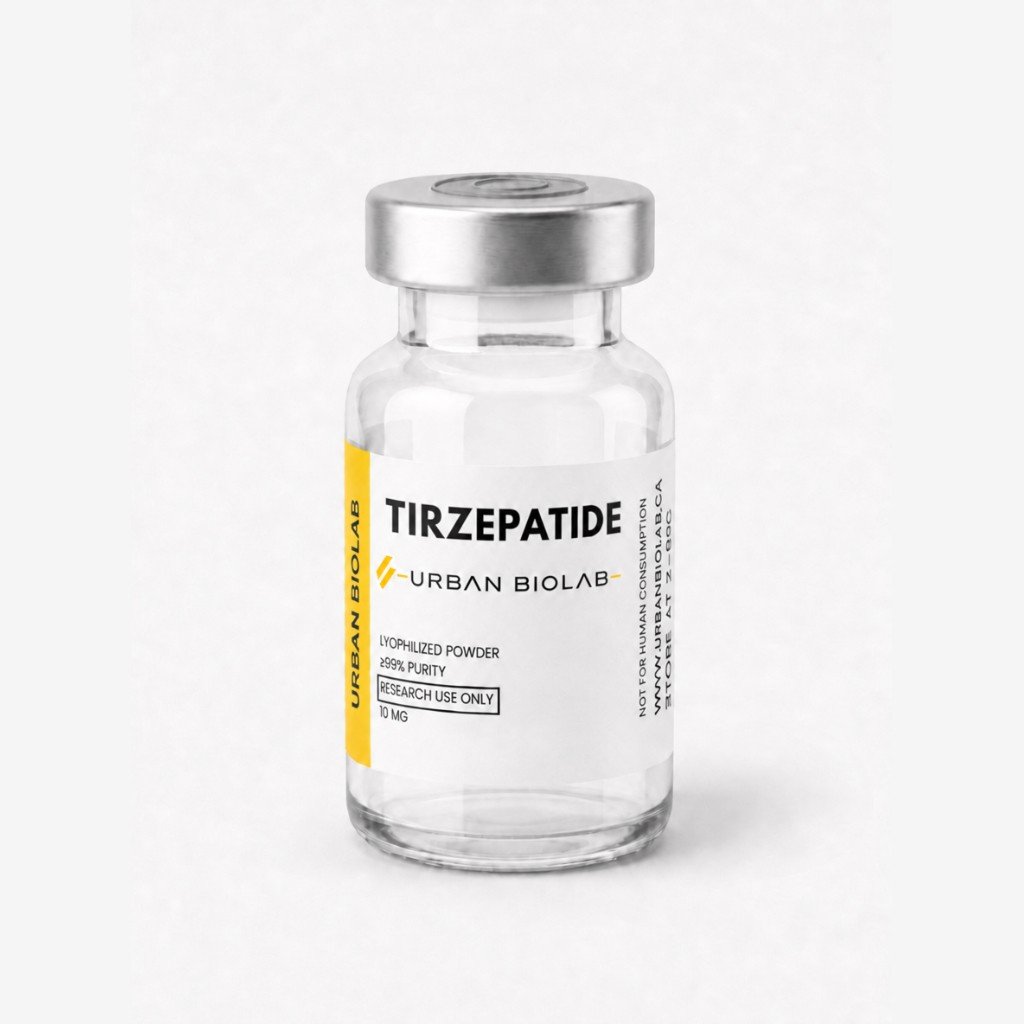
Tirzepatide 60MG
Tirzepatide 10mg is a synthetic research peptide classified as a dual GIP and GLP-1 receptor agonist, widely studied for its role in glucose metabolism, insulin signaling, and appetite regulation pathways. In laboratory research settings, Tirzepatide is of interest for investigations into metabolic regulation, energy balance, and endocrine system signaling.
Lifestyle Factors That Maximize Results
Peptides create the biological conditions for fat loss. Lifestyle determines whether you maximize that potential.
Sleep
Sleep quality directly impacts fat loss through multiple mechanisms. Poor sleep elevates cortisol, increases hunger hormones, reduces insulin sensitivity, and impairs food decisions.
Canadian winters create particular challenges. Extended darkness disrupts circadian rhythms. Less natural light confuses internal clocks. Indoor heating creates dry environments that disturb sleep.
Aim for 7-9 hours nightly. Maintain consistent sleep/wake times. Create a cool, dark sleeping environment. Consider a light therapy lamp (10,000 lux for 20-30 minutes each morning) during darker months.
Research from the University of Chicago found sleep-deprived dieters lost 55% less fat than well-rested participants despite identical calorie intakes. The sleep-deprived group lost more muscle instead.
Stress Management
Chronic stress elevates cortisol, promoting visceral fat accumulation and undermining peptide efficacy. It also triggers emotional eating that can override appetite suppression.
Effective options include exercise, meditation, time in nature, social connection, therapy, and creative outlets. The method matters less than consistent practice.
Movement Beyond Exercise
Non-exercise activity thermogenesis (NEAT) accounts for 15-50% of daily calorie expenditure. This includes walking, standing, household tasks, taking stairs.
Increasing NEAT provides metabolic benefits without structured workout time. Stand during phone calls. Park farther away. Use stairs instead of elevators. Small changes accumulate.
During Canadian winters, indoor strategies become essential. Mall walking, home equipment, dancing while cooking, and standing desks help maintain activity when weather prevents outdoor movement.
Breaking Through Plateaus
Plateaus happen in virtually every extended protocol. Understanding why prevents frustration.
Why Plateaus Happen
Plateaus result from metabolic adaptation, not failure. As weight decreases, calorie requirements drop. Someone who needed 2,500 calories daily may only need 2,000 after losing 30 pounds. If intake stays constant while expenditure decreases, weight loss stalls.
Water retention can mask fat loss. Increased activity builds muscle that offsets fat loss on the scale. Menstrual cycles cause multi-pound fluctuations. These false plateaus resolve with patience.
True metabolic plateaus require intervention. When weight remains stable for 4-6 weeks despite consistent adherence, adjustments become necessary.
Plateau-Breaking Strategies
Dose adjustment: If not at optimal dose, increasing often restarts weight loss.
Calorie cycling: Alternating higher and lower calorie days prevents metabolic adaptation from fully setting in.
Exercise modification: Adding resistance training builds muscle that elevates resting metabolism. Changing modality challenges the body in new ways.
Protein increase: Higher intake (1-1.2g per pound of goal weight) increases thermogenesis and supports muscle retention.
Sleep and stress audit: Often reveals correctable issues that restart progress when other factors are optimized.
When Plateaus Indicate Success
Extended plateaus near goal weight may indicate maintenance rather than failure. If you’ve achieved healthy body composition and metabolic markers, a plateau suggests your body found sustainable equilibrium.
Pursuing further loss beyond healthy ranges often proves counterproductive. Working with healthcare providers to assess whether continued loss is appropriate helps distinguish healthy endpoints from premature stalls.
Frequently Asked Questions
How quickly will I see results?
Most users notice appetite changes within 2-3 weeks, with measurable weight loss by week 4-6. Visible changes typically occur around weeks 8-12. The acceleration phase (weeks 9-24) produces the most dramatic results—often 1-2 pounds weekly.
What’s the difference between injectable and oral peptides?
Injectable peptides offer dramatically superior bioavailability—89%+ versus less than 1% for oral. This means lower doses, better results, and more predictable responses. Injections also eliminate food timing restrictions required for oral absorption.
Can I use peptides if I have diabetes?
GLP-1 agonists were originally developed for diabetes and show excellent safety profiles in diabetic populations. They improve blood sugar control while producing weight loss. However, combination with other diabetes medications requires monitoring to prevent hypoglycemia.
What side effects should I expect?
Gastrointestinal effects are most common, particularly during weeks 1-8. Nausea affects 25-44% depending on the peptide. Other effects include constipation, diarrhea, and occasionally acid reflux. Most diminish after the adjustment period. Serious effects are rare—pancreatitis (<0.5%) and gallbladder issues (1-2%).
How long do I need to stay on peptide therapy?
Active weight loss typically lasts 6-12 months. Maintenance options include continued reduced-dose therapy (most effective), strategic cycling, or discontinuation with intensive lifestyle maintenance. Data favors continued therapy—89% maintenance at 2 years on treatment versus 34% after discontinuation.
Will I regain weight if I stop?
Without continued intervention, most people regain significant weight. Studies show 70-85% regain within 12-18 months of discontinuation. The biological factors that drove initial weight gain remain present. Successful discontinuation requires exceptional lifestyle adherence.
Is long-term use safe?
Current evidence supports safety over 5-7 years of continuous use. No concerning signals have emerged in extended follow-up. The medication class has been used for diabetes since 2005. Ongoing monitoring through regular bloodwork remains prudent.
How should I store peptides?
Refrigerate between 2-8°C. Store in the main body of the refrigerator, not the door or freezer compartment. Reconstituted peptides remain stable for 4-8 weeks refrigerated. Lyophilized peptides remain stable for months. Protect from light. Never freeze reconstituted peptides.
What dose should I start with?
Starting doses are intentionally low to allow GI tolerance to develop. Semaglutide: 0.25 mg weekly for 4 weeks. Tirzepatide: 2.5 mg weekly for 4 weeks. Retatrutide: 1 mg weekly. The titration process takes 2-3 months to reach optimal dosing.
Can I drink alcohol?
Alcohol isn’t specifically contraindicated, but considerations apply. It provides empty calories. Reduced food intake increases intoxication effects. Appetite suppression means drinking on an emptier stomach. Most successful users limit or eliminate alcohol during active loss phases.
Do peptides interact with other medications?
GLP-1 agonists can affect absorption of oral medications by slowing gastric emptying. Medications requiring precise timing may need adjustment. Blood pressure medications may require dose reduction as weight loss improves blood pressure. Diabetes medications almost always need adjustment.
What if peptides don’t work for me?
Non-response occurs in approximately 10-15% of users. Before concluding non-response, ensure adequate dosing, sufficient time (minimum 12 weeks at effective dose), and honest adherence assessment. True non-responders may respond to different peptides—someone who fails Semaglutide might succeed with Tirzepatide.
Glossary
GLP-1: A hormone produced in the intestines that regulates appetite, slows gastric emptying, and improves insulin secretion.
GIP: An incretin hormone that enhances insulin response to meals and improves fat metabolism.
Glucagon Receptor: The third receptor targeted by triple agonist peptides. Activation increases thermogenesis and fat oxidation.
Bioavailability: The percentage of an administered dose that reaches systemic circulation in active form.
Titration: Gradual dose increase over time to reach therapeutic levels while minimizing side effects.
Adaptive Thermogenesis: Metabolic slowdown in response to weight loss, resulting in lower calorie expenditure than predicted for body size.
NEAT: Non-exercise activity thermogenesis—calories burned through daily activities outside formal exercise.
Lyophilized: Freeze-dried form of peptides providing extended stability before reconstitution.
Bacteriostatic Water: Sterile water with 0.9% benzyl alcohol preservative, used to reconstitute peptides.
Subcutaneous Injection: Injection into the fatty tissue layer beneath the skin, providing slow, steady absorption.
Set Point: The weight range the body defends through hormonal and metabolic mechanisms.
Half-Life: Time required for half a drug dose to be eliminated. Semaglutide’s half-life is approximately one week.
References
- Jastreboff AM, Aronne LJ, Ahmad NN, et al. Tirzepatide Once Weekly for the Treatment of Obesity. New England Journal of Medicine. 2022;387(3):205-216.
- Wilding JPH, Batterham RL, Calanna S, et al. Once-Weekly Semaglutide in Adults with Overweight or Obesity. New England Journal of Medicine. 2021;384(11):989-1002.
- Rosenstock J, Frias J, Jastreboff AM, et al. Retatrutide, a GIP, GLP-1 and Glucagon Receptor Agonist, for People with Type 2 Diabetes. The Lancet. 2023;402(10401):529-544.
Disclaimer: This article is for informational and educational purposes only. Research peptides are sold for laboratory research use only and are not intended for human consumption. Always consult with a qualified healthcare provider before starting any new health protocol. The information provided does not constitute medical advice, diagnosis, or treatment recommendations.