

The 24.2% Number That Has Everyone Talking
Let me cut straight to it: Retatrutide delivered 24.2% average body weight reduction over 48 weeks in Phase 2 trials. That’s not a typo. That’s not marketing spin. That’s the number that has obesity medicine specialists rethinking what pharmaceutical intervention can achieve.
For context, the previous ceiling for weight loss medications sat around 15-21%. Retatrutide didn’t just nudge past that—it blew through it. The highest dose (12mg) pushed results up to 27.3% weight loss, which for someone starting at 231 pounds means roughly 56 pounds gone.
This isn’t incremental progress. This is a different category of efficacy altogether.
Why This Medication Works Differently
Retatrutide isn’t just another GLP-1 agonist. It’s a triple receptor agonist, meaning it simultaneously activates three hormone pathways: GLP-1, GIP, and glucagon.
Here’s why that matters:
GLP-1 activation handles the appetite suppression most people associate with medications like Ozempic and Wegovy. It signals fullness to your brain and slows stomach emptying. Nothing revolutionary there—every major weight loss drug does this.
GIP activation adds enhanced insulin sensitivity and improved fat metabolism. This is the same pathway tirzepatide (Mounjaro/Zepbound) uses. The interesting part? GIP activation appears to reduce some of the nausea that makes GLP-1 medications difficult to tolerate.
Glucagon activation is where things get genuinely interesting. Glucagon traditionally raises blood sugar, which sounds counterproductive for a metabolic medication. But glucagon also increases energy expenditure by stimulating thermogenesis and promoting fat breakdown. Researchers estimate this third pathway adds roughly 100-150 calories per day of additional energy burn—which compounds to 10-15 pounds of extra weight loss over 48 weeks.
The synergy between these three pathways creates effects greater than the sum of their parts. You’re not just eating less; your body is burning more at rest. That’s why Retatrutide achieves 3-4 percentage points more weight loss than tirzepatide without proportionally worse side effects.
The Dose-Response Story
The Phase 2 trial tested four dose levels, and the pattern was remarkably consistent—each increase delivered approximately 3 additional percentage points of weight loss:
1mg: 8.7% weight loss (comparable to older GLP-1 medications, unlikely to be commercialized)
4mg: 15.2% weight loss (matches Wegovy’s 2.4mg dose)
8mg: 21.1% weight loss (matches Mounjaro’s 15mg dose)
12mg: 24.2% weight loss (unprecedented, approaching surgical intervention results)
The 8mg dose will likely become the standard maintenance dose for most patients—strong results with manageable side effects. The 12mg dose is for those who tolerate lower doses well and want maximum efficacy.
Here’s the thing about that dose-response curve: it’s predictable. Physicians can titrate patients based on individual response and tolerance rather than guessing. That reliability changes treatment planning entirely.
How Retatrutide Stacks Up Against the Competition
Let me put the head-to-head comparison in plain terms:
| Metric | Retatrutide 12mg | Tirzepatide 15mg | Semaglutide 2.4mg |
|---|---|---|---|
| Average Weight Loss | 24.2% | 20.9% | 14.9% |
| Nausea Rate | 28% | 25% | 44% |
| 10%+ Loss Rate | 91.7% | 89% | 68% |
| Discontinuation Rate | 11.2% | 7.1% | 6.2% |
The tolerability numbers deserve attention. Despite achieving significantly more weight loss, Retatrutide’s 28% nausea rate essentially matches tirzepatide’s 25% and beats semaglutide’s 44%. The triple-receptor mechanism may actually provide protective effects through GIP modulation.
One caveat: trial duration matters. Retatrutide data comes from 48-week trials while the competitors’ data comes from 68-72 week studies. Weight loss typically continues beyond 48 weeks, so Retatrutide’s true maximum potential remains unknown. The plateau appears to hit around weeks 40-48, but some participants were still losing at study endpoint.
What the Timeline Actually Looks Like
Understanding the treatment arc helps set realistic expectations:
Weeks 1-4: Starting dose produces modest effects. Appetite suppression kicks in within the first week. Weight loss averages 2-4% of starting body weight.
Weeks 5-8: This is the challenging phase. Dose escalation intensifies both benefits and side effects. Nausea typically peaks around weeks 6-8. Having anti-nausea strategies ready pays off here.
Weeks 9-16: Side effects resolve as the body adapts. Weight loss hits peak velocity—roughly 1.5-2 pounds per week. Metabolic improvements become measurable on blood tests.
Weeks 17-36: The heart of treatment. Side effects minimal. Steady progress at 0.8-1.2 pounds per week. Many patients reduce or eliminate other medications during this phase.
Weeks 37-48: Approaching plateau. Weight loss velocity slows. Focus shifts to consolidating gains and establishing maintenance habits.
By week 12, average weight loss reached 8.7%. By week 24, it hit 17.3%. By week 36, 21.1%. The consistency is remarkable—participants who made it past week 12 without discontinuing had an 87% chance of achieving at least 15% total weight loss.
Who Responds Best
Average numbers mask important variation. The subgroup analyses reveal useful patterns:
By Starting BMI: Higher starting BMI correlates with slightly lower percentage weight loss but often higher absolute pounds lost. Someone starting at BMI 45 who loses 21.3% still drops 66 pounds. Focus on absolute pounds and health improvements rather than comparing percentages across different starting points.
With Type 2 Diabetes: The 8mg dose produced 19.7% weight loss in diabetic participants, plus a 2.02% A1C reduction. That glucose control improvement matches or exceeds adding a second or third diabetes medication. Patients with both obesity and diabetes essentially receive dual treatment benefit from a single weekly injection.
By Gender: Women showed slightly higher percentage weight loss (25.3% vs 22.8%) and slightly higher nausea rates. Both groups exceeded 20% weight loss with manageable side effects.
By Age: Younger participants showed slightly better results, but older participants reported fewer gastrointestinal side effects. Those over 65 were underrepresented in the trial, so data for this group remains limited.
The Side Effect Reality
No medication comes without side effects. Here’s what the data actually shows:
Common (10%+ of participants):
- Nausea: 28% (peaks weeks 6-8, then subsides)
- Diarrhea: 24% (usually transient during dose escalation)
- Vomiting: 17% (most common in first 12 weeks)
- Constipation: 14% (fiber and hydration typically resolve)
- Injection site reactions: 14% (usually mild, lasting 24-48 hours)
Less Common (5-10%):
- Fatigue: 9%
- Dizziness: 8%
- Abdominal pain: 7%
- Headache: 6%
Rare but Serious:
- Pancreatitis: 0.1-0.2% incidence
- Gallbladder issues: 1-2% incidence (maintaining 30-50g daily fat intake helps prevent)
- Thyroid concerns: Ongoing monitoring required based on GLP-1 class labeling
The tolerability paradox stands out: Retatrutide achieves significantly more weight loss without proportionally worse side effects. The triple-receptor mechanism may provide protective effects through GIP modulation.
Managing Side Effects Effectively
The first 8-12 weeks determine whether patients complete treatment successfully. Those who develop effective management strategies early almost always continue to week 48 and beyond.
For nausea: Eat small meals every 2-3 hours rather than three large meals. Cold foods often trigger less nausea than hot foods during peak side effect weeks. Ginger tea, ginger chews, or ginger supplements taken 30 minutes before meals help many patients. Prescription anti-nausea medications like ondansetron can be used as needed during the worst weeks.
For gastrointestinal comfort: Hydration prevents most serious complications—aim for 64-80 ounces of water daily. Fiber intake requires balance: too little causes constipation, too much worsens diarrhea. Start with 20-25g daily and adjust based on symptoms. Avoid high-fat meals during dose escalation.
For injection site care: Rotate sites systematically. Let medication reach room temperature before injecting. Clean skin with alcohol and let dry completely.
The preparation investment pays dividends in comfort and compliance. Patients who prepare for side effects before starting treatment handle them much better than those caught off guard.
Beyond Weight: The Metabolic Improvements
Media coverage focuses on pounds lost. The metabolic improvements may matter more for long-term health outcomes:
- A1C: 2.02% reduction in diabetic participants
- Triglycerides: 28% reduction
- Blood pressure: 6.8 mmHg systolic drop
- LDL cholesterol: 12% reduction
- Liver fat: 44% reduction (measured by MRI)
That liver fat reduction deserves particular attention. Non-alcoholic fatty liver disease affects an estimated 25% of adults and can progress to serious liver damage. A 44% reduction represents significant disease modification, not just symptom management. The glucagon receptor activation likely contributes specifically to this hepatic benefit.
Participants also reported improvements in quality of life metrics that standard blood tests don’t capture: increased energy, diminished joint pain, improved sleep quality, expanded physical activity capacity. These subjective improvements often matter more to patients than laboratory values.
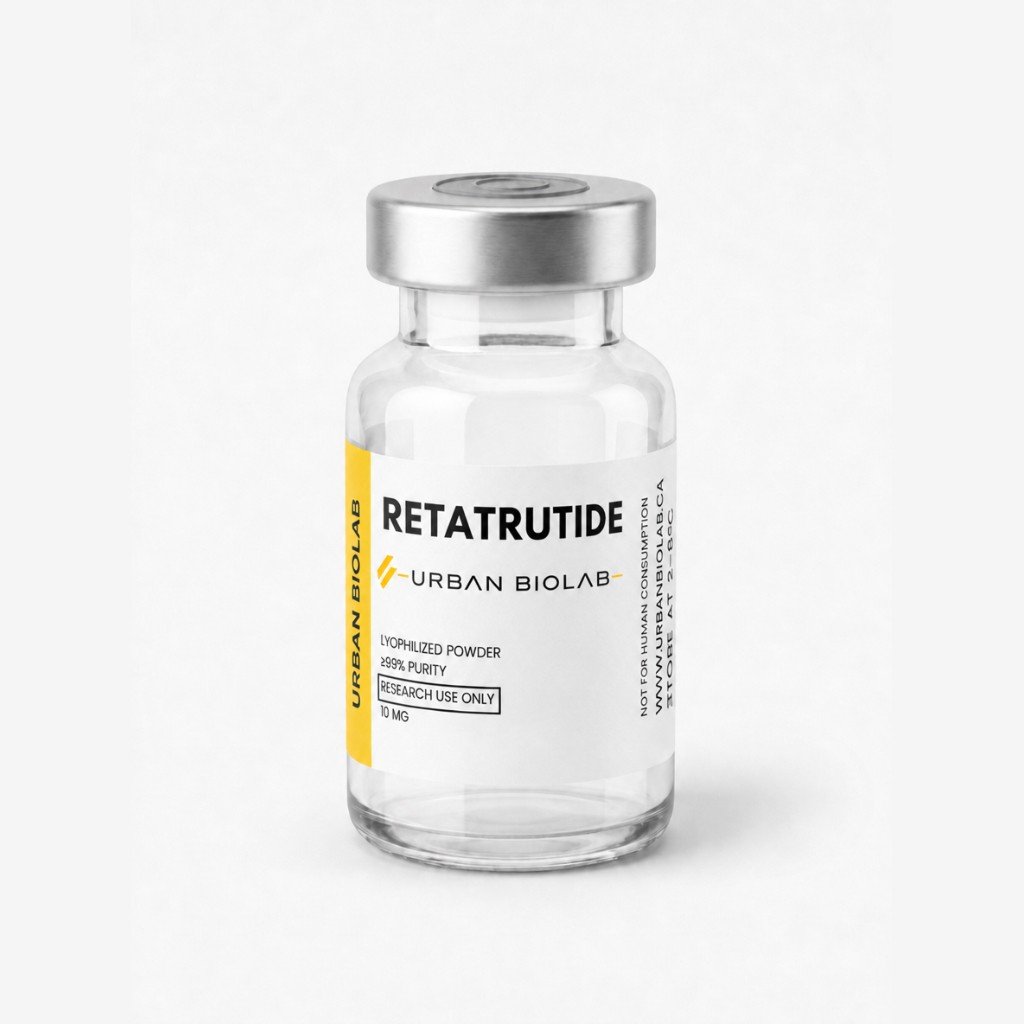
RT (Retatrutide) 10MG
Buy Retatrutide Canada: RT10 is a cutting-edge investigational peptide designed for advanced scientific exploration in metabolic health and weight management research. Known for its unique mechanism as a triple agonist (GLP-1, GIP, and glucagon receptors), it has shown promising potential in preclinical studies related to appetite regulation, fat metabolism, and glycemic control.
When Weight Loss Stops
Every weight loss intervention eventually reaches a plateau. With Retatrutide, this typically occurs around weeks 40-48.
The plateau isn’t failure—it represents the new equilibrium between medication effects and metabolic adaptation. Most patients who continue treatment beyond 48 weeks maintain their weight loss with minimal additional reduction. The medication continues working to prevent regain even after plateau.
About 12% of participants were still losing weight at week 48 without plateau. These individuals tend to have higher starting weights, excellent medication adherence, and consistent dietary modifications.
About 8% reached plateau before week 36. Early plateau doesn’t indicate treatment failure—it simply means the body reached its new set point faster.
The 91% maintenance rate through week 48 represents remarkable stability compared to traditional dieting approaches where most people regain weight within months.
What Happens When Treatment Stops
Experience with similar medications shows significant weight regain within 6-12 months of discontinuation. The metabolic adaptations these medications counteract return when medication stops. Appetite increases. Metabolic rate decreases. The body defends its previous higher weight.
This doesn’t mean treatment is futile. Rather, it means obesity requires chronic management similar to hypertension or diabetes. Nobody considers blood pressure medication a failure because blood pressure rises when you stop taking it. The same logic applies to weight loss medications.
Planning should assume long-term or indefinite treatment to maintain results. Discontinuation attempts should involve gradual tapering rather than abrupt cessation, close weight monitoring, and predetermined criteria for restarting medication if regain exceeds acceptable thresholds.
Practical Guidance for Potential Patients
Who may qualify: Individuals with BMI 30+ (obesity) or BMI 27+ with weight-related health conditions such as diabetes, hypertension, or high cholesterol. Candidates must be 18 or older and have tried diet and exercise without sustained success.
Who should avoid: Personal or family history of medullary thyroid cancer, MEN2 syndrome, history of pancreatitis, severe gastrointestinal disease, pregnancy or planning pregnancy, currently breastfeeding.
Dose escalation timeline: 2mg weekly (weeks 1-4), 4mg weekly (weeks 5-8), 8mg weekly (weeks 9-12), 12mg weekly maintenance (week 13+). The 12-week escalation is slower than competitors but necessary given the triple receptor mechanism.
Strategies for maximizing results:
- Prioritize protein intake (0.8-1.0g per pound of goal body weight daily)
- Eat small, frequent meals (5-6 meals of 200-300 calories)
- Maintain adequate hydration (64-80 ounces daily)
- Include healthy fats (30-50g daily to prevent gallbladder complications)
- Use cold foods during peak nausea weeks
Week 12 serves as the critical decision point. Patients who haven’t lost at least 5% by week 12 rarely achieve robust weight loss by week 48. Early response strongly predicts ultimate success.
Canadian Access Considerations
Health Canada typically approves medications 6-18 months after FDA approval. Assuming FDA approval in late 2026 or early 2027, Canadian approval could come as early as mid-2027 or as late as early 2028.
Provincial coverage for obesity medications varies significantly. Some provinces cover GLP-1 medications for diabetes but not for weight loss indication. Private insurance through employers often provides better coverage for newer obesity medications than provincial plans.
Canadians seeking access before official approval have options through research peptide suppliers. This route requires self-administration knowledge and assumes personal responsibility for dosing protocols. Research peptides exist in a regulatory gray area—legal for research purposes but not approved for human consumption.
Working with obesity medicine specialists or endocrinologists increases the likelihood of finding a supportive prescriber. Telemedicine has expanded access for Canadians in rural areas or provinces with limited specialists.
The Bottom Line
Retatrutide represents a genuine breakthrough in obesity pharmacotherapy. The 24.2% average weight loss approaches surgical intervention results without the operating room. The tolerability profile matches or exceeds existing medications despite superior efficacy.
FDA approval is projected between Q3 2026 and Q1 2027. Phase 3 trials are currently underway with results expected throughout 2026. For millions of people struggling with weight management, this medication could fundamentally change what’s possible through pharmaceutical intervention.
The numbers tell a compelling story. The mechanism explains why. The practical guidance helps translate clinical data into real-world expectations.
This is what happens when pharmaceutical research delivers on its promise.