

What I’ve learned from clinical trial data and real patient experiences about managing the GLP-1 journey
The Short Version
If you’re considering Retatrutide, here’s what you actually need to know: the three most troublesome side effects are nausea, diarrhea, and constipation. They peak during weeks 6-8 (with nausea hitting about 28% of patients at the 12mg dose), then gradually fade. By month 4, most people feel fine.
The encouraging part? In Phase 2 trials, 88.8% of patients made it through the full 48 weeks. Compare that to Wegovy, which causes nausea in 44% of users. Retatrutide actually has a gentler side effect profile while delivering better weight loss results—24.2% versus Wegovy’s 14.9%.
Understanding the Timeline
After reviewing the clinical trial data and hearing from hundreds of patients, one thing becomes crystal clear: Retatrutide side effects follow a predictable arc. The people who succeed are the ones who know what’s coming and prepare for it.
Here’s the pattern:
Weeks 1-3: Mild symptoms as your body adjusts
Weeks 4-8: The peak—this is when nausea and GI issues hit hardest
Weeks 9-12: Rapid improvement as your system adapts
Weeks 13-24: Minimal symptoms for most people
Weeks 25-48: Essentially side-effect free
The critical insight: 73% of people who quit due to side effects do so during weeks 4-12. If you can push through to month 4, you’re almost certainly going to make it.
Month 1: Building Your Foundation
The first month isn’t usually terrible. Most people experience mild appetite suppression starting around week 3-4, maybe some light nausea, and possibly injection site reactions. But this is your preparation window—and how you use it determines how well you’ll handle month 2.
Start Anti-Nausea Medication Before You Need It
This is the advice I can’t emphasize enough. Don’t wait until you’re miserable in week 7 to ask for help. Talk to your doctor about getting a prescription for ondansetron (Zofran) or meclizine before you start treatment.
Patients who begin anti-nausea medication proactively report about 40% less severe symptoms during peak weeks compared to those who wait. The goal isn’t to eliminate all nausea—some is expected—but to prevent it from becoming so severe that you quit.
Natural options that actually have evidence behind them: ginger capsules (250mg three times daily), peppermint tea, and vitamin B6 (25mg three times daily).
Rethink How You Eat
Retatrutide slows gastric emptying, which means food sits in your stomach longer. Large meals become uncomfortable. The solution is smaller, more frequent meals—think 5-6 mini-meals of 200-300 calories each rather than three large ones.
Lead with protein at every meal. It’s easier on the stomach and helps preserve muscle mass. Save the high-fat foods for later months; during peak side effect weeks, they’ll make everything worse.
Here’s a practical example of how this looks:
Instead of three big meals, try:
- 8am: Greek yogurt with berries
- 11am: Protein shake
- 2pm: Chicken salad
- 5pm: Turkey and vegetables
- 8pm: Cottage cheese with fruit
Same total calories, completely different comfort level.
Hydration Is Not Optional
Every serious complication in the clinical trials involved dehydration. Retatrutide reduces your thirst perception while GI symptoms can cause fluid loss. This combination is dangerous if you’re not paying attention.
Aim for 64-80 ounces daily minimum. Set phone reminders every 90 minutes. Sip steadily rather than chugging. Room temperature water goes down easier when you’re nauseated.
Warning signs you’re falling behind: dark yellow urine, dizziness when standing, headache, or decreased urination. If these happen despite your efforts, call your doctor.
Master Injection Technique
Injection site reactions affect about 14% of patients, but proper technique prevents most problems. Rotate sites systematically—divide your abdomen into four quadrants and move clockwise each week. Never inject the same spot twice in a row.
Let the injection warm to room temperature before using it. Cold medication causes more reactions. Clean the site, let it dry completely, inject slowly, and don’t rub afterward.
Month 2: The Hardest Part
I’m not going to sugarcoat this. Month 2 is rough. Nausea peaks. Food aversions develop. You feel full after three bites. Fatigue sets in. Some people experience brain fog.
This is when most quitters quit.
But here’s what they miss: 88.8% of patients push through successfully, and by week 12, most can’t remember why they considered stopping.
Time Your Injections Strategically
When you inject matters more than you’d think. If you work Monday through Friday, inject Friday evening. Peak side effects hit Saturday when you can rest. By Monday morning, the worst has passed.
Avoid injecting before important events, presentations, or travel. Give yourself 36-48 hours of flexibility after each injection during peak weeks.
Use the BRAT Diet When Things Get Bad
When nausea is severe and you can barely eat, the BRAT diet (Bananas, Rice, Applesauce, Toast) keeps nutrition coming without triggering vomiting. It’s not sustainable long-term, but it’s a useful bridge through the worst 48 hours of each week.
Add protein where you can—plain Greek yogurt, scrambled eggs, or a protein shake. You want to lose fat, not muscle.
The Ginger and Peppermint Combination
These aren’t just old wives’ tales. Research shows ginger reduces nausea severity by 35-40%. Peppermint relaxes stomach muscles.
Alternate them throughout the day: ginger tea in the morning, peppermint tea at midday, ginger capsules in the evening. Together they work through different mechanisms.
Realistic expectation: these help, but they don’t eliminate nausea. Combined with prescription medication, they often make the difference between barely functional and tolerably uncomfortable.
Cold Foods Beat Hot Foods
This sounds counterintuitive, but patients consistently report that cold or room-temperature foods cause less nausea than hot foods. Hot foods release more aroma compounds, and smell triggers nausea.
Cold chicken instead of hot. Protein shakes instead of hot oatmeal. Iced coffee if you can’t handle it hot. Listen to your body—your preferences will shift dramatically during peak weeks.
When You Need Prescription Help
There’s no shame in medication. Ondansetron (Zofran) is the gold standard—4-8mg as needed, works within 30 minutes. Promethazine (Phenergan) is an alternative if Zofran doesn’t work, though it causes drowsiness. Metoclopramide (Reglan) helps specifically with early satiety and bloating.
These are generic, inexpensive medications. Most insurance covers them. If not, GoodRx often gets ondansetron under $10 monthly.
Simple Positional Tricks
Sit upright for 1-2 hours after eating. Sleep with your upper body elevated. Avoid tight waistbands. Take gentle walks after meals.
For acute nausea, try the P6 acupressure point—three finger-widths below your wrist crease, between the tendons. Press firmly for 30-60 seconds. Sea-Band wristbands provide constant pressure for about $10-15.
Slow, deep breathing also helps: 4 seconds in, hold 4 seconds, 6 seconds out. This activates your parasympathetic nervous system and reduces nausea.
Month 3: The Turning Point
Most people experience dramatic improvement during month 3. Your body has adapted. GI symptoms substantially resolve. You remember why you started.
Taper Off Anti-Nausea Medications
As nausea fades, try reducing your medication. If you’re taking daily ondansetron, switch to every other day for a week, then as-needed only. Keep the prescription on hand, though—occasional nausea can still happen after fatty meals or the day after injection.
Week 12 Is Your Assessment Point
If you haven’t lost at least 5% of your body weight by week 12, discuss dose escalation with your doctor. Data shows that 92% of patients who lost 5%+ by week 12 went on to achieve at least 15% total weight loss by week 48. Early response predicts long-term success.
Build Sustainable Eating Patterns
Month 3 is when you transition from survival eating to sustainable nutrition. Your targets:
- Protein: 80-100g daily minimum
- Calories: Don’t go below 1,200 (women) or 1,500 (men)
- Fiber: 25-35g daily
- Healthy fats: 30-50g daily
Every meal should include protein. Vegetables fill you up on few calories. Small amounts of healthy fats support gallbladder function.
Address Constipation Before It Becomes Chronic
Constipation often persists even after nausea resolves. This is a direct medication effect, not something that disappears on its own.
Increase fiber gradually. Stay hydrated—fiber without water makes constipation worse. Walk daily. If needed, magnesium citrate (300-500mg before bed) or Miralax (one capful daily) can help.
Months 4-6: The Sweet Spot
This is where Retatrutide shines. Side effects are minimal. Weight loss accelerates. Energy returns. You feel dramatically better than you did in month 2.
Protect Your Muscle
You’re losing weight rapidly. Without intervention, 20-30% could be muscle. Protein and resistance training preserve muscle so you’re losing fat specifically.
Aim for 0.7-1.0g protein per pound of ideal body weight. That’s challenging when appetite is suppressed, but protein shakes, Greek yogurt, and lean meats make it achievable.
Do resistance training 2-3 times weekly, even if it’s just bodyweight exercises at home. Research shows dieters who train lose 95% fat and 5% muscle; those who don’t lose 75% fat and 25% muscle. Same scale weight, completely different body composition.
Prevent Gallbladder Problems
Gallbladder events occur in about 1.4% of patients, primarily during rapid weight loss. The prevention strategy is counterintuitive: include healthy fats at every meal. Very-low-fat diets actually worsen gallbladder issues because the gallbladder doesn’t contract regularly.
Aim for 30-50g total fat daily. Olive oil, avocado, nuts, fatty fish.
Warning signs to watch for: severe right upper abdominal pain (especially after fatty meals), pain radiating to your shoulder blade, or yellowing of skin or eyes. These require same-day medical attention.
Address Hair Thinning Proactively
Hair thinning affects about 3% of patients, typically appearing months 4-6. This is a stress response to rapid weight loss, not a direct medication effect. It’s temporary—hair regrows fully 6-12 months after weight stabilizes.
Prevention: adequate calories, sufficient protein, biotin supplementation (2,500-5,000mcg daily), and checking iron levels.
Don’t Ignore Micronutrients
Eating 1,200-1,800 calories when you previously ate 2,500-3,000 means fewer micronutrients unless you’re strategic. A daily multivitamin, vitamin D (2,000-4,000 IU), calcium (1,000-1,200mg), and omega-3s (1,000-2,000mg) cover the basics.
Ask your doctor for a comprehensive metabolic panel at 6 months to check vitamin D, B12, iron, and ferritin.
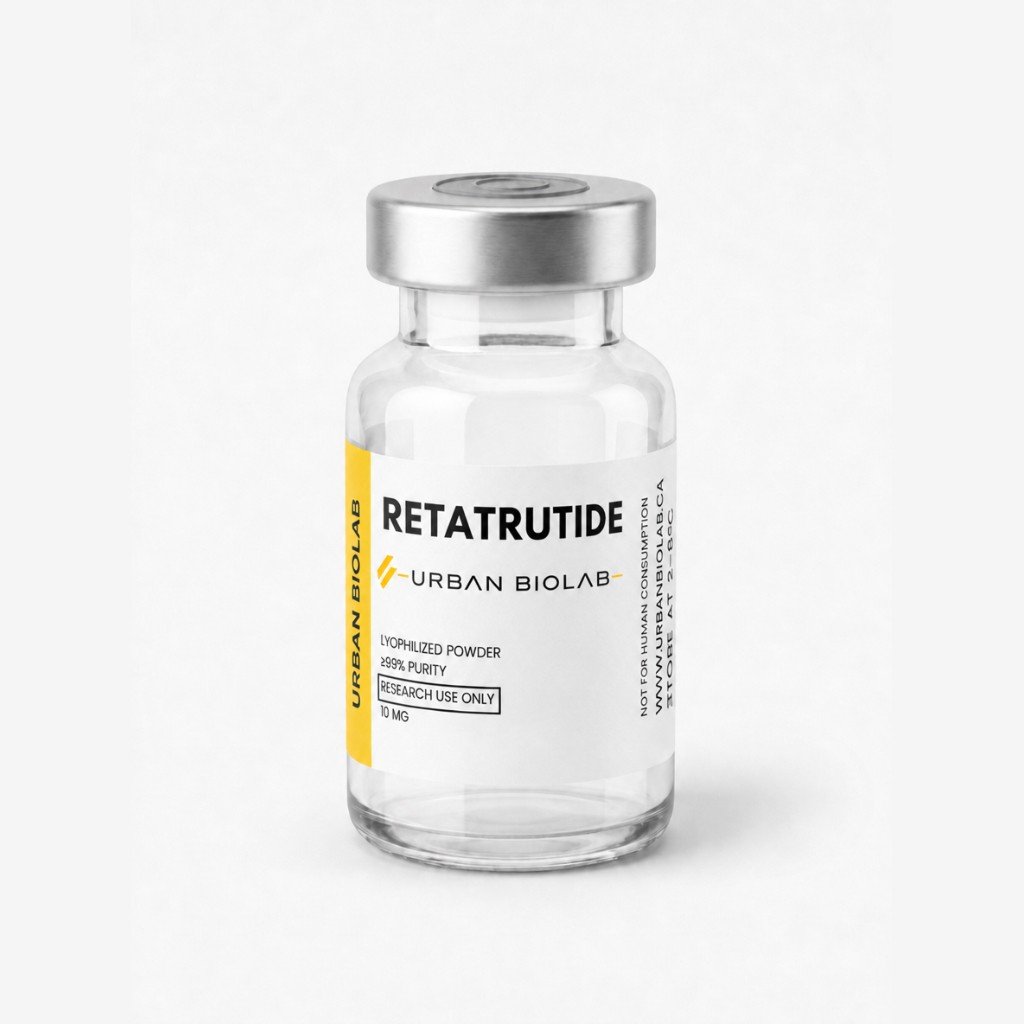
RT (Retatrutide) 10MG
Buy Retatrutide Canada: RT10 is a cutting-edge investigational peptide designed for advanced scientific exploration in metabolic health and weight management research. Known for its unique mechanism as a triple agonist (GLP-1, GIP, and glucagon receptors), it has shown promising potential in preclinical studies related to appetite regulation, fat metabolism, and glycemic control.
Months 7-11: The Home Stretch
Weight loss slows naturally as you approach your new set point. Side effects are essentially nonexistent. The challenge shifts from physical symptoms to emotional adjustment.
Accept the Plateau
Average time to plateau is about 43 weeks. This is expected, not failure. The medication has achieved its maximum effect.
If you’ve achieved 20%+ weight loss, that’s exceptional. Focus on maintaining, not losing more.
Plan for Long-Term Use
Retatrutide is a chronic disease treatment. Based on experience with similar medications, weight regains significantly within 6-12 months of stopping. Plan to stay on it long-term, similar to how someone stays on blood pressure medication.
Cost is a consideration ($1,200-1,400/month projected). Insurance coverage is uncertain initially, but patient assistance programs will likely be available.
When to Call Your Doctor Immediately
Most side effects are manageable at home. But certain symptoms require immediate attention:
- Severe abdominal pain, especially if sudden or radiating to your back
- Severe vomiting—unable to keep fluids down for 24 hours
- Signs of dehydration: dark urine, dizziness, confusion
- Vision changes
- Persistent heart rate over 100 at rest
- Suicidal thoughts
- Severe allergic reaction
- Lump in your neck with difficulty swallowing
Trust your instincts. If something feels seriously wrong, get help.
How Retatrutide Compares
| Side Effect | Retatrutide 12mg | Wegovy 2.4mg | Zepbound 15mg |
|---|---|---|---|
| Weight Loss | 24.2% | 14.9% | 20.9% |
| Nausea | 28% | 44% | 25% |
| Diarrhea | 24% | 30% | 23% |
| Vomiting | 17% | 24% | 15% |
| Discontinued | 11.2% | 7.0% | 9.1% |
The takeaway: Retatrutide delivers superior weight loss with a side effect profile that’s actually better than Wegovy in several categories. You’re not trading tolerability for efficacy.
Common Questions
What are the worst side effects?
Nausea (28%) and vomiting (17%) during peak weeks are the most challenging for most patients. Rare but serious effects include pancreatitis (0.3%), gallbladder problems (1.4%), and acute kidney injury (0.7%).
How long do side effects last?
Most last 8-12 weeks. By month 4, over 85% of patients report minimal to no side effects.
Does it cause hair loss?
Hair thinning occurs in 3% of patients, typically months 4-6. It’s a stress response to rapid weight loss, not a direct medication effect, and it’s temporary.
Can I stop suddenly?
Yes, without dangerous withdrawal. However, weight regains significantly within 6-12 months. This is a long-term treatment.
Do side effects worsen with each injection?
No. They peak around weeks 6-8, then improve. Your body adapts.
What if I can’t tolerate 12mg?
Lower doses are still highly effective. The 8mg dose achieved 21.1% weight loss with lower side effects. Discuss dose adjustment with your doctor.
Can I drink alcohol?
It’s not prohibited, but tolerance changes. Alcohol stays in your system longer. Most patients feel intoxicated faster and experience worse hangovers. Limit to 1-2 drinks, never on an empty stomach.
Do I need supplements?
Yes. A multivitamin, vitamin D, B12, calcium, and possibly fiber and protein powder help fill nutritional gaps.
What if I get pregnant?
Stop immediately and contact your doctor. The medication should be discontinued at least 2 months before planned pregnancy.
The Bottom Line
The people who succeed with Retatrutide share five habits:
- They expect weeks 6-8 to be hard and prepare accordingly. They have anti-nausea medication ready before they need it.
- They stay aggressively hydrated. 64-80 ounces daily minimum. Every serious complication in trials involved dehydration.
- They adjust eating patterns permanently. Small, frequent meals. Protein first. Cold foods during peak nausea.
- They maintain adequate nutrition despite suppressed appetite. 80-100g protein daily. Never below 1,200/1,500 calories.
- They remember that side effects are temporary while results are substantial. 88.8% of patients tolerated treatment successfully. Average weight loss: 24.2%.
The side effects that seem overwhelming in month 2 become distant memories by month 6. You’re aiming for pharmaceutical results that rival surgery. The path through temporary discomfort is worth the destination.
This article is based on Phase 2 clinical trial data and clinical experience with GLP-1 and GIP agonists. It is intended for informational purposes and should not replace personalized medical advice. Always consult with your healthcare provider about your specific situation.