
Quick Answer
Retatrutide is an investigational weight loss peptide that has drawn serious attention in Canada because of one striking number: participants in a Phase 2 trial lost an average of 24.2% of their body weight at the 12mg dose over 48 weeks.
For someone who weighs 200 pounds, that works out to roughly 48 pounds lost with a once-weekly injection.
What separates Retatrutide from earlier options is its mechanism. It is a triple receptor agonist, meaning it activates GLP-1, GIP, and glucagon receptors at the same time. That makes it appear more effective than Ozempic (semaglutide, about 14.9% weight loss) and Mounjaro (tirzepatide, about 20.9% weight loss).
In the trial, 88.8% of participants at the 12mg dose completed the full 48 weeks, which suggests side effects were manageable for most people.
That said, Retatrutide is still investigational. It has not been approved by Health Canada or the FDA. The information below is educational and based on published trial data, not medical advice.
One Canadian Experience
A 41-year-old man from Edmonton, Tyler Richardson, shared his experience with Retatrutide. He started at 218 pounds and described feeling defeated after years of calorie counting, gym memberships, and intermittent fasting. His doctor had been raising concerns about blood pressure and cholesterol.
After reading clinical trial data and forum discussions, he decided to try Retatrutide. His protocol looked like this:
- Weeks 1–4: 2mg weekly
- Weeks 5–8: 4mg weekly
- Weeks 9–12: 8mg weekly
- Week 13 onward: 12mg weekly
- Injection day: Saturday mornings
He reported mild nausea after meals during the first month, which faded by around week six. His appetite changed noticeably. He stopped thinking about snacks, meals felt satisfying without seconds, and weight came off at roughly 3–4 pounds per week during months two and three.
Nine months in, he weighed 169 pounds—49 pounds down. His blood pressure normalized without medication, his energy improved, and he could play hockey with his kids without getting winded.
This is a single anecdotal report, not clinical evidence. Individual results vary widely. But it illustrates why Retatrutide has captured so much attention.
What Is Retatrutide and Why Is Canada Paying Attention?
Retatrutide is being developed by Eli Lilly. It is not yet on the market. It is an investigational compound that activates three different hormone receptors involved in appetite, metabolism, and energy balance.
Canada has a particular interest in effective obesity treatments. Statistics Canada reports that about 27% of Canadian adults are obese, and another 36% are overweight. That means nearly two-thirds of the adult population could potentially benefit from better weight management options.
The Canadian context makes this more complicated than it might seem. Cold winters reduce outdoor activity for many people. Comfort food traditions are strong. Access to care varies significantly between large cities and remote communities. Provincial health systems are already under pressure from obesity-related conditions like type 2 diabetes, cardiovascular disease, and joint problems that often require surgery.
The economic burden of obesity in Canada is estimated to exceed $7 billion annually when direct healthcare costs and lost productivity are included.
Bariatric surgery can produce 25–30% weight loss, but wait times in Canada often range from 2 to 5 years depending on the province. For many people, a pharmaceutical option that approaches surgical results would be a meaningful alternative.
That is why Retatrutide has become a major topic in Canadian obesity research circles.
The Triple Mechanism That Changes the Equation
To understand why Retatrutide appears to outperform other weight loss medications, you have to look at how it works.
GLP-1 Receptor Activation
This is the same pathway targeted by Ozempic and Wegovy. GLP-1 activation slows gastric emptying, reduces appetite, and improves insulin secretion. You feel full longer and lose interest in eating between meals.
GIP Receptor Activation
GIP, or glucose-dependent insulinotropic polypeptide, works alongside GLP-1. It improves how the body handles nutrients, reduces fat accumulation, and adds further appetite suppression. Mounjaro targets both GLP-1 and GIP, which helps explain why it outperforms GLP-1-only medications.
Glucagon Receptor Activation
This is the third mechanism, and it is what makes Retatrutide different. Glucagon receptor activation increases energy expenditure, promotes fat burning, and supports liver health. While GLP-1 and GIP mainly reduce calorie intake, glucagon activation increases calorie output. It attacks the energy balance equation from both directions.
The key takeaway: The combination of reduced appetite, better nutrient handling, and increased energy expenditure produces weight loss that is roughly 50% greater than GLP-1-only medications and about 15% greater than dual agonist approaches.
Clinical Trial Data: The Numbers Behind the Hype
The Phase 2 trial enrolled 338 participants with obesity or overweight status and followed them for 48 weeks. Several dose levels were tested.
The trial was randomized, double-blind, and placebo-controlled. Participants ranged from 18 to 75 years old. Both men and women were included. Average baseline BMI was about 37. Many had tried other weight loss methods without lasting success.
Here is the dose-response data:
| Dose | Average Weight Loss | Nausea Rate | Completion Rate |
|---|---|---|---|
| 1mg weekly | 8.7% | 12% | 96.8% |
| 4mg weekly | 15.2% | 18% | 94.3% |
| 8mg weekly | 21.1% | 24% | 91.6% |
| 12mg weekly | 24.2% | 28% | 88.8% |
The placebo group lost an average of 2.1% of body weight, which reflects the lifestyle counseling all participants received. The difference between placebo and active treatment shows that Retatrutide itself drove the substantial weight loss.
Among participants who continued past week 12, 87% achieved at least 15% total body weight loss.
Weight loss followed a predictable curve. Rapid loss occurred during months two through six, averaging 3–5 pounds per week for many participants. The pace slowed during months seven through nine. By weeks 40–48, most participants had reached a plateau.
Subgroup analyses showed consistent results across men and women, younger and older participants, and those with and without diabetes.
Phase 3 trials are ongoing. They will provide larger safety data, longer treatment durations, and direct comparisons with existing medications.
How Retatrutide Compares to Other Options
Context matters. Retatrutide is entering a field with established competitors.
| Medication | Average Weight Loss | Mechanism | Status |
|---|---|---|---|
| Liraglutide (Saxenda) | 8.0% | GLP-1 agonist | Approved |
| Semaglutide (Ozempic/Wegovy) | 14.9% | GLP-1 agonist | Approved |
| Tirzepatide (Mounjaro/Zepbound) | 20.9% | GLP-1/GIP dual agonist | Approved |
| Retatrutide | 24.2% | GLP-1/GIP/glucagon triple agonist | Investigational |
The progression from single to dual to triple agonists shows clear gains at each step.
Interestingly, Retatrutide reports lower nausea rates than semaglutide (28% versus 44%) despite producing more weight loss. The additional receptor activity may buffer some gastrointestinal effects.
For context, gastric sleeve surgery typically produces 25–30% weight loss. Retatrutide comes remarkably close to that through a weekly injection.
Cost is another factor. Existing GLP-1 medications often cost $1,100 to $1,300 per month in Canada without insurance coverage. Research peptide suppliers offer lower price points, but quality verification becomes critical when sourcing outside traditional pharmacy channels.
Access and Availability in Canada
Health Canada maintains strict oversight of pharmaceutical products. Formal approval for Retatrutide is likely several years away.
Phase 3 trials are ongoing. FDA approval is projected for late 2026 to early 2027. Health Canada approval typically follows FDA decisions by 6 to 12 months. Realistic availability through Canadian pharmacies may fall in the 2027 to 2028 timeframe.
Provincial drug plans will eventually need to make coverage decisions. Based on precedent with other obesity medications, initial coverage may focus on patients with type 2 diabetes or severe obesity with comorbidities. Others may face out-of-pocket costs.
Canada’s healthcare system is universal, but drug coverage is fragmented. Quebec has its own drug insurance program. Ontario covers certain obesity-related medications through the Ontario Drug Benefit program for eligible patients. British Columbia, Alberta, and other provinces evaluate medications independently. This creates a patchwork that can confuse patients moving between provinces.
For now, many Canadians interested in Retatrutide access it through the research peptide market. Reputable Canadian suppliers provide third-party testing documentation, maintain cold chain storage, and ship domestically within 2–4 business days. This avoids customs delays that can degrade peptide stability.
Quality verification is essential. Look for:
- HPLC testing showing purity above 98%
- Mass spectrometry confirmation
- Endotoxin testing below 2 ng/mL
- Certificates of analysis for each batch
- Proper cold chain storage and shipping
- Canadian warehouse with domestic shipping
- Responsive customer service
- Established reputation in the research community
Not all suppliers meet these standards. Price alone is not a reliable indicator of quality. Documentation and transparency matter more.
Dosing Protocol and What to Expect
Retatrutide is typically studied using a gradual dose escalation schedule. Rushing this process increases side effects and makes discontinuation more likely.
Phase 1: Introduction
- Weeks 1–4: 2mg weekly
- The body adjusts to GLP-1 activation. Appetite changes are mild. Weight loss is modest, typically 2–4 pounds total.
Phase 2: Building
- Weeks 5–8: 4mg weekly
- Appetite suppression becomes noticeable. Portion sizes decrease. Mild nausea may occur during the first week at this dose but usually resolves within 7–10 days. Weight loss accelerates to 1–2 pounds per week.
Phase 3: Acceleration
- Weeks 9–12: 8mg weekly
- All three receptor pathways are more fully activated. Energy expenditure increases. Food interest decreases. This phase often brings peak side effects, though they usually moderate by week 12. Weight loss reaches 2–4 pounds per week.
Phase 4: Maximum Effect
- Weeks 13 onward: 12mg weekly
- Full therapeutic dosing. Appetite changes are profound. Weight loss continues at 2–5 pounds weekly during months four through six, then gradually slows.
Injection technique matters. Subcutaneous injection into abdominal fat provides reliable absorption. Rotate injection sites to prevent lipodystrophy. Room-temperature peptide reduces injection discomfort compared to cold solution.
My view: The most common mistake is rushing the escalation. Reaching 12mg within a few weeks instead of three months almost always backfires. Severe nausea leads to discontinuation, and people never reach the phase where results become dramatic. Patience during titration pays off.
Side Effects: The Complete Picture
Most users experience at least some side effects during the initial weeks. They typically follow predictable patterns and resolve as the body adapts.
Nausea – 28% at 12mg. Peaks during weeks 4–8. Smaller, more frequent meals help. Avoiding high-fat foods reduces severity. Most users improve by week 12 and resolve by month four.
Diarrhea – 24% at 12mg. Usually transient during dose increases. Hydration is important. Probiotics may help.
Constipation – 21% at 12mg. Slowed gastric emptying can reduce bowel frequency. Fiber and hydration address this effectively.
Injection site reactions – 14% at 12mg. Mild redness, swelling, or itching. Usually resolves within 24–48 hours. Rotating sites minimizes occurrence.
Serious adverse events are rare. Pancreatitis occurred in 0.3% of trial participants. Gallbladder events affected 1.4%. Acute kidney injury occurred in 0.7%, all associated with severe dehydration from vomiting or diarrhea rather than direct drug toxicity.
Hair thinning affects about 3% of users. It is likely related to rapid weight loss rather than the medication itself. This condition, called telogen effluvium, usually reverses once weight stabilizes. Adequate protein intake helps.
Fatigue is common early on as the body shifts toward fat burning. Most users report energy levels equal to or better than baseline once adaptation completes.
Headaches occur in about 11% of users. They are usually mild and responsive to hydration.
Mental health should be monitored. Trials showed no increased risk of depression or anxiety compared to placebo, but the FDA requires mood warnings for all obesity medications. Those with existing mental health conditions should maintain communication with their healthcare providers.
The discontinuation rate due to side effects at 12mg was only 11.2%. Nearly 9 out of 10 participants completed the full 48-week study.
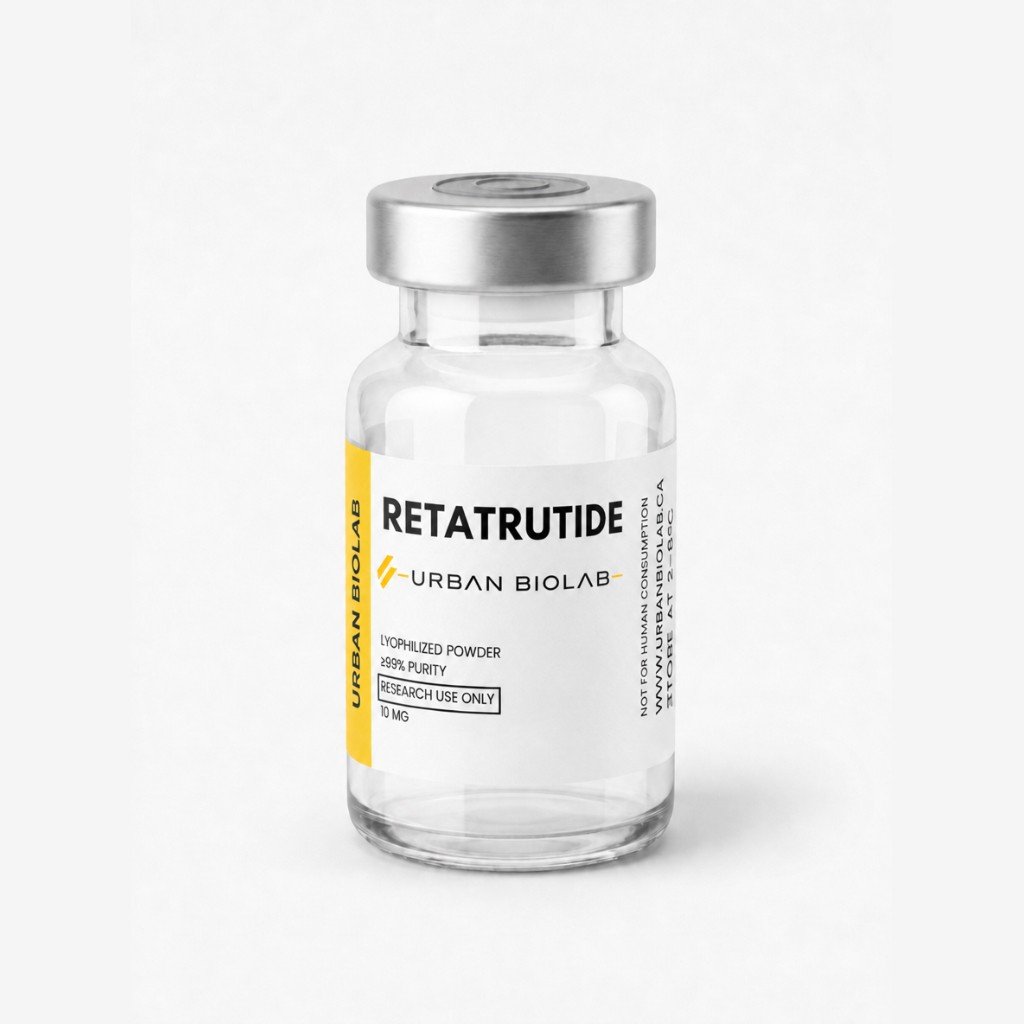
RT (Retatrutide) 10MG
RT10 is a cutting-edge investigational peptide designed for advanced scientific exploration in metabolic health and weight management research. Known for its unique mechanism as a triple agonist (GLP-1, GIP, and glucagon receptors), it has shown promising potential in preclinical studies related to appetite regulation, fat metabolism, and glycemic control.
Metabolic Benefits Beyond Weight Loss
The scale is the most visible metric, but Retatrutide delivers improvements across multiple health parameters.
- Blood pressure: Average 6.8 mmHg systolic reduction. Every 5 mmHg reduction cuts cardiovascular event risk by about 10%.
- A1C: 2.02 percentage point drop in diabetic participants.
- Triglycerides: 28% reduction.
- Liver fat: 44% reduction in MRI-measured trial subsets.
- LDL cholesterol: 12% decrease.
- Insulin sensitivity: Direct improvement from GLP-1 and GIP activation.
- Inflammation: Substantial reduction in C-reactive protein.
- Sleep: Weight loss reduces sleep apnea severity and snoring.
- Joints: Every pound lost removes about 4 pounds of force from the knees during walking.
These metabolic changes may ultimately save more lives than the weight loss itself.
Who Makes a Good Candidate?
Ideal candidates typically have:
- BMI of 30 or higher
- BMI of 27 or higher with at least one weight-related health condition
- Previous unsuccessful attempts at lifestyle modification
- Metabolic syndrome or prediabetes
- Type 2 diabetes seeking improved glycemic control
- Cardiovascular risk factors
- Commitment to dietary changes alongside medication
- Realistic expectations about timeline and results
Use caution or avoid if you have:
- Personal or family history of medullary thyroid cancer
- Multiple endocrine neoplasia syndrome type 2
- History of pancreatitis
- Severe gastrointestinal disease
- Pregnancy or breastfeeding
- Type 1 diabetes
- Severe kidney impairment
- Eating disorders requiring different intervention
Age plays less of a role than overall health status. Psychological readiness matters. The medication reduces appetite and enhances fat burning, but it does not override deliberate overeating or poor food choices.
Financial considerations require honest assessment. Research peptides involve ongoing costs. Those unable to commit financially for at least six months may struggle to see meaningful results.
Support systems enhance success. Partners, family, and friends who support weight loss efforts help. Those facing skepticism may need to establish boundaries or seek online communities.
Nutrition Tips While Using Retatrutide
Protein intake is the top priority. Target 0.7 to 1.0 grams per pound of body weight daily. For a 180-pound person, that means 126–180 grams of protein each day. This is challenging when appetite is suppressed, making protein shakes or bars often necessary.
Meal timing: Eat your largest meal earlier in the day when nausea is less problematic. Many users tolerate breakfast and lunch well but struggle with dinner.
Hydration: Aim for 64–100 ounces of water daily. Dehydration worsens nausea, contributes to constipation, and increases kidney stress.
Foods to minimize: High-fat foods, fried foods, heavy creams, and spicy foods often trigger discomfort during the adjustment phase.
Supplements: A quality multivitamin covers micronutrient gaps. Fiber supplements prevent constipation. Protein powder helps meet targets. Vitamin B12 may be worth considering because GLP-1 medications can reduce absorption over time.
Ginger has anti-nausea properties. Fresh ginger tea, ginger chews, or ginger supplements taken 30 minutes before meals can reduce nausea during adjustment.
Timeline Expectations: Month by Month
Month 1 – Adjustment
- Weight loss: 3–6 pounds
- Appetite changes are subtle. Energy may fluctuate.
Month 2 – Side Effect Peak
- Weight loss: 6–12 pounds cumulative
- Appetite suppression increases. Nausea most common. Symptoms often improve by month end.
Month 3 – The Turning Point
- Weight loss: 12–20 pounds cumulative
- Weight loss accelerates. Side effects stabilize or improve. Energy increases.
Months 4–6 – Maximum Velocity
- Weight loss: 25–40 pounds cumulative
- Weekly losses of 2–4 pounds are common. Clothing sizes drop. Health markers improve.
Months 7–9 – Deceleration
- Weight loss: 40–50 pounds cumulative
- Weekly losses decrease to 1–2 pounds. This is normal.
Months 10–12 – Stabilization
- Weight loss: 45–55 pounds cumulative, approximately 24%
- Weight stabilizes. Focus shifts to maintenance. Side effects typically resolved.
Sourcing Quality Research Peptides in Canada
The research peptide market is unregulated. Quality varies dramatically. Price alone does not indicate quality. Some expensive suppliers overcharge for average products. Some reasonably priced options deliver excellent quality.
Testing documentation is the most reliable quality indicator. Legitimate suppliers invest in third-party laboratory testing. Those refusing to provide documentation merit skepticism.
Quality verification checklist:
- Third-party HPLC testing showing purity above 98%
- Mass spectrometry confirmation of molecular identity
- Endotoxin testing below 2 ng/mL
- Certificates of analysis for each production batch
- Proper cold chain storage and shipping
- Canadian warehouse with domestic shipping
- Responsive customer service
- Established reputation in the research community
Domestic Canadian suppliers offer significant advantages. Customs processing can delay international shipments for weeks. Temperature fluctuations during extended transit degrade peptide integrity. Domestic shipments reach Canadian destinations within 2–4 days with proper cold packing.
Cold chain integrity matters. Peptides degrade outside their stable temperature range. International shipments often sit in warehouses and delivery vehicles without temperature control. Each hour at elevated temperatures reduces potency.
Canadian suppliers understand Canadian conditions. They know packages delivered in January might sit on doorsteps in freezing temperatures. They package accordingly.
Price comparisons require caution. Significantly cheaper options often indicate compromised quality or insufficient testing. The 40–60% price premium for verified quality peptides is an investment, not an optional expense.
Community feedback supplements official documentation. Online forums contain years of accumulated experience with various suppliers. Consistent positive reports build confidence. Repeated complaints raise flags.
Frequently Asked Questions
How much weight can I realistically expect to lose?
Clinical trial data shows average weight loss of 24.2% at the 12mg dose over 48 weeks. For a 200-pound person, that is about 48 pounds. Individual results vary based on starting weight, adherence, diet, and genetics. The range in trials was 15% to over 27% among completers.
When will Retatrutide receive Health Canada approval?
Phase 3 trials are ongoing. FDA approval is projected for late 2026 to early 2027. Health Canada approval typically follows by 6–12 months. Realistic availability through Canadian pharmacies is 2027–2028.
Is Retatrutide better than Ozempic or Mounjaro?
Based on Phase 2 data, Retatrutide produces greater weight loss than both. However, Ozempic and Mounjaro have longer safety track records and regulatory approval.
How long do side effects last?
Gastrointestinal side effects typically peak during weeks 4–8 and resolve substantially by week 12. Most users report minimal side effects during months 4–11.
Can I use Retatrutide if I have diabetes?
Retatrutide shows excellent results for type 2 diabetics, with A1C reductions averaging 2.02 percentage points. Coordination with diabetes management is essential. Type 1 diabetes is a contraindication.
What happens if I stop taking Retatrutide?
Weight regain typically occurs after discontinuation, consistent with other GLP-1 medications. Maintenance dosing, lifestyle modifications, or cycling approaches can help sustain results.
How should I store Retatrutide peptides?
Unreconstituted peptides should be refrigerated at 2–8°C. Once reconstituted with bacteriostatic water, the solution remains stable for 4–6 weeks under refrigeration. Avoid freezing reconstituted peptides. Keep away from light. Never use cloudy or discolored solutions.
Is Retatrutide safe for long-term use?
Current clinical data extends only to 48 weeks. Long-term safety beyond this timeframe remains unknown pending extended trials. The side effect profile appears comparable to other GLP-1 medications with longer track records.
What is the cost of Retatrutide in Canada?
Official pharmaceutical pricing is undetermined. Research peptide costs vary by supplier and quantity, generally $200–$400 CAD monthly depending on dosing. Quality-verified suppliers typically price at the higher end.
Can Retatrutide be combined with other weight loss medications?
Combination with other GLP-1 or GIP agonists is not recommended due to overlapping mechanisms and increased side effect risk. Consultation with qualified healthcare providers is advisable before combining any medications.
Glossary of Terms
GLP-1 (Glucagon-Like Peptide 1): A hormone that regulates appetite, slows gastric emptying, and enhances insulin secretion.
GIP (Glucose-Dependent Insulinotropic Polypeptide): A gut hormone involved in nutrient metabolism and insulin regulation.
Glucagon: A hormone that raises blood sugar by promoting glucose release from the liver. Glucagon receptor activation also increases energy expenditure and fat breakdown.
Triple Agonist: A medication that activates three different receptor types simultaneously.
A1C (Hemoglobin A1C): A blood test measuring average blood sugar levels over 2–3 months.
HPLC (High Performance Liquid Chromatography): An analytical technique used to determine peptide purity.
Mass Spectrometry: A testing method that confirms molecular identity by measuring mass-to-charge ratio.
Subcutaneous Injection: An injection delivered into the fatty tissue layer beneath the skin.
Telogen Effluvium: Temporary hair shedding caused by metabolic stress such as rapid weight loss.
BMI (Body Mass Index): A calculation using height and weight to categorize body composition.
References
- Jastreboff AM, et al. “Triple hormone receptor agonist retatrutide for obesity.” New England Journal of Medicine. 2023.
- ClinicalTrials.gov. “A Study of Retatrutide (LY3437943) in Participants With Obesity.” NCT05934110.
- American Heart Association. “Diabetes and Cardiovascular Disease.”
Research Disclaimer
This article provides educational information about Retatrutide based on published clinical trial data. It is intended for research purposes and does not constitute medical advice. Retatrutide is an investigational compound that has not received regulatory approval from Health Canada or the FDA. Individual health decisions should be made in consultation with qualified healthcare providers who understand your complete medical history and circumstances.