
By Mark Litherland, MSc
Molecular Pharmacologist | University of British Columbia
Understanding the molecular conversations that happen inside your cells
The Big Picture
Peptides don’t just “do things” in your body—they speak a language. A molecular language that cells have been using for millions of years to coordinate everything from healing wounds to regulating appetite.
When I first started studying peptide pharmacology, I was struck by how elegant this system really is. Your genome encodes roughly 360 G-protein coupled receptors, and about a quarter of them are specifically waiting to receive peptide messages. That’s not accidental—it’s a testament to how fundamental peptide communication is to human physiology.
Here’s what makes this so fascinating: when a peptide finds its target receptor, it doesn’t just flip a simple switch. It initiates a cascade that can amplify the original signal thousands of times over. One molecule becomes a cellular revolution.
Let me walk you through how this actually works.
Three Ways Peptides Communicate With Cells
Peptide signaling operates through three interconnected mechanisms:
1. Receptor Agonism — The peptide directly activates cell surface receptors, like a key turning in a lock. But this analogy barely scratches the surface of what happens next.
2. Pathway Modulation — Some peptides influence biochemical cascades without binding to receptors at all. They work upstream or downstream, tweaking the machinery that’s already running.
3. Signal Transduction — This is the relay race. Information travels from the cell surface all the way to the nucleus, where gene expression changes occur.
What’s remarkable is that these three pillars don’t operate in isolation. Take BPC-157, for example. This single peptide activates at least six distinct molecular pathways simultaneously—angiogenesis through VEGFR2-Akt-eNOS, nitric oxide production via Src-Caveolin-1-eNOS, cell migration through FAK-paxillin, growth hormone receptor upregulation, ERK1/2 activation, and anti-inflammatory modulation that reduces IL-6 and TNF-alpha.
That’s not a bug. That’s a feature. Multi-pathway activation explains why certain peptides produce such broad therapeutic effects in research settings.
G-Protein Coupled Receptors: The Master Switches
If peptides are the messages, GPCRs are the receivers. These proteins span the cell membrane seven times, creating a serpentine structure that connects the outside world to the inside of the cell.
The GLP-1 receptor is a perfect example. When glucagon-like peptide-1 binds, the receptor couples with Gs protein—a heterotrimeric complex made of G-alpha-s, G-beta, and G-gamma subunits. The G-alpha-s subunit breaks away and activates adenylate cyclase, which converts ATP to cyclic AMP.
That cAMP molecule is a second messenger. It accumulates rapidly, activating protein kinase A and triggering a phosphorylation cascade.
In pancreatic beta cells, this cascade enhances insulin secretion. In neurons, it modulates appetite signals. Same mechanism, different outcomes depending on the cell type receiving the message.
This is cellular intelligence at its finest.
Not All Agonists Are Created Equal
Here’s where things get interesting. Not every receptor activator produces the same response. The pharmacology community recognizes several distinct categories:
Full Agonists
These produce the maximum possible cellular response. When GLP-1 binds to its receptor, it produces full activation of the cAMP pathway. Synthetic analogues like semaglutide and liraglutide function as full agonists—their extended half-lives come from modifications that resist enzymatic degradation, not from altered receptor interactions.
Partial Agonists
These bind to receptors but produce submaximal responses even at saturating concentrations. This can be therapeutically valuable when full activation produces unwanted effects alongside desired ones. A compound might function as a full agonist for cAMP production but as a partial agonist for beta-arrestin recruitment.
Biased Agonists
This concept has transformed how researchers think about drug design. Biased agonists preferentially activate certain signaling pathways over others, even though the receptor can theoretically engage multiple downstream cascades.
Parathyroid hormone provides a clear example. Different PTH analogues can preferentially signal through either G-proteins or beta-arrestins. The analogue that favours beta-arrestin signaling promotes bone formation. The one favouring G-protein signaling increases bone resorption.
Same receptor. Same hormone family. Dramatically different physiological outcomes.
Researchers are now designing peptide analogues specifically to exploit biased agonism—activating beneficial pathways while avoiding those that produce side effects. This represents a significant advance from the traditional view that receptor activation is all-or-nothing.
Allosteric Modulators
Unlike traditional agonists that bind to the orthosteric site (where the native ligand binds), allosteric modulators interact with distinct receptor regions. Positive allosteric modulators enhance receptor responses. Negative ones decrease agonist affinity or efficacy.
The therapeutic advantage? These compounds can fine-tune receptor activity rather than simply turning receptors on or off. They maintain the temporal pattern of endogenous signaling while adjusting its magnitude.
When Peptides Skip the Receptor Entirely
Not all peptides work through classical cell surface receptors. Some modulate intracellular signaling pathways directly, influence gene expression, or act as regulatory molecules within biochemical cascades.
Transcriptomic Modulators
The copper peptide GHK-Cu demonstrates transcriptomic modulation on a remarkable scale. Research indicates this tripeptide affects expression of approximately 31.2% of all human genes at meaningful threshold levels. Of the roughly 4,000 affected genes, 59% show increased expression while 41% show decreased expression.
DNA repair pathways receive substantial enhancement—47 DNA repair genes show stimulated expression. The ATM gene, a master cell cycle checkpoint kinase, increases by 80% in breast cancer cells and 120% in prostate cells exposed to GHK-Cu.
Semax provides another example. This synthetic heptapeptide dramatically alters gene expression landscapes in neural tissue, suppressing pro-inflammatory genes like IL-1alpha, IL-1beta, IL-6, and TNF-alpha while upregulating genes essential for neurotransmission and cellular survival.
The peptide essentially reprograms cellular responses to injury, shifting the balance from inflammatory damage toward repair and recovery.
Enzymatic Pathway Modulation
Some peptides exert effects by modifying enzyme activity rather than receptor function. Semax inhibits enkephalinases with an IC50 of approximately 0.01 mg. By preventing degradation of endogenous opioid peptides, Semax effectively increases the concentration and duration of action of these natural pain-relieving molecules.
This mechanism illustrates an important principle: peptides can amplify existing physiological systems rather than introducing entirely novel signaling.
The Signaling Cascades: From Surface to Nucleus
When a peptide activates its receptor, the initial signal must travel from the cell surface to the nucleus where gene expression changes occur. This journey involves multiple sequential steps, each providing opportunities for signal amplification and integration.
The MAPK Pathway
Mitogen-activated protein kinase pathways represent one of the most conserved signaling cascades in biology. The pathway consists of three kinases arranged in a chain: MAP3K activates MAP2K, which activates MAPK.
GHK-Cu provides dual modulation of MAPK pathways. ERK1/2 activation upregulates collagen gene expression and promotes cell proliferation. Simultaneously, p38 MAPK inhibition reduces inflammatory responses.
This selective pathway modulation demonstrates what researchers call context-dependent signaling intelligence.
BPC-157 activates ERK1/2 through a distinct mechanism, triggering transcription factors c-Fos and c-Jun that control cell proliferation and differentiation programs. The convergence of multiple peptides on ERK signaling highlights the central importance of this pathway in cellular responses to injury and growth signals.
The PI3K-Akt Pathway
Phosphoinositide 3-kinase signaling plays critical roles in cell survival, growth, and metabolism. When activated, PI3K produces phosphatidylinositol-3,4,5-trisphosphate at the cell membrane, which recruits and activates Akt.
BPC-157 engages this pathway through the VEGFR2-Akt-eNOS cascade, producing a 129-152% increase in blood vessel formation in research models. The connection between Akt activation and endothelial nitric oxide synthase explains how this peptide promotes both angiogenesis and vasodilation.
The Wnt/Beta-Catenin Pathway
Wnt signaling controls cell fate decisions during development and tissue maintenance in adults. GHK-Cu activates Wnt/beta-catenin signaling specifically in hair follicles, promoting the anagen (growth) phase and enhancing follicular proliferation.
This pathway specificity demonstrates how the same peptide can produce tissue-appropriate responses depending on local receptor expression and cellular context.
Second Messengers: The Amplification System
Second messengers are small molecules that relay signals from receptors to effector proteins inside cells. Their importance lies in signal amplification—a single receptor activation event can generate thousands of second messenger molecules.
Cyclic AMP
Cyclic adenosine monophosphate remains one of the most thoroughly studied second messengers. When GLP-1 receptor agonists activate pancreatic beta cells, adenylate cyclase rapidly converts ATP to cAMP. The resulting accumulation activates protein kinase A, which phosphorylates multiple substrates including ion channels, metabolic enzymes, and transcription factors.
Importantly, cAMP generation alone does not efficiently stimulate insulin secretion. The pathway requires concurrent elevation of intracellular calcium and increased ATP/ADP ratio from glucose metabolism. This requirement for multiple converging signals ensures that insulin release remains tightly coupled to actual nutrient availability.
Calcium Ions
Calcium serves as both a second messenger and a direct effector in many signaling pathways. Peptide receptor activation can open calcium channels in the plasma membrane, release calcium from intracellular stores, or both.
The interplay between cAMP and calcium explains the enhanced effects seen with dual and triple receptor agonists in metabolic applications. When GIP receptor activation adds to GLP-1 signaling, the combined effect on both cAMP and calcium produces greater insulin secretion than either pathway alone.
Nitric Oxide
Unlike most second messengers that act within the cell that produces them, nitric oxide is a gaseous molecule that diffuses freely across membranes. This property allows NO to coordinate responses between neighbouring cells, particularly in blood vessels where endothelial NO production causes smooth muscle relaxation and vasodilation.
BPC-157 produces nitric oxide through multiple converging pathways. The VEGFR2-Akt-eNOS cascade represents one route, while the Src-Caveolin-1-eNOS pathway provides another. This redundancy ensures robust NO production even if one pathway is compromised.
How Specific Research Peptides Signal
Understanding the signaling mechanisms of commonly studied peptides helps researchers predict effects, optimize protocols, and identify potential synergies.
BPC-157: The Multi-Pathway Repair Peptide
BPC-157 achieves its effects through multiple interconnected signaling cascades rather than binding to a single identified receptor. Research has mapped at least six distinct molecular pathways:
- VEGFR2-Akt-eNOS angiogenic cascade for blood vessel formation
- Src-Caveolin-1-eNOS pathway for nitric oxide production
- FAK-paxillin system for cell migration to injury sites
- Growth hormone receptor upregulation for tissue proliferation
- ERK1/2 activation triggering c-Fos and c-Jun transcription factors
- Multi-level anti-inflammatory modulation reducing IL-6, TNF-alpha, and COX-2
The molecular architecture of BPC-157 enables remarkable stability in biological fluids. It remains active in human gastric juice for over 24 hours and in urine for 4 days. This stability eliminates the need for protective carriers required by other growth factors and makes both oral and injectable administration viable.
TB-500: Actin Binding and Systemic Healing
TB-500, the synthetic analogue of thymosin beta-4, works through mechanisms centred on actin binding. The peptide binds to G-actin, preventing it from polymerizing into rigid filament structures. This seemingly simple interaction triggers a cascade of healing responses.
The actin-binding mechanism enables cells to migrate through chemotaxis. Stem cells, endothelial cells, and repair cells can move rapidly toward damaged tissue. Simultaneously, TB-500 upregulates vascular endothelial growth factor through HIF-1-alpha stabilization, promoting angiogenesis.
Beyond cell movement and vessel formation, TB-500 powerfully modulates inflammation. It increases microRNA-146a expression while decreasing pro-inflammatory cytokines including TNF-alpha, IL-6, IRAK1, and TRAF6. This anti-inflammatory action occurs without suppressing the immune response entirely, unlike corticosteroids that can weaken tissue integrity.
GLP-1 Receptor Agonists: The Evolution of Incretin Therapy
Semaglutide, tirzepatide, and retatrutide represent successive generations of incretin-based therapy with increasingly complex receptor profiles.
Semaglutide activates only GLP-1 receptors, producing appetite suppression through hypothalamic signaling, delayed gastric emptying, improved insulin secretion, and reduced glucagon release. This single-receptor approach has established 15 years of safety data but faces inherent limitations.
Tirzepatide adds GIP receptor activation to GLP-1 activity. This combination produces enhanced insulin secretion, improved fat metabolism, and potential central nervous system effects on appetite beyond GLP-1 alone. GIP activation appears to complement GLP-1 effects synergistically rather than merely additively.
Retatrutide adds glucagon receptor activation to both GIP and GLP-1 activity. The glucagon component increases energy expenditure through thermogenesis, enhances fat oxidation and breakdown, and improves metabolic rate. While glucagon receptor activation was previously thought counterproductive for weight management, combining it with GLP-1 activity shifts glucagon effects toward increased energy expenditure rather than hyperglycemia.
The clinical data demonstrates the power of this approach: retatrutide produces 24.2% average weight loss at 48 weeks, exceeding tirzepatide’s 20.9% over 72 weeks and semaglutide’s 14.9% over 68 weeks.
Semax: The Regulatory Metapeptide
Semax functions as what researchers call a regulatory metapeptide, orchestrating complex transcriptomic and neurochemical changes rather than targeting a single receptor with high affinity. The peptide retains structural homology to endogenous melanocortins and likely acts as an agonist or allosteric modulator at MC4 and MC3 receptors in the central nervous system.
The neurotrophic effects of Semax involve de novo synthesis of brain-derived neurotrophic factor, not merely release of stored protein. The peptide increases mRNA levels of specific BDNF exons and upregulates TrkB, the high-affinity BDNF receptor. This dual upregulation of both ligand and receptor amplifies the neurotrophic signaling pathway.
Synergy: When Peptides Work Together
The concept of synergy in peptide signaling extends beyond simply combining compounds. True synergy occurs when peptides activate complementary pathways that converge on shared biological goals.
The TB-500 and BPC-157 Combination
The TB-500 and BPC-157 combination demonstrates how distinct mechanisms can work together. TB-500 binds G-actin to facilitate cell migration while BPC-157 activates the FAK-paxillin pathway for fibroblast movement. Both promote angiogenesis but through different routes.
TB-500 reduces inflammation through microRNA-146a upregulation while BPC-157 works via erg-1 transcription factor inhibition. These complementary anti-inflammatory pathways explain why combined use produces synergistic effects.
The molecular synergy becomes particularly evident when examining actin dynamics. BPC-157 increases actin gene expression, providing more raw material for cellular cytoskeleton construction. TB-500 then sequesters and organizes this actin for efficient cell movement. The sequential relationship creates a feed-forward loop where each peptide enhances the other’s effectiveness.
Research models suggest combined protocols produce approximately 30% faster healing outcomes compared to either peptide individually.
Receptor Upregulation Effects
BPC-157 upregulates growth hormone receptors on tendon fibroblasts, essentially increasing the cellular machinery available to respond to growth signals. When combined with peptides that stimulate growth hormone release or activity, this receptor upregulation creates conditions for amplified tissue repair responses.
This principle extends to growth hormone secretagogue combinations. Adding MK-677 to a BPC-157 protocol provides convenient oral growth hormone stimulation. The elevated GH and IGF-1 levels interact with the upregulated receptors that BPC-157 creates, producing exponential rather than additive healing effects.
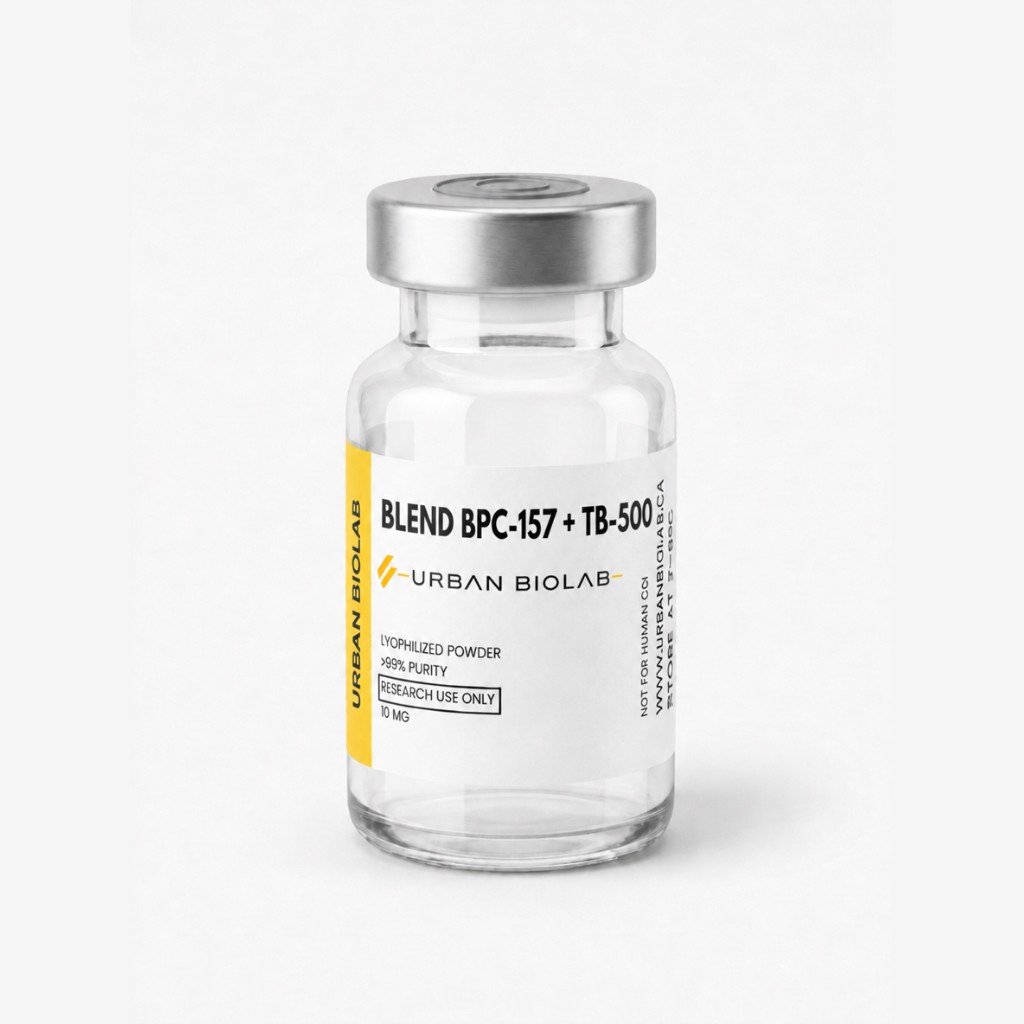
BPC-157 + TB-500 Blend 20MG
BPC-157 + TB-500 is a combined research peptide blend featuring two widely studied compounds known for their roles in tissue repair, cellular regeneration, and recovery-related signaling pathways. In laboratory research settings, this combination is of interest for investigations into connective tissue models, cell migration, angiogenesis, and regenerative biology, offering a complementary approach to studying complex repair mechanisms.
Receptor Desensitization: Why Cycling Matters
Continuous receptor stimulation leads to adaptive responses that can diminish peptide effectiveness over time. Understanding desensitization mechanisms helps researchers design protocols that maintain signaling efficacy.
Mechanisms of Desensitization
G-protein coupled receptors undergo several forms of desensitization following sustained activation:
Homologous desensitization occurs when the activated receptor itself becomes less responsive, typically through phosphorylation by G-protein coupled receptor kinases. The phosphorylated receptor attracts beta-arrestin proteins that block further G-protein coupling.
Receptor internalization follows beta-arrestin binding in many systems. The receptor is pulled into the cell interior through endocytosis, temporarily removing it from the cell surface.
Receptor downregulation occurs with longer-term exposure where cells actually reduce the number of receptor proteins they express. This transcriptional response takes hours to days to develop but can persist for extended periods.
Practical Cycling Approaches
Cycling protocols balance the desire for therapeutic effects against the need to maintain receptor sensitivity:
For tissue repair peptides like BPC-157, acute injury protocols typically run 4-6 weeks at standard doses followed by 2-4 weeks off. Chronic injury protocols may extend to 6-8 weeks at higher doses with 4-8 weeks off.
TB-500 protocols follow similar cycling principles but can often use longer cycles due to its twice-weekly dosing. The peptide does not suppress natural hormone production, so post-cycle therapy protocols used with anabolic compounds are not necessary.
Monitoring for Diminished Response
Signs that desensitization may be occurring include reduced subjective effects at previously effective doses, plateau in therapeutic outcomes despite continued administration, and need for increasing doses to maintain the same response level.
When these signs appear, a break period often restores sensitivity better than dose escalation.
Clinical Applications: Where the Science Meets Practice
Metabolic Regulation
The incretin system provides the clearest example of peptide signaling applied to clinical medicine. GLP-1 receptor agonists have transformed treatment approaches for type 2 diabetes and obesity by leveraging endogenous hormone pathways.
Triple receptor agonism in retatrutide demonstrates the potential of multi-pathway targeting. For a 220-pound individual, the 24.2% weight loss translates to approximately 53 pounds lost versus 46 pounds with tirzepatide or 33 pounds with semaglutide.
Tissue Repair and Regeneration
The combination of BPC-157 and TB-500 illustrates how complementary signaling mechanisms can produce synergistic effects. These peptides work through different pathways, with TB-500 providing systemic healing while BPC-157 concentrates at injection sites with targeted repair effects.
Neurological Applications
Semax demonstrates how peptide signaling can be directed toward neurological goals. By normalizing the transcriptomic response to injury and enhancing neurotrophic factor production, this peptide creates conditions favourable for neuronal survival and functional recovery.
The Future of Peptide Research
The field of peptide signaling continues to advance rapidly. Several promising research areas are likely to shape the next decade:
Precision Peptide Design
Advances in structural biology, particularly cryo-electron microscopy, have revealed receptor conformations at atomic resolution. This structural information enables rational design of peptide analogues with specific signaling properties.
Computational approaches including machine learning and molecular dynamics simulations accelerate the design process. Rather than synthesizing and testing thousands of peptide variants, researchers can predict which modifications are most likely to produce desired receptor interactions.
Tissue-Targeted Delivery Systems
Current peptide administration often produces systemic exposure when only localized effects are desired. Emerging delivery technologies aim to concentrate peptides at specific tissue sites while minimizing systemic distribution.
Implantable devices that release peptides in response to physiological signals represent another frontier. Glucose-responsive insulin delivery systems provide a model for how peptide release could be coupled to biological needs rather than fixed dosing schedules.
Biomarker Development
Better biomarkers would help researchers monitor peptide effects objectively rather than relying primarily on subjective reports. Gene expression signatures offer particular promise given that many peptides produce characteristic transcriptomic changes.
Combination Therapy Optimization
While combination peptide protocols have gained popularity based on mechanistic rationale and anecdotal reports, systematic studies comparing different combinations remain limited. Future research will likely establish evidence-based combination protocols with optimized dosing, timing, and duration.
Long-Term Safety Assessment
Most peptide safety data derives from relatively short-term studies. As these compounds see broader and more prolonged use, longer-term safety monitoring becomes increasingly important.
Particular attention focuses on theoretical concerns about peptides that promote angiogenesis or cell proliferation. While these effects support tissue repair, the same mechanisms could theoretically support tumour growth in susceptible individuals.
Frequently Asked Questions
What is a receptor agonist and how does it differ from an antagonist?
A receptor agonist binds to a receptor and activates it, triggering downstream signaling. An antagonist also binds but blocks activation without producing a response. Agonists turn cellular switches on while antagonists prevent them from being turned on.
How do peptides cross cell membranes to affect intracellular signaling?
Most peptides do not cross cell membranes directly. Instead, they bind to cell surface receptors that transmit signals across the membrane through conformational changes. Some small peptides can enter cells through receptor-mediated endocytosis or, rarely, direct membrane penetration.
Why do some peptides affect multiple pathways simultaneously?
Peptides like BPC-157 affect multiple pathways because they interact with several different molecular targets or because their primary target sits upstream of multiple branching pathways. Evolutionary pressure has favoured signaling molecules that coordinate complex responses to injury.
What determines whether a peptide produces beneficial or harmful effects?
Dose, timing, duration of exposure, and the specific tissues involved all determine peptide effects. Context matters enormously. A peptide that helps wound healing might pose theoretical risks in someone with undetected malignancy.
How does receptor desensitization affect peptide therapy?
Receptors that receive continuous stimulation often become desensitized. This occurs through receptor phosphorylation, internalization, and downregulation. Pulsatile or cyclical peptide administration can help maintain receptor sensitivity.
What is the difference between single, dual, and triple receptor agonists?
Single receptor agonists like semaglutide activate one receptor type. Dual agonists like tirzepatide activate two receptors. Triple agonists like retatrutide activate three receptors. More receptor targets generally produce greater effects but also increase biological complexity.
Can different peptides be combined to enhance signaling effects?
Combining peptides with complementary mechanisms can produce synergistic effects. The BPC-157 and TB-500 combination works well because these peptides activate different pathways that converge on tissue repair goals. However, combining peptides also introduces complexity and potential for unexpected interactions.
How long do peptide signaling effects typically last?
Signaling effects range from seconds for ion channel modulation to hours for gene expression changes. Acute effects like cAMP elevation dissipate quickly once receptor activation ceases. However, downstream effects like protein synthesis and tissue remodeling can persist for days or weeks.
What role does peptide stability play in signaling effectiveness?
Peptide stability directly impacts how long a compound remains active in the body to engage its target receptors. BPC-157 demonstrates unusual stability, remaining active in gastric juice for over 24 hours. Most peptides degrade within minutes to hours.
Do peptides affect gene expression, and if so, how?
Many peptides ultimately affect gene expression through their signaling cascades. Receptor activation leads to transcription factor activation that changes which genes are transcribed. GHK-Cu affects expression of roughly 31% of all human genes.
Glossary of Key Terms
Adenylate Cyclase — An enzyme that converts ATP to cyclic AMP, a crucial second messenger in many signaling pathways.
Agonist — A molecule that binds to a receptor and activates it, producing a biological response.
Allosteric Modulator — A compound that binds to a receptor at a site distinct from the primary ligand binding site, affecting receptor activity.
Angiogenesis — The formation of new blood vessels from pre-existing vasculature.
Beta-Arrestin — Proteins that bind to activated GPCRs, promoting receptor internalization and initiating distinct signaling cascades.
Biased Agonism — The phenomenon where different agonists at the same receptor preferentially activate certain downstream pathways over others.
cAMP — Cyclic adenosine monophosphate, a second messenger that activates protein kinase A and regulates numerous cellular processes.
Chemotaxis — The directed movement of cells toward or away from chemical signals.
ERK1/2 — Extracellular signal-regulated kinases, key enzymes in the MAPK pathway.
GPCR — G-protein coupled receptor, a large family of cell surface receptors with seven transmembrane domains.
Incretin — Hormones released by the gut in response to food intake that stimulate insulin secretion.
MAPK Pathway — Mitogen-activated protein kinase signaling cascade that transmits signals from cell surface receptors to the nucleus.
Neurotrophic Factor — Proteins that support neuron survival, growth, and differentiation.
Orthosteric Site — The primary binding site on a receptor where endogenous ligands bind.
Phosphorylation — The addition of a phosphate group to a protein, typically altering its activity.
Second Messenger — Small molecules that relay signals from receptors to effector proteins inside cells.
Signal Transduction — The process by which extracellular signals are converted to intracellular responses.
Transcription Factor — Proteins that bind to DNA and control the transcription of specific genes.
VEGF — Vascular Endothelial Growth Factor, a signaling protein that promotes angiogenesis.
References
- Yang D, et al. Structural pharmacology and mechanisms of GLP-1R signaling. Trends in Pharmacological Sciences. 2025.
- Dong M, et al. Structure and mechanism for recognition of peptide hormones by Class B G-protein-coupled receptors. PMC.
- Ji L, et al. Glucagon-like peptide-1 receptor: mechanisms and advances in therapy. Signal Transduction and Targeted Therapy. 2024.
This article is intended for educational and informational purposes only. The information presented reflects current scientific understanding of peptide signaling mechanisms and is not intended as medical advice. Peptides discussed are sold as research compounds and are not approved for human consumption. Always consult qualified healthcare professionals before making any decisions related to your health.