

Let me guess. You’ve been researching Retatrutide, getting excited about the weight loss potential, and then you hit that black box warning about thyroid tumors. Suddenly your excitement turns to anxiety. Maybe you’ve even started wondering if this whole thing is worth the risk.
I get it. I’ve been there.
Here’s what I want to do: cut through the noise and give you the real story about what that warning means, where it comes from, and whether it should actually concern you.
Where the Thyroid Warning Actually Comes From
The thyroid cancer warning on Retatrutide doesn’t come from human data. It comes from rats and mice.
During the development of GLP-1 medications, researchers ran two-year carcinogenicity studies where they gave rodents extremely high doses of these drugs over extended periods. The animals developed thyroid C-cell tumors. This finding was consistent across multiple studies and multiple medications in the class.
Makes sense that regulators slapped a warning on these drugs, right?
But here’s where things get interesting. The mechanism that caused those tumors in rodents basically doesn’t exist in humans.
Why Rats Aren’t Small Humans (At Least Not for Thyroid Biology)
The whole issue comes down to receptor expression.
Rodent thyroid C-cells are covered in GLP-1 receptors. They’re everywhere. So when you give a rat a GLP-1 medication, those receptors get activated, triggering a cascade that leads to calcitonin release and cell proliferation. Over time, this chronic stimulation causes abnormal growth.
Human thyroid C-cells are a completely different story. Research has shown that GLP-1 receptors are expressed in no more than 30% of human thyroid cells. Some studies using highly specific detection methods found even lower rates, or couldn’t detect them at all.
The best analogy I’ve heard? Worrying about chocolate being toxic to you because it kills dogs. The biology is simply different.
One woman in Calgary had this exact conversation with her doctor after spending three weeks terrified by scary-sounding warnings. Her doctor ordered a baseline calcitonin test just to have a comparison point. Normal. Eight months later, still normal. She lost 47 pounds. Her blood pressure medication got cut in half. Her sleep apnea disappeared entirely.
The theoretical risk never materialized. The real health improvements did.
What the Human Trials Actually Show
This is where the evidence gets even more reassuring.
Retatrutide’s Phase 2 trial followed over 300 participants for 48 weeks. The safety monitoring specifically tracked thyroid outcomes given the known class concerns. Here’s what they found:
- Zero cases of medullary thyroid cancer
- Zero cases of C-cell hyperplasia
- No clinically significant changes in calcitonin levels
These results align with the entire GLP-1 medication class. Liraglutide has been studied since 2010. Semaglutide trials have enrolled tens of thousands of participants. Tirzepatide added thousands more. The SELECT trial alone followed over 17,600 patients taking semaglutide for an average of nearly 4 years, with specific calcitonin monitoring protocols.
If GLP-1 medications caused thyroid problems in humans at meaningful rates, these massive studies would have caught it.
They didn’t.
The Calcitonin Question
Calcitonin is the biomarker doctors use to detect C-cell changes. It’s a hormone produced by thyroid C-cells, and elevated levels can indicate problems.
Normal levels generally fall below 10 pg/mL for most adults. Mild elevations can happen for many benign reasons. Levels above 100 pg/mL warrant investigation.
In rodent studies, GLP-1 medications reliably increased calcitonin levels. The cells responded immediately to receptor activation.
In human trials? Calcitonin levels stay stable. Studies lasting up to 52 weeks with various GLP-1 medications show no systematic changes. Individual patients might show minor fluctuations, but nothing outside normal ranges and no dose-dependent patterns suggesting drug effect.
The biomarker evidence confirms what the receptor expression data told us: the problematic mechanism simply doesn’t operate in human thyroid tissue.
Who Should Actually Avoid Retatrutide
For most people, the thyroid concern is theoretical. But there are specific groups who genuinely should not take this medication:
People with personal history of medullary thyroid cancer. If you’ve had MTC, no GLP-1 medication is appropriate for you.
People with family history of medullary thyroid cancer in first-degree relatives. Parent, sibling, or child with MTC? You may carry genetic mutations that increase your risk. This warrants genetic testing and careful evaluation.
People with Multiple Endocrine Neoplasia type 2 (MEN2). This inherited syndrome dramatically increases MTC risk. Genetic testing can confirm this diagnosis.
These contraindications make biological sense even without confirmed human thyroid effects. People with these conditions already have abnormal C-cells or carry mutations predisposing to C-cell dysfunction. Adding a medication that theoretically could stimulate these cells seems unnecessarily risky when alternatives exist.
For everyone else? The warning provides context for informed decision-making, not a reason to avoid potentially life-changing treatment.
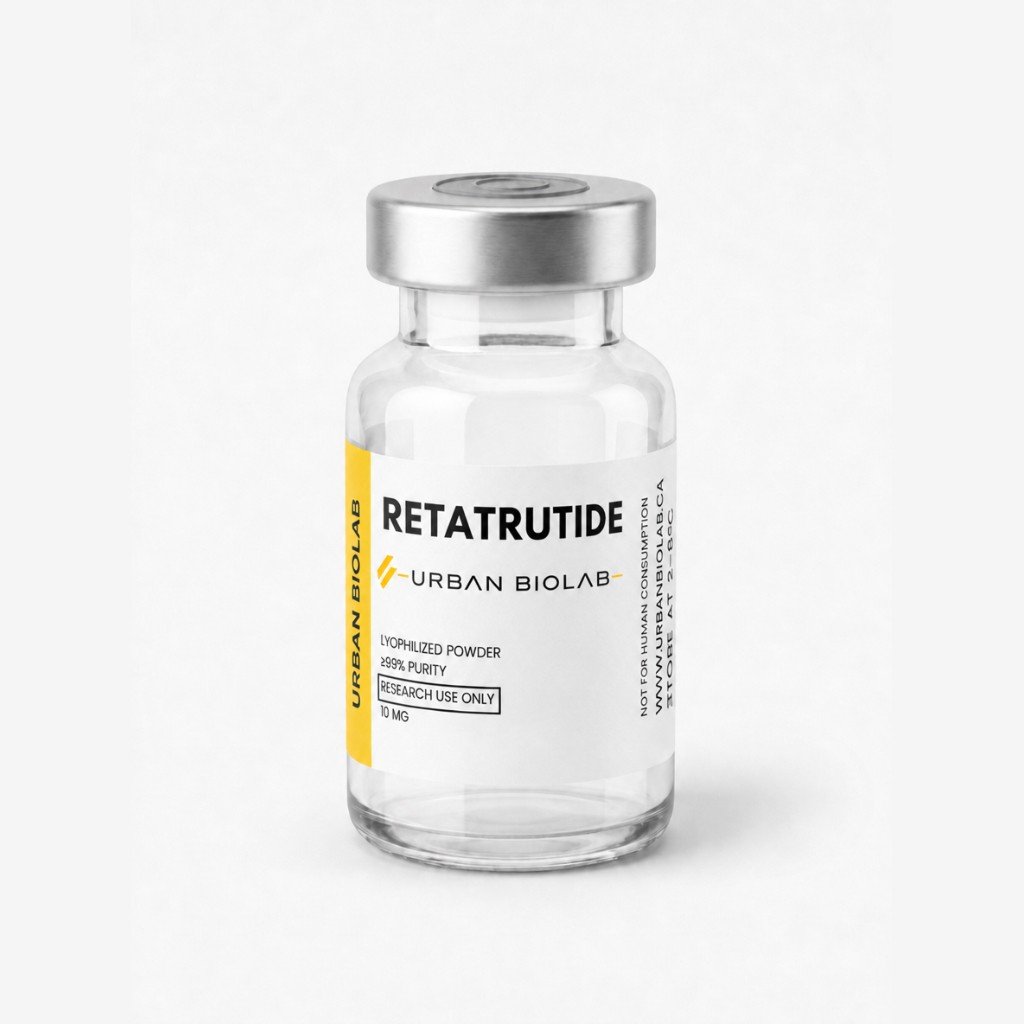
RT (Retatrutide) 10MG
Buy Retatrutide Canada: RT10 is a cutting-edge investigational peptide designed for advanced scientific exploration in metabolic health and weight management research. Known for its unique mechanism as a triple agonist (GLP-1, GIP, and glucagon receptors), it has shown promising potential in preclinical studies related to appetite regulation, fat metabolism, and glycemic control.
Putting the Risk in Perspective
Medullary thyroid cancer is rare. It accounts for only 2-4% of all thyroid cancers, which themselves represent about 1% of all cancers. In absolute numbers, roughly 1,000 cases occur annually in the United States. Most of these relate to genetic syndromes or sporadic mutations unconnected to any medication.
Now compare that to the risks of remaining significantly obese:
- Cardiovascular disease
- Type 2 diabetes
- Certain cancers
- Liver disease
- Kidney disease
- Joint destruction
- Reduced life expectancy
These aren’t theoretical concerns or rodent extrapolations. They’re established medical facts supported by decades of human epidemiological data.
Every medical intervention involves balancing potential benefits against potential risks. The thyroid concern for GLP-1 medications represents a theoretical risk that hasn’t materialized in human data. The obesity-related conditions these medications treat represent actual risks causing actual harm to actual patients right now.
What Monitoring Makes Sense
The FDA labeling doesn’t mandate routine calcitonin monitoring. Product labels advise patients to report symptoms that could indicate thyroid tumors: neck masses, difficulty swallowing, difficulty breathing, or persistent hoarseness.
Some clinicians recommend baseline calcitonin testing before starting treatment. This approach has merit for establishing individual baselines and identifying pre-existing elevations requiring workup. However, routine screening isn’t universally recommended given the low yield and potential for false positives causing unnecessary anxiety.
The most important monitoring happens before treatment starts. Confirming you have no personal or family history of medullary thyroid cancer and no symptoms suggesting existing thyroid disease matters far more than serial laboratory testing during therapy.
The Bottom Line
The thyroid warning on Retatrutide exists because regulators take conservative positions on potential risks. When animal studies show any signal of concern, that information gets prominently displayed regardless of whether the same mechanism operates in humans.
After 15 years and tens of millions of human patients, the feared thyroid cancer epidemic from rodent studies hasn’t materialized in real-world surveillance data. The biological mechanism that caused tumors in rats barely exists in people.
If you have specific risk factors like MEN2 or family history of medullary thyroid cancer, absolutely avoid this medication class. Those contraindications exist for good reason.
For the vast majority of people without these risk factors, the thyroid concern represents theoretical risk rather than documented human danger. The documented benefits of effective weight loss likely outweigh the unconfirmed thyroid concerns.
Make your decision based on accurate information rather than anxiety driven by scary-sounding warning labels. Talk to your doctor. Get the facts. Then decide what makes sense for your situation.
Have questions about Retatrutide or other GLP-1 medications? The research continues to evolve, and staying informed helps you make better decisions for your health.