
The Short Answer for Canadians
Let’s cut through the hype: No, you cannot get a prescription for retatrutide from your doctor in Canada.
Eli Lilly’s triple-agonist is still an investigational compound. It has not received a Notice of Compliance from Health Canada, and it won’t until at least 2028.
However, if you are a bona fide researcher working in metabolic disease, animal models, or in-vitro cellular assays, the compound is technically accessible through specialized chemical and peptide suppliers operating in the research space.
Here are the hard, verifiable numbers as of September 2026:
- Phase 2 Clinical Data (48 weeks): 24.2% average weight loss at the 12 mg maintenance dose.
- Phase 3 Topline Results (July 2026): Mean weight loss reached 24.6% at 104 weeks, with a subset of high-responders achieving up to 30.3%. (It is important to note that “up to” is not the average; the overall trial average remains in the mid-20s).
- Regulatory Submission: Lilly will file a Biologics License Application (BLA) with the FDA in Q1 2027.
- Health Canada Projection: Given the biologics classification, Canadians are likely looking at a 2028–2029 approval timeline, with formulary coverage lagging into 2030.
Standard Laboratory Disclaimer: Retatrutide is strictly an investigational research compound. It is not approved by Health Canada or the FDA for human therapeutic use. Research peptides are sold exclusively for in-vitro testing, animal studies, and laboratory analysis—not for human consumption. This article is for educational and informational purposes only and does not constitute medical advice.
Why This Compound Has the Research Community’s Attention
Retatrutide represents a pharmacological evolution. While semaglutide (Ozempic) is a single GLP-1 receptor agonist and tirzepatide (Mounjaro) is a dual GIP/GLP-1 agonist, retatrutide is a triple agonist that activates GIP, GLP-1, and glucagon receptors.
The inclusion of glucagon agonism is the key differentiator. Beyond suppressing appetite (via GLP-1/GIP), glucagon directly increases energy expenditure through thermogenesis—essentially raising the resting metabolic rate. This dual mechanism (eat less + burn more) is why the weight-loss curves in the Phase 2 NEJM trial significantly outpaced its predecessors.
| Compound | Mechanism of Action | Mean Weight Loss (Phase 3) | Regulatory Status in Canada |
|---|---|---|---|
| Semaglutide (Ozempic/Wegovy) | GLP-1 Agonist | ~14.9% | Approved (Prescription) |
| Tirzepatide (Mounjaro/Zepbound) | GIP + GLP-1 Agonist | ~20.9% | Approved (Prescription) |
| Retatrutide | GIP + GLP-1 + Glucagon Agonist | ~24.6% | Investigational Only |
The Current State of Play (September 2026)
Three structural factors define the Canadian landscape right now:
- Phase 3 is complete and statistically robust. The TRIUMPH-1 trial met all primary and secondary endpoints, demonstrating superior weight reduction compared to placebo, with a safety profile consistent with the GLP-1 class (predominantly gastrointestinal).
- Regulatory submission is imminent. After a procedural dispute regarding whether retatrutide is classified as a “drug” (small molecule) or a “biologic” (large molecule/protein), Lilly has confirmed it will proceed with a Biologics License Application. This classification affects manufacturing standards and biosimilar exclusivity periods.
- Expanded Access is highly restricted. Since August 2026, Lilly has opened a limited early-access program for specific patient subgroups with severe metabolic comorbidities. This is not a general availability pathway; it requires direct enrollment through specialized endocrinology clinics.
Realistic Canadian Timeline
| Milestone | Estimated Date |
|---|---|
| Research-Grade Peptide Availability | Currently accessible via licensed suppliers |
| FDA Approval (US) | Late 2027 – Early 2028 |
| Health Canada NOC | 2028 – 2029 |
| Provincial Formulary & Private Insurance Inclusion | 2029 – 2030 (highly variable by province) |
Accessing Retatrutide for Research Purposes in Canada
For academic, pharmaceutical, or independent research labs, the compound is available through the research peptide supply chain.
1. Specialized Canadian Peptide Suppliers
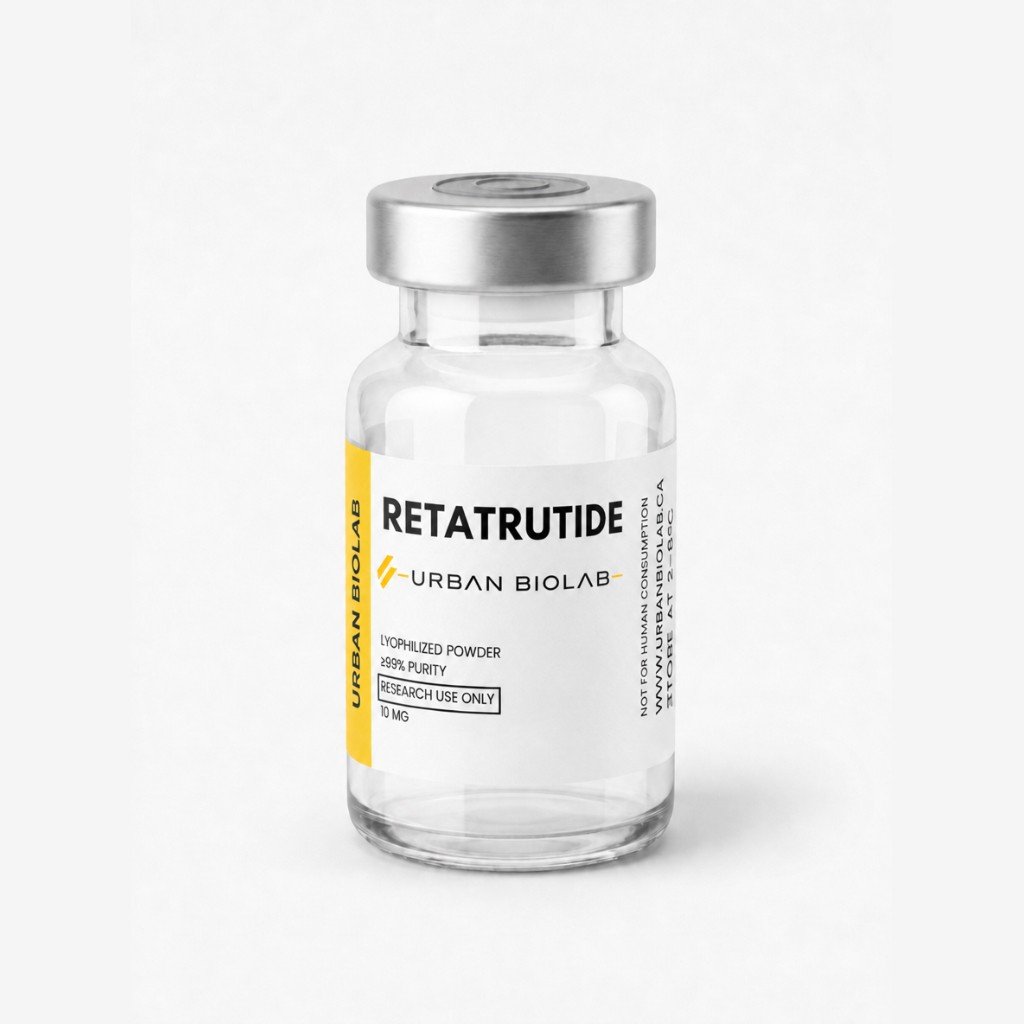
Because these compounds are sold explicitly for laboratory research, they fall outside Health Canada’s therapeutic goods regulatory framework. Suppliers like Urban Biolab provide third-party-verified compounds with domestic logistical support.
Why the domestic supply chain matters for researchers:
- Avoidance of Customs Seizures: Importing research chemicals across the US/Canada border carries a significant risk of CBSA interception, even for legitimate research.
- Batch Traceability: Canadian suppliers typically provide lot-specific Certificates of Analysis (COAs).
- Currency and Logistics: Pricing in CAD and 2–4 day domestic shipping removes the friction associated with international procurement.
2. Clinical Trial Enrollment
Lilly maintains a global trial network. Canadian sites are limited but do exist. Enrollment provides the compound free of charge under rigorous medical supervision, but requires a 48–104 week commitment and carries the risk of receiving a placebo. Researchers and clinicians can search the ClinicalTrials.gov registry for active recruiting sites in their province.
3. The Traditional Regulatory Pathway
For those unwilling to engage with the research supply chain, waiting for Health Canada approval remains the only legally recognized route for therapeutic use. This is the safest option, albeit one that requires patience through 2028.
A Note on the Legal and Commercial Environment
Eli Lilly has recently escalated its enforcement efforts, publicly calling on payment processors, e-commerce platforms, and regulatory bodies to restrict the sale of unauthorized retatrutide.
This creates a dynamic environment. Researchers purchasing these compounds must exercise due diligence, ensuring their supplier is not making explicit therapeutic claims (which would trigger Health Canada enforcement) and that the product is clearly labeled “For Research Use Only.”
Critical Verification Protocols for Laboratory Procurement
Because research peptides are not subject to pharmaceutical Good Manufacturing Practice (GMP) oversight in the same way as approved drugs, verification rests entirely with the end-user. A reputable supplier should provide, per batch:
- ✅ High-Performance Liquid Chromatography (HPLC): Purity analysis indicating ≥98% chromatographic purity.
- ✅ Mass Spectrometry (MS): Confirmation of the precise molecular weight (specific to retatrutide’s peptide sequence).
- ✅ Certificate of Analysis (COA): A document matching the batch number on the vial, with a visible date of analysis.
- ✅ Sterility and Endotoxin Testing: Crucial if the compound is intended for in vivo animal models.
Operational Red Flag: If a supplier cannot produce a batch-specific COA within 24 hours of request, do not procure from them. The cost savings are negligible compared to the risk of injecting an impure, degraded, or misidentified peptide into a research model.
Standard Reconstitution and Storage Protocols
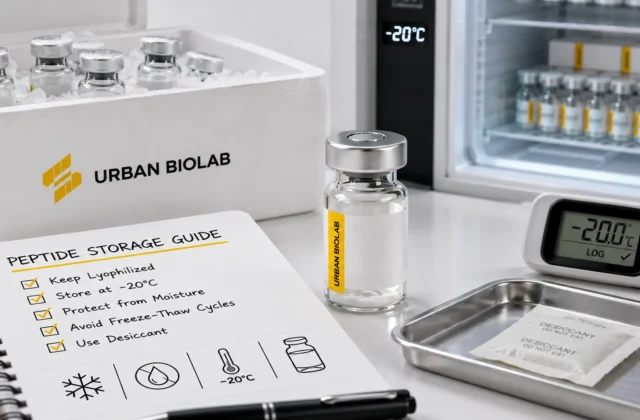
- Storage (Lyophilized): Store freeze-dried powder at ≤ -20°C, desiccated, and protected from ambient light to prevent degradation.
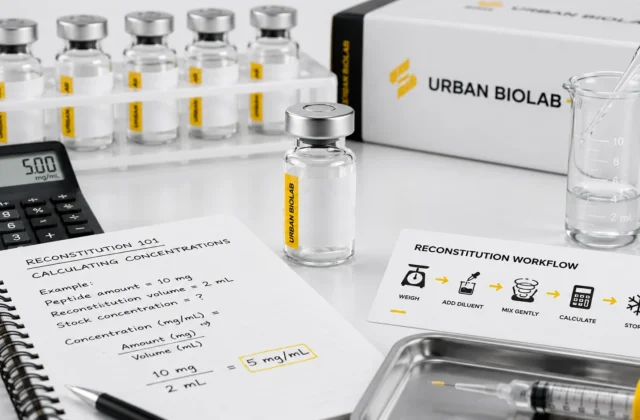
- Reconstitution: For a standard 10 mg vial, reconstitute with 2 mL of bacteriostatic water (0.9% benzyl alcohol). This yields a concentration of 5 mg/mL. Do not use plain sterile water for multi-use vials, as it lacks preservative properties.
- Storage (Reconstituted): Refrigerate at 2–8°C. Discard any unused solution after 28–30 days to mitigate the risk of bacterial contamination.
Interpreting the Clinical Data Accurately
Beyond the top-line weight-loss figures, the Phase 2 and Phase 3 data revealed significant secondary metabolic improvements:
- Glycemic Control: In patients with type 2 diabetes, mean HbA1c reduction was approximately 2.02%.
- Lipid Profile: Serum triglycerides decreased by an average of 28%, with modest reductions in LDL cholesterol.
- Hemodynamic Effects: Systolic blood pressure dropped by a mean of 6.8 mmHg.
Predictors of Response: The strongest correlate for success was early response. Participants achieving ≥5% weight loss by Week 12 had an 87% likelihood of achieving ≥15% total weight loss by Week 48. Crucially, prior GLP-1 exposure did not significantly attenuate the absolute percentage of weight loss relative to baseline.
Dosing Protocols (For In-Vivo Animal Models & Research Contexts)
The clinical titration schedule utilized a gradual escalation to improve gastrointestinal tolerability. Researchers adapting this for animal or ex-vivo studies should note the following clinical escalation:
| Weeks | Dose (Weekly) | Clinical Phase |
|---|---|---|
| 1–4 | 2 mg | Titration / Tolerability |
| 5–8 | 4 mg | Active Appetite Suppression |
| 9–12 | 8 mg | Therapeutic Onset |
| 13+ | 12 mg | Maintenance / Maximum Efficacy |
Administration is subcutaneous, typically rotating injection sites (abdomen, thigh, or upper arm).
Adverse Event Profile and Risk Mitigation
The side-effect profile is consistent with potent GLP-1 receptor agonists, peaking during the dose-escalation phase (Weeks 4–8) and generally stabilizing by Week 12.
Incidence at the 12 mg dose:
- Very Common (>20%): Nausea (28%), Diarrhea (24%), Constipation (21%).
- Common (10–20%): Vomiting (17%), Decreased Appetite (15%), Fatigue (12%).
- Less Common (5–10%): Dizziness, Abdominal Pain, Injection Site Reactions.
Research Monitoring Protocols:
- For gastrointestinal distress, smaller, more frequent feeding intervals are recommended.
- Maintain high fiber intake (25–30g) and hydration to counteract constipation.
- Severe Warning Signs: Acute, radiating abdominal pain (potential pancreatitis), right-upper-quadrant pain post-fatty meals (potential cholecystitis), or signs of severe dehydration require immediate veterinary or clinical intervention (depending on the research model).
Cost Analysis for Canadian Researchers (CAD)
| Procurement Source | Estimated Monthly Cost (Maintenance Dose) |
|---|---|
| Canadian Research Peptide Supplier | $200 – $400 |
| US Research Supplier (incl. exchange/shipping) | $350 – $550 |
| Approved GLP-1 (Ozempic, retail, no insurance) | $400 – $600 |
| Projected Pharmaceutical Retatrutide (Post-2028) | $1,200+ (Estimated) |
Researchers should budget an additional $30–$50 monthly for consumables (bacteriostatic water, insulin syringes, alcohol swabs) and $150–$300 quarterly for independent laboratory bloodwork to monitor metabolic and hepatic panels.
The Bottom Line for Canadian Researchers and Clinicians
Retatrutide is, by most objective measures, the most efficacious weight-management compound in the development pipeline. The gap between its current investigational status and its eventual appearance on Canadian pharmacy shelves is approximately 2 to 3 years.
For legitimate research laboratories requiring the compound for preclinical studies, a verified domestic peptide supplier represents the most logistically viable path forward. For individuals seeking therapeutic intervention, the prudent course remains awaiting Health Canada approval (2028–2029) or engaging with existing GLP-1 receptor agonists available by prescription today.
Regardless of the path chosen, strict adherence to source verification, batch-specific COA validation, and rigorous safety monitoring is non-negotiable.
Frequently Asked Questions
Can a Canadian physician prescribe retatrutide today?
No. It lacks Health Canada approval, rendering it a prohibited substance for therapeutic prescription outside of clinical trial frameworks.
Is it legal to purchase research peptides in Canada?
Yes, provided the product is sold exclusively for research or laboratory purposes without implied therapeutic claims. Possession for in vitro research is legally distinct from possession for human consumption.
How does retatrutide compare to Ozempic in the literature?
In head-to-head comparisons (indirect), retatrutide demonstrates a statistically superior weight-loss profile (~24.6% vs. ~14.9%) due to the added glucagon-mediated thermogenic effect.
Is the compound effective if a subject has plateaued on a GLP-1?
Trial data suggests that previous GLP-1 exposure does not reduce the percentage of weight loss from baseline, though the absolute total weight loss may be lower due to a lower starting weight.
What is the expected weight regain post-discontinuation?
Obesity is a chronic disease. Discontinuation typically results in gradual weight regain over 6–12 months, consistent with the mechanism of action of incretin mimetics.
References
- Jastreboff AM, et al. Triple–Hormone-Receptor Agonist Retatrutide for Obesity — A Phase 2 Trial. N Engl J Med. 2023.
- Lilly Press Release. TRIUMPH-1 Phase 3 Topline Results. July 2026.
- FDA Regulatory Update. Retatrutide Biologics License Application Status. BioSpace. 2026.
- Lilly Investor Relations. Statement on Unauthorized Retatrutide Sales. August 2026.
- ClinicalTrials.gov. Retatrutide Study Results. NCT04881760.